


BookLab
Advanced High-Protein Low-Carb Cookbook
Advanced High-Protein Low-Carb Cookbook
SKU:17361419
- Ready to publish on Amazon KDP
- Human-Written Manuscript
Couldn't load pickup availability
Premium Publishing Asset for Amazon Sellers
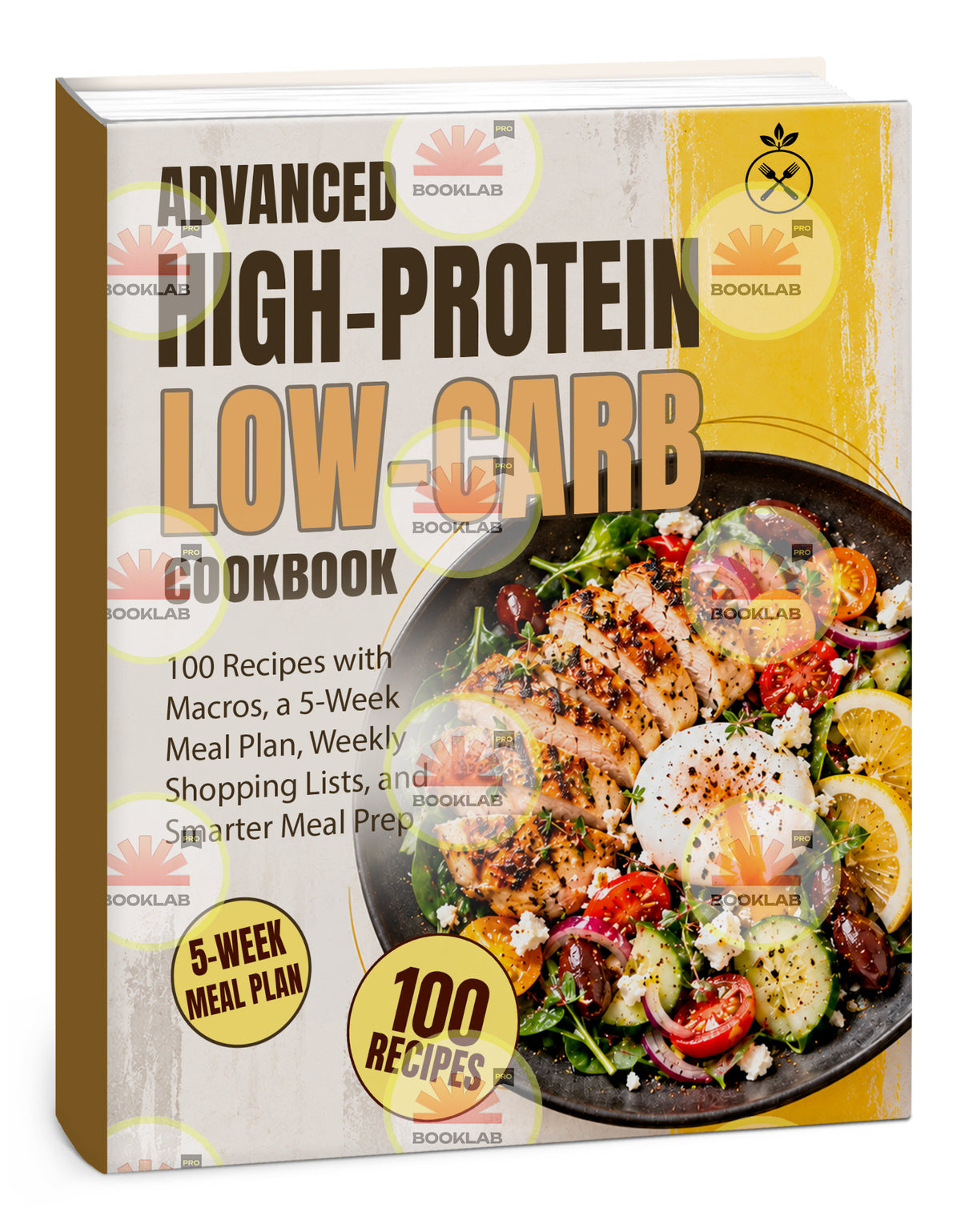
Advanced High-Protein Low-Carb Cookbook: 100 Recipes with Macros, a 5-Week Meal Plan, Weekly Shopping Lists, and Smarter Meal Prep
A polished, professionally structured cookbook manuscript — fully written, organized, and ready for publishing preparation.
This asset is designed for Amazon sellers entering the high-protein, low-carb nutrition niche without spending weeks developing recipes, calculating nutritional values, organizing meal plans, or building a manuscript from scratch.
Created for readers who already understand the basics of high-protein eating, this cookbook offers an advanced, performance-focused approach to nutrition. It combines 100 varied recipes, detailed macros, meal-prep guidance, a complete 5-week meal plan, weekly shopping lists, and practical meal-building strategies.
⭐️ What’s Included:
✔️ Complete cookbook manuscript
✔️ 100 high-protein, low-carb recipes
✔️ Nutrition information and macros for every recipe
✔️ Complete 5-week meal plan
✔️ Weekly shopping lists for easier planning
✔️ Performance-focused nutrition guidance
✔️ High-protein breakfasts, lunches, dinners, snacks, desserts, smoothies, and sauces
✔️ Advanced meal-prep and batch-cooking recipes
✔️ Guidance on protein sources, healthy fats, low-carb vegetables, and protein enhancers
✔️ Practical information on macronutrient timing, protein distribution, and meal structure
✔️ Recipes featuring meat, poultry, seafood, eggs, dairy, plant proteins, whey, and collagen
✔️ Suitable for Kindle and paperback publishing preparation
📈 Why This Is a Valuable Publishing Asset
You’re getting a complete, organized cookbook manuscript — not a basic collection of protein recipes.
The book targets a clear and commercially recognizable niche: high-protein, low-carb eating for performance-focused and active-lifestyle readers interested in lean muscle support, recovery, steady energy, and efficient meal preparation.
Its structure goes beyond individual recipes by combining:
- Advanced nutrition guidance
- Diverse recipe categories
- Detailed macros and nutritional values
- Strategic meal planning
- Weekly grocery support
- Meal-prep and batch-cooking systems
- Practical ways to adapt meals to different goals and activity levels
The recipe collection offers strong variety, covering protein-rich breakfasts, satisfying lunches, main courses, comfort-food alternatives, international dishes, desserts, shakes, sauces, and batch-cooking staples.
💼 Ideal For:
- KDP publishers expanding a fitness, nutrition, or healthy cooking catalog
- Publishing agencies seeking a finished cookbook asset
- Entrepreneurs selling digital or print-ready products
- Sellers entering the high-protein or low-carb cookbook niche
- Publishers targeting fitness-focused and active-lifestyle readers
- Cookbook sellers seeking an advanced alternative to beginner-focused nutrition titles
🚀 What Makes This Book Special:
- Advanced, performance-focused positioning
- 100 varied high-protein, low-carb recipes
- Detailed macros and nutritional information
- Dedicated chapters for breakfasts, lunches, main courses, snacks, comfort foods, international recipes, desserts, smoothies, meal prep, and sauces
- Structured 5-week meal plan
- Weekly grocery lists for all five weeks
- Dedicated meal-prep and batch-cooking content
- Guidance on macronutrient timing, protein distribution, and strategic meal building
- Wide variety of animal- and plant-based protein sources
- Practical structure designed to reduce repetitive meal planning
This is a complete cookbook publishing asset for sellers entering the high-protein, low-carb nutrition niche. With 100 recipes, detailed macros, advanced nutrition guidance, meal-prep strategies, a 5-week meal plan, and weekly shopping lists, the manuscript provides a strong foundation for a professional Amazon KDP product.
- Number of pages: 91
- Trim Size Paperback: 8,5*11
- Trim Size Hardcover: 8,25*11
Share
What's Included
-
Manuscript PDF
Complete manuscript in PDF format
-
eBook Format
Ready-to-publish electronic book format
-
Plagiarism Report
Detailed plagiarism check report
-
Book Cover
Covers that sell and visuals that grab attention
-
Book Description
Book description for marketing purposes
-
Book Quality Guide
Guide to reviewing book quality before publishing on Amazon KDP
Book Details
Human-Written Content
This manuscript was written by human authors and reviewed by editors. We do not use AI-generated text for the core book content. Each title is created as an original publishing asset for Amazon KDP sellers who want ready-to-use, professional-quality content.
Outline Overview
Table of Contents
Introduction: The Science of Lean Fuel
- What advanced high-protein, low-carb nutrition means
- The role of protein in body composition and recovery
- Reducing carbohydrates while maintaining steady energy
- Macronutrient timing for performance
- Using the cookbook strategically
Chapter 1: The Power Plate Protocol
- Lean meats, fatty fish, eggs, and high-protein dairy
- Low-carb vegetables, healthy fats, and plant proteins
- Protein enhancers such as collagen, whey, and pea protein
- Foods to limit: refined carbohydrates, added sugars, and processed snacks
- Identifying hidden sugars and highly processed oils
Chapter 2: Ironclad Morning Fuel
- High-protein egg scrambles, frittatas, and soufflé cups
- Cottage cheese, ricotta, chia, and collagen breakfasts
- Seafood, lean meat, and vegetable morning bowls
- Low-carb crepes, savory oats, and cauliflower hash
Chapter 3: Lean Lunch Engineering
- Chicken, turkey, beef, tuna, shrimp, sardines, and tofu
- Protein bowls, salads, lettuce wraps, and stuffed vegetables
- Low-carb noodle alternatives and vegetable-based lunches
- Quick midday meals for home or meal prep
Chapter 4: High-Protein Main Courses
- Salmon, cod, sea bass, chicken, turkey, beef, pork, and lamb
- Skillet meals, roasted dishes, meatballs, and lettuce cups
- Low-carb vegetable sides and protein-rich sauces
- Mediterranean, Asian, Moroccan, and Cajun flavors
Chapter 5: Protein-Forward Snacks & Small Plates
- Egg, turkey, chicken, beef, tuna, and tofu snacks
- Protein crisps, jerky, roll-ups, and snack boxes
- Cottage cheese, avocado, hummus, and vegetable dips
- Portable options for planned snacks and light meals
Chapter 6: Smart Comfort Foods Reimagined
- Low-carb versions of mac and cheese, Alfredo, pizza, and lasagna
- Cheeseburger skillets, chili, meatballs, and stuffed cabbage
- Cauliflower, zucchini, eggplant, and other vegetable substitutes
- Familiar comfort foods with added protein
Chapter 7: Global Protein Expeditions
- Japanese, Korean, Thai, Vietnamese, and Indian-inspired meals
- Greek, Italian, Spanish, Mexican, and Middle Eastern dishes
- International bowls, skillets, soups, wraps, and tapas
- High-protein adaptations with fewer refined carbohydrates
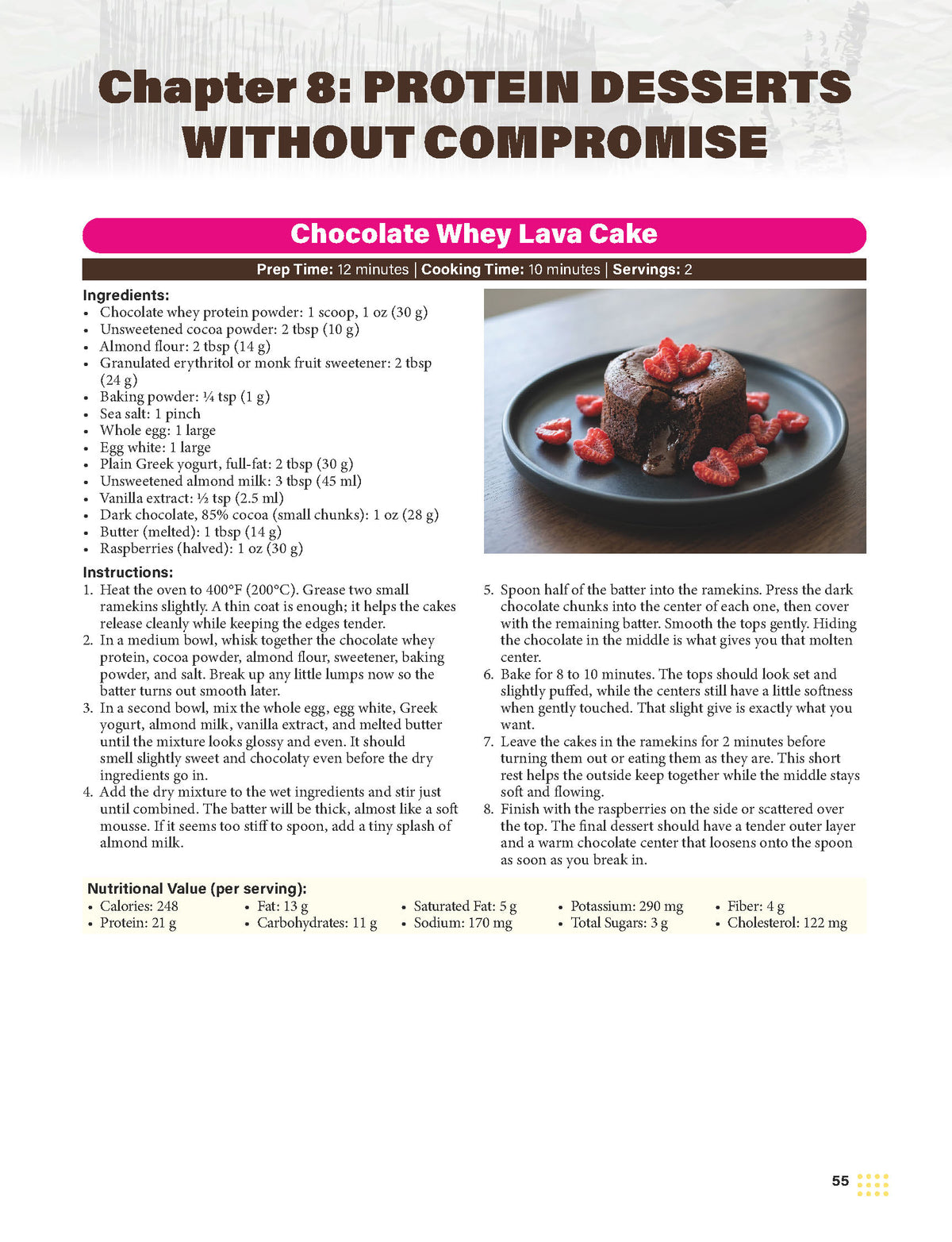
Chapter 8: Protein Desserts Without Compromise
- Protein cakes, brownies, fudge, and cheesecake cups
- Ricotta mousse, collagen treats, and avocado pudding
- Whey, collagen, yogurt, and nut butter desserts
- Lower-carb alternatives to familiar sweets
Chapter 9: High-Performance Smoothies & Shakes
- Whey, collagen, and plant-protein beverages
- Fruit, greens, avocado, nut butter, coffee, and matcha
- Recovery blends, energy-focused shakes, and refreshing smoothies
- Chocolate, vanilla, berry, mint, and cinnamon flavors
Chapter 10: Advanced Prep Cooking Mastery
- Batch-cooked chicken, beef, salmon, eggs, and vegetables
- Meal-prep bowls, soup bases, and freezer-friendly meatballs
- Slow-cooker recipes and ready-to-assemble snack boxes
- Storage, portioning, freezing, and weekly preparation strategies
Chapter 11: Precision Sauces & Protein Boosters
- Yogurt sauces, protein pesto, and avocado dressing
- Collagen broth reduction and whey-based sauces
- Low-carb teriyaki glaze, marinara, and peanut sauce
- Flavor boosters for meat, seafood, vegetables, and meal-prep dishes
5-Week High-Protein Low-Carb Meal Plan
- Week 1: Foundation Building
- Week 2: Protein Optimization
- Week 3: Balanced Energy Sources
- Week 4: Advanced Plate Strategies
- Week 5: Mastery & Sustainability
Tactical Shopping Blueprint
- Five organized weekly grocery lists
- Meat, poultry, seafood, eggs, dairy, and plant proteins
- Low-carb vegetables, healthy fats, and pantry essentials
- Protein powders, collagen, sauces, herbs, and seasonings
Conclusion: The Discipline of Delicious Efficiency
- Building consistency without repetitive meals
- Adapting recipes to personal goals and activity levels
- Maintaining practical nutrition and meal-prep habits
- Turning strategic high-protein eating into a sustainable routine
Sample Chapter
Chapter 1 — The Power Plate Protocol
Foods to Eat
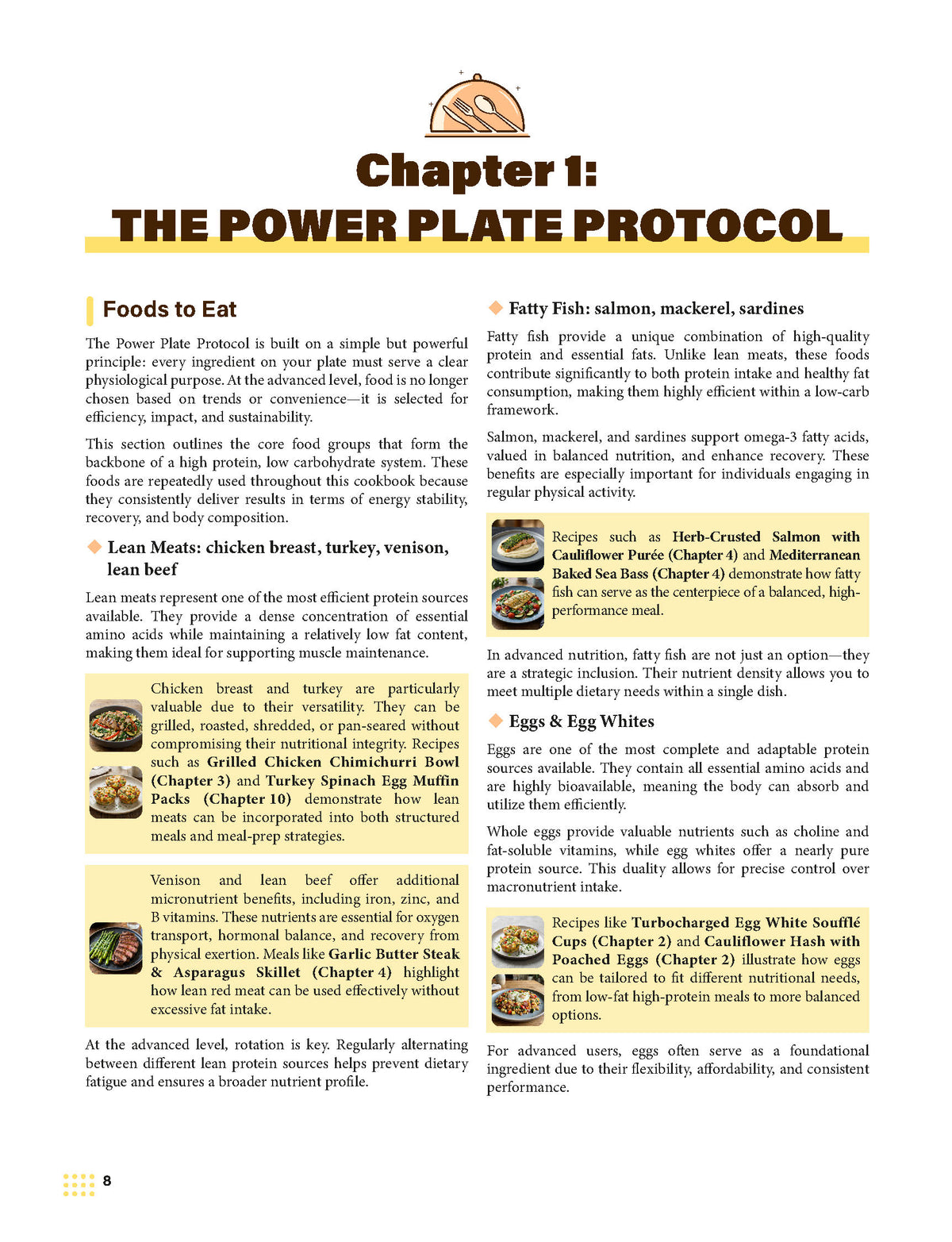
The Power Plate Protocol is built on a simple but powerful principle: every ingredient on your plate must serve a clear physiological purpose. At the advanced level, food is no longer chosen based on trends or convenience—it is selected for efficiency, impact, and sustainability.
This section outlines the core food groups that form the backbone of a high protein, low carbohydrate system. These foods are repeatedly used throughout this cookbook because they consistently deliver results in terms of energy stability, recovery, and body composition.
Lean Meats: chicken breast, turkey, venison, lean beef
Lean meats represent one of the most efficient protein sources available. They provide a dense concentration of essential amino acids while maintaining a relatively low fat content, making them ideal for supporting muscle maintenance.
Chicken breast and turkey are particularly valuable due to their versatility. They can be grilled, roasted, shredded, or pan-seared without compromising their nutritional integrity. Recipes such as Grilled Chicken Chimichurri Bowl (Chapter 3) and Turkey Spinach Egg Muffin Packs (Chapter 10) demonstrate how lean meats can be incorporated into both structured meals and meal-prep strategies.
Venison and lean beef offer additional micronutrient benefits, including iron, zinc, and B vitamins. These nutrients are essential for oxygen transport, hormonal balance, and recovery from physical exertion. Meals like Garlic Butter Steak & Asparagus Skillet (Chapter 4) highlight how lean red meat can be used effectively without excessive fat intake.
At the advanced level, rotation is key. Regularly alternating between different lean protein sources helps prevent dietary fatigue and ensures a broader nutrient profile.
Fatty Fish: salmon, mackerel, sardines
Fatty fish provide a unique combination of high-quality protein and essential fats. Unlike lean meats, these foods contribute significantly to both protein intake and healthy fat consumption, making them highly efficient within a low-carb framework.
Salmon, mackerel, and sardines support omega-3 fatty acids, valued in balanced nutrition, and enhance recovery. These benefits are especially important for individuals engaging in regular physical activity.
Recipes such as Herb-Crusted Salmon with Cauliflower Purée (Chapter 4) and Mediterranean Baked Sea Bass (Chapter 4) demonstrate how fatty fish can serve as the centerpiece of a balanced, high-performance meal.
In advanced nutrition, fatty fish are not just an option—they are a strategic inclusion. Their nutrient density allows you to meet multiple dietary needs within a single dish.
Eggs & Egg Whites
Eggs are one of the most complete and adaptable protein sources available. They contain all essential amino acids and are highly bioavailable, meaning the body can absorb and utilize them efficiently.
Whole eggs provide valuable nutrients such as choline and fat-soluble vitamins, while egg whites offer a nearly pure protein source. This duality allows for precise control over macronutrient intake.
Recipes like Turbocharged Egg White Soufflé Cups (Chapter 2) and Cauliflower Hash with Poached Eggs (Chapter 2) illustrate how eggs can be tailored to fit different nutritional needs, from low-fat high-protein meals to more balanced options.
For advanced users, eggs often serve as a foundational ingredient due to their flexibility, affordability, and consistent performance.
See Inside the Book


