


BookLab
Diabetic Renal Diet Cookbook for Seniors
Diabetic Renal Diet Cookbook for Seniors
SKU:15987941
- Ready to publish on Amazon KDP
- Human-Written Manuscript
Couldn't load pickup availability
Premium Publishing Asset for Amazon Sellers: Diabetic Renal Diet Cookbook for Seniors
Diabetic Renal Diet Cookbook for Seniors: 110 Kidney-Safe, Low-Sodium Recipes for Regulating Blood Sugar, Supporting Kidney Function, and Enhancing Wellness with Simple, Balanced Meals
A polished, professionally crafted cookbook — fully finished and ready to publish.
This asset is designed for Amazon sellers who want a top-performing Diabetic Renal Diet title without spending weeks on writing, editing, or structuring. Built around a high-demand niche, this book offers clean formatting, strong keyword alignment, and premium content that consistently performs well on Amazon.
⭐️ What’s Included
- ✔️ About 101 pages of content
- ✔️ Over 40,000 words, fully edited
- ✔️ 110 low-sodium recipes for kidney health, including every meal of the day
- ✔️ 28 day meal plan + weekly shopping list
- ✔️ Diet tips, kidney health strategies, and cooking guides
- ✔️ Consistent, clear, and organized structure
- ✔️ Compatible with Kindle versions and Paperback versions
- ✔️ 100% authentic and plagiarism-checked
📈 This Is a Priceless Asset Worth $1,000
You’re getting a finished, market-ready product, not a draft. It targets one of Amazon’s most sought-after niches in health and wellness, focusing on managing diabetes and kidney disease through a balanced, low-sodium diet. This makes it a timeless asset for health-conscious buyers looking for sustainable ways to manage kidney health.
💼 Ideal For
- KDP publishers who want to grow their catalog
- Book publishing agencies
- Digital product companies
- Industry professionals entering the diabetes or kidney health niche
🚀 Why This Book Matters
- Organized structure
- 110 easy and delicious recipes for a variety of dishes
- 28-day meal plan with weekly shopping lists
- Kidney health tips and practical meal prep strategies
- Comprehensive and ready-to-upload manuscript
- Number of pages: 101
- Trim Size Paperback: 8,5*11
- Trim Size Hardcover: 8,25*11
Share


What's Included
-
Manuscript PDF
Complete manuscript in PDF format
-
eBook Format
Ready-to-publish electronic book format
-
Plagiarism Report
Detailed plagiarism check report
-
Book Cover
Covers that sell and visuals that grab attention
-
Book Description
Book description for marketing purposes
-
Book Quality Guide
Guide to reviewing book quality before publishing on Amazon KDP
Book Details
Human-Written Content
This manuscript was written by human authors and reviewed by editors. We do not use AI-generated text for the core book content. Each title is created as an original publishing asset for Amazon KDP sellers who want ready-to-use, professional-quality content.
Outline Overview
Introduction
- What Is the Diabetic Renal Diet?
- Why This Diet Matters for Seniors & How to Use This Book
- Understanding Key Nutrients: Potassium, Sodium, Phosphorus, Carbohydrates, and Protein.
Part 1: Understanding the Diet
- Chapter 1: Diabetes and Kidney Disease 101: How nutrition manages dual conditions.
- Chapter 2: What to Eat and What to Avoid: Approved food groups and reference tables.
- Chapter 3: Nutrition and Aging: Managing low appetite, fatigue, and chewing/swallowing challenges.
- Chapter 4: Building a Balanced Plate: Portion control and nutrient balance safely.
Part 2: Recipes (110 Senior-Friendly Recipes)
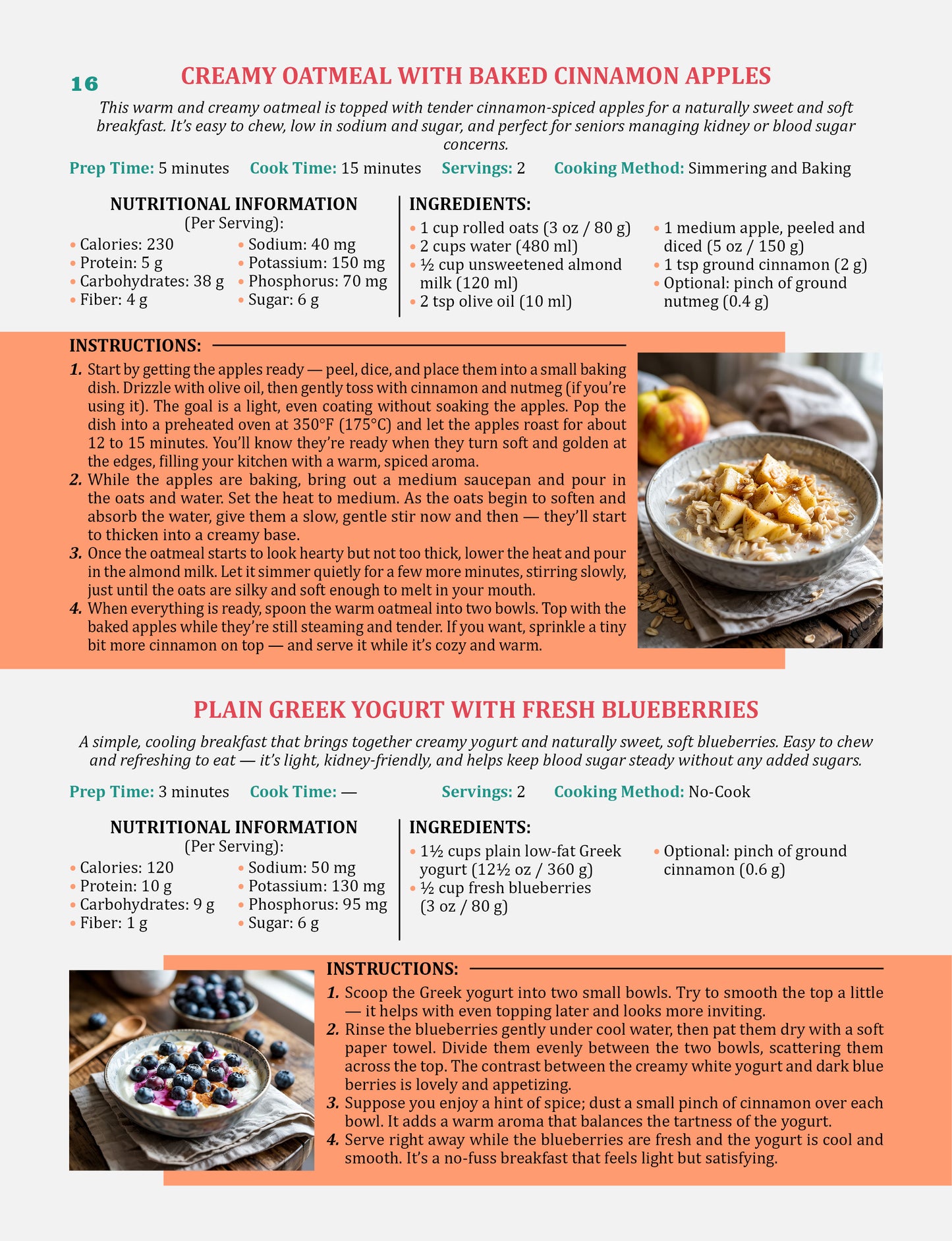
- Section 1: Breakfasts (20 Recipes): Soft and easy starts like Creamy Oatmeal, Egg White Omelets, and Applesauce Pancakes.
- Section 2: Lunches (20 Recipes): Gentle meals including Herb-Roasted Chicken, Cauliflower Mash with Fish, and Creamy Carrot Soup.
- Section 3: Dinners (20 Recipes): Hearty yet safe options like Turkey Meatballs, Zucchini Gratin, and Soft-Baked Chicken Thighs.
- Section 4: Snacks (20 Recipes): Kidney-friendly bites like Rice Cakes with Unsalted Peanut Butter and Cucumber Roll-ups.
- Section 5: Desserts (10 Recipes): Low-sugar treats including Baked Apple with Cinnamon and Peach Mousse.
- Section 6: Drinks & Smoothies (10 Recipes): Hydrating options like Peach Rice Milk Smoothies and Herbal Infusions.
- Section 7: Bonus Recipes (10 Recipes): Celebration dishes for special occasions, from Turkey Loaf to Kidney-Friendly Birthday Cake.
Part 3: 28-Day Meal Plan
- A structured 4-week roadmap (Gentle Start, Balanced Intake, Variety, and Maintenance).
Part 4: Weekly Shopping Lists
- Detailed weekly lists categorized by food group for easier shopping.
Part 5: Bonus Section — Making Life Easier with Age
- Cooking with less energy and kitchen safety tips for seniors.
- Eating well with physical limitations (arthritis-friendly tools).
- How family and caregivers can help with meal prep and support.
Appendices
- Appendix A & B: Potassium and Phosphorus content charts.
- Appendix C: Daily Food Journal Template.
- Appendix E & F: Ingredient Substitution Guide and Glycemic Index Chart for Seniors.
Conclusion
- Long-term health outlook and encouragement for daily practice.
Sample Chapter
Chapter 1: Diabetes and Kidney Disease 101
How Diabetes Impacts Kidney Function
Diabetes is one of the leading causes of chronic kidney disease. When blood sugar levels remain high over time, they can damage the tiny blood vessels in the kidneys. These vessels are essential for filtering waste and excess fluid from the body.
As the blood vessels become damaged, the kidneys can’t work as well. This process may be slow and gradual, and people often don’t notice symptoms until the damage is advanced. Over time, this can lead to a buildup of waste in the blood, swelling in the legs, fatigue, and changes in urination.
Taking care of your blood sugar is one of the most important ways to protect your kidneys. That’s why the diabetic renal diet focuses on keeping glucose stable while also supporting kidney function.
What Is Chronic Kidney Disease (CKD)?
Chronic Kidney Disease, or CKD, means your kidneys are not working as well as they should over a long period. This condition is progressive, meaning it typically worsens gradually.
In CKD, the kidneys may struggle to:
- Remove waste and toxins from your blood
- Control blood pressure
- Keep the right balance of minerals like potassium and phosphorus
- Maintain fluid balance
When these functions are affected, it can lead to serious health problems, especially in seniors. CKD has different stages — from mild to severe — and the earlier it’s managed, the better the outcomes. Many seniors don’t feel symptoms until the later stages. That’s why regular check-ups and healthy habits, including diet, are so important.
The Role of Nutrition in Dual Management
When someone has both diabetes and kidney disease, nutrition becomes a powerful tool. Every bite matters — the wrong foods can strain the kidneys or raise blood sugar, while the right foods can ease pressure on the body and help maintain energy and strength.
A well-designed diabetic renal diet helps you:
- Control blood sugar without spiking insulin
- Limit nutrients that can build up in CKD, such as potassium, sodium, and phosphorus
- Maintain a healthy weight and muscle mass
- Feel fuller and more energized throughout the day
This book is here to make that balance easier. You don’t have to be a nutrition expert or a professional cook. You need simple recipes, clear guidance, and a little encouragement — and that’s precisely what you’ll find in the chapters ahead.
Chapter 2: What to Eat and What to Avoid
Eating with both diabetes and kidney disease requires careful choices. The goal is to protect kidney function while also maintaining safe blood sugar levels. This chapter outlines which foods are best to include and which should be limited or avoided, along with easy-to-follow ingredient tables.
Approved Food Groups
These foods are generally safe and suitable for seniors following a diabetic renal diet. They are low in sodium, potassium, phosphorus, and added sugars, and they support stable energy throughout the day.
Vegetables (low in potassium)
- Cabbage
- Cauliflower
- Zucchini
- Bell peppers
- Green beans
- Lettuce
- Cucumber
- Carrots (small portions)
Fruits (low in sugar and potassium)
- Apples
- Blueberries
- Strawberries
- Grapes
- Fresh peaches
- Pears
See Inside the Book


