


BookLab
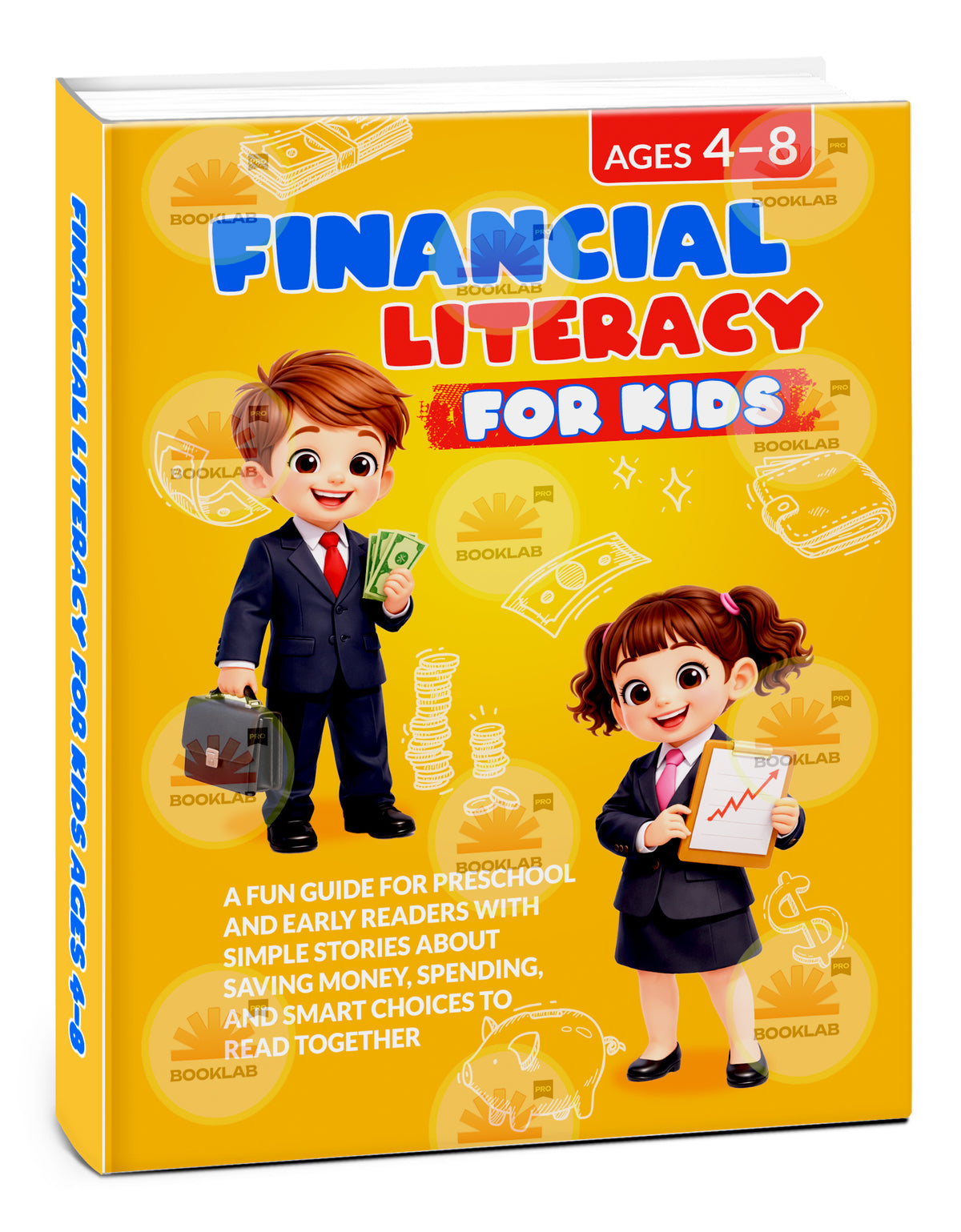
Financial Literacy for Kids Ages 4–8
Financial Literacy for Kids Ages 4–8
SKU:16127827
- Ready to publish on Amazon KDP
- Human-Written Manuscript
Couldn't load pickup availability
Premium Publishing Asset for Amazon Sellers: Financial Literacy for Kids Ages 4–8
A Fun Guide for Preschool and Early Readers with Simple Stories About Saving Money, Spending, and Smart Choices to Read Together
A polished, professionally crafted children’s book — fully finished and ready to publish. This premium asset is designed for Amazon sellers who want to enter the high-demand kids’ education niche without spending months on writing, editing, and structuring a children’s book from scratch. Built for parents, families, and early learners, this title focuses on age-appropriate financial literacy through simple stories and everyday situations.
⭐️ What’s Included:
- ✔️ Maximum 155 pages
- ✔️ Fully parents-friendly quality
- ✔️ Top short stories for kids ages 4-8
- ✔️ Clear guidelines for saving, spending, and smart decision making
- ✔️ Designed for adults and children to learn together
- ✔️ Each chapter has the same tone, structure, and pace
- ✔️ Compatible with Kindle and Paperback
- ✔️ 100% original, plagiarism-checked
📈 It’s a Powerful Communication Tool
You will get a finished book, not a blueprint or idea. The children’s financial education niche is popular on Amazon, and the book is full of non-technical information that parents might need. Great for family time, bedtime, and homeschooling.
💼 This book is ideal for:
- Amazon KDP publishers expanding into children’s education
- Publishers producing consumer books geared towards families
- Educational or parent vendors
- Sellers involved in early childhood education
🚀 Why Is This Book So Good?
- Joyful and uplifting stories for children aged 4 to 8 years
- Financial awareness and daily planning
- Helps in communicating with parents
- Everything is organized and ready to upload immediately
This ready-to-buy children's book is based on Amazon standards and realistic parental expectations.
📚 Add this premium asset to your catalog and publish with confidence.
- Number of pages: 150
- Trim Size Paperback: 8,5*11
- Trim Size Hardcover: 8,25*11
Share
What's Included
-
Manuscript PDF
Complete manuscript in PDF format
-
eBook Format
Ready-to-publish electronic book format
-
Plagiarism Report
Detailed plagiarism check report
-
Book Cover
Covers that sell and visuals that grab attention
-
Book Description
Book description for marketing purposes
-
Book Quality Guide
Guide to reviewing book quality before publishing on Amazon KDP
Book Details
Human-Written Content
This manuscript was written by human authors and reviewed by editors. We do not use AI-generated text for the core book content. Each title is created as an original publishing asset for Amazon KDP sellers who want ready-to-use, professional-quality content.
Outline Overview
Table of Contents
Introduction: Welcome to the World of Money!
- Why Money Matters & How to Use This Book
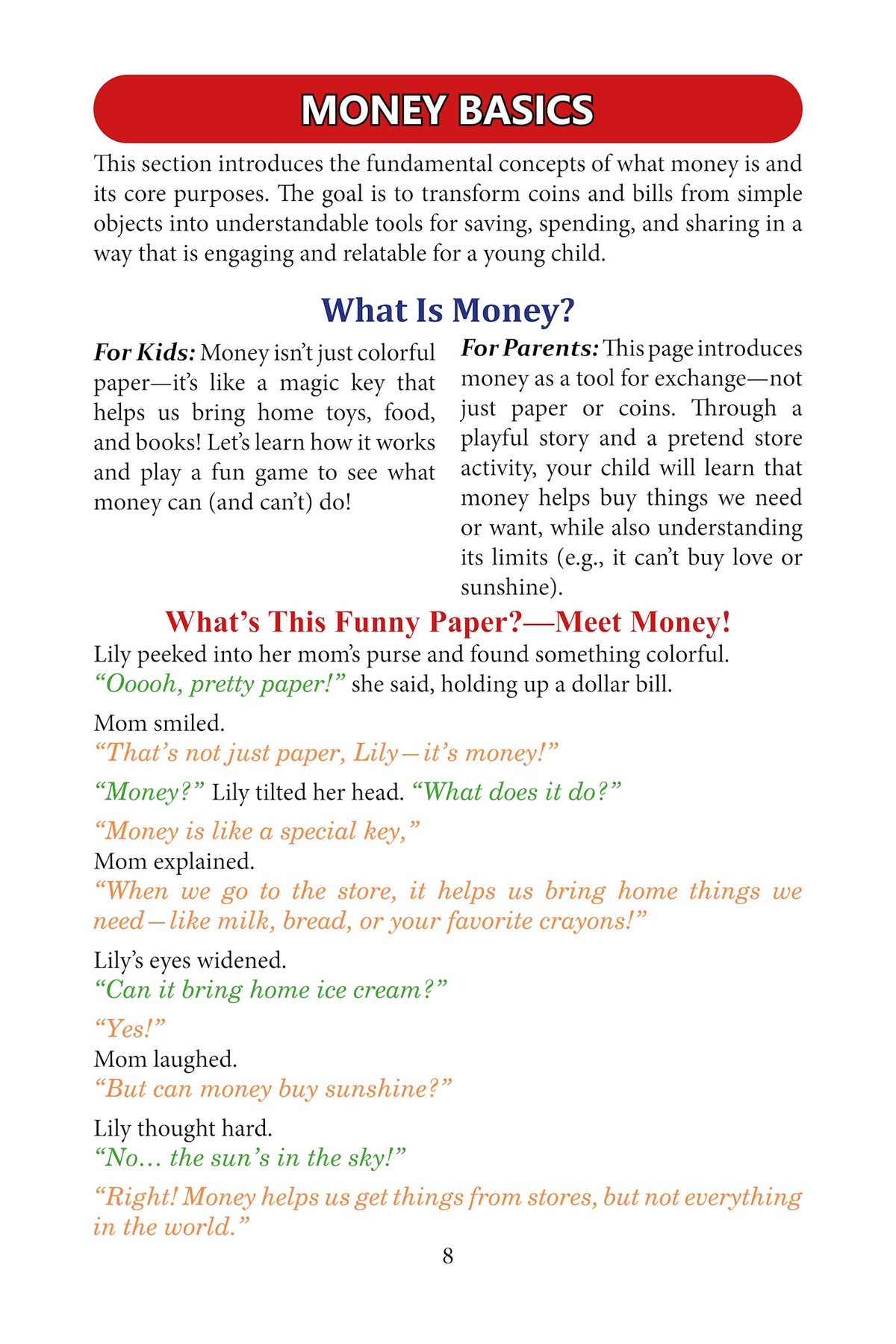
Money Basics
- Understanding coins, bills, and where money comes from.
- Learning that money has value and how to count it.
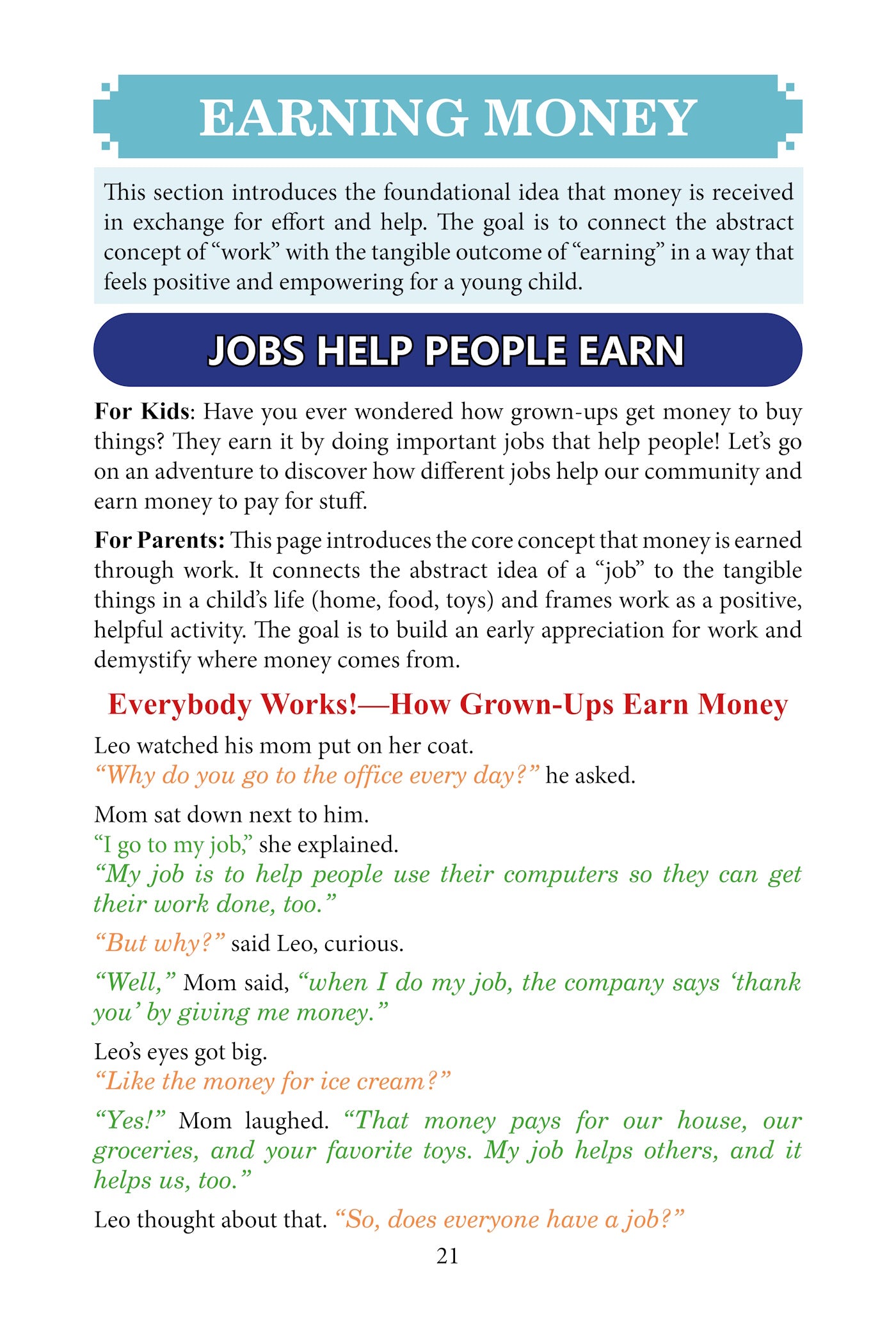
Earning Money
- Discovering how jobs and chores help people earn.
- Lessons on lemonade stands, sharing work, and the difference between gifts and earnings.
Saving Money
- The secrets of the piggy bank and the "Clear Jar Trick."
- Learning patience and saving up for a special toy.
Spending Wisely
- Needs vs. Wants: Learning the most important rule of spending.
- The Shopping List rule and why price tags matter.
Sharing & Giving
- Creating a donation jar and learning about birthday charities.
- Understanding kindness rewards and gifts from the heart.
Smart Choices
- Real-life lessons: The Toy Swap, the borrowing lesson, and the "Think Before You Buy" rule.
Goals & Patience
- Setting big dreams with the Three-Jar System (Save, Spend, Give).
- Using the Growing Garden and Treasure Map techniques to reach goals.
Mistakes & Learning
- Turning "Oops" moments into lessons: Dealing with candy regret, lost allowances, and refunds.
Fun with Money
- Engaging activities: Coin rubbing art, the Supermarket Game, and Rainbow Savings.
Advanced Basics
- First steps into the bigger world: Bank visits, the little investor, and family budget chats.
Conclusion: You’re a Money Superhero!
- Reviewing your journey and looking at what’s next.
Sample Chapter
Money Has Value
For Kids: Have you ever wanted two toys but only had enough money for one? This happens to everyone! Let’s learn how to be a smart shopper by comparing what things cost and making choices that make us happy.
For Parents: This page introduces the concept of relative value and opportunity cost in a simple, relatable way. It teaches children that money is limited and that spending decisions involve comparing wants and making choices based on available resources.
Why Can’t I Have Both? — Learning Value!
Noah clutched his three dollar bills tightly at the store. His eyes darted between a shiny racecar and his favorite fruit chews.
“Can I get both, Mom?” he asked hopefully.
Mom shook her head gently. “Let’s see. The car costs five dollars, and the candy costs one. You’ve got three dollars.”
Noah’s shoulders slumped. “But I want both!”
“I know,” said Mom. “But look—the toy car costs as much as five packs of candy! That’s a lot of candy.”
“Five?” Noah’s eyes got wide. He looked at the small bag of candy, then at the big, shiny car.
“If you choose the candy, it’s gone after you eat it,” Mom said. “But if you save two more dollars at home, you could come back for the car later.”
Noah thought hard. He really loved that car.
“I’ll save for the car, then,” he decided. “And I’ll save my allowance for the candy next time!”
“Great choice!” Mom said. “That’s called being a smart shopper.”
Parent Tip: Explain
- Make Value Tangible: Young children think concretely. Compare prices to things they know and love (e.g., “This toy costs the same as four trips to the gumball machine”). This helps them understand relative value—that different items have different worth.
- Normalize Trade-Offs: Use these moments to gently introduce the idea of opportunity cost: choosing one thing means saying no to another. Frame it not as a loss, but as a conscious decision that empowers them.
Activity: “Price Hunt”
- How to Play: Give your child a small, set amount of play money (e.g., $3). Walk around a real or pretend store and challenge them to find one or more items they can afford without going over budget.
- Possible Scenario: If they pick an item that’s $4, don’t just say “no.” Ask: “Your money says $3. How much more would you need to buy that?” This builds problem-solving skills.
Useful Wording
- “Money is like puzzle pieces—you need the right amount to ‘complete’ a purchase.”
- “Let’s see what we can trade this money for!”
Outcome
This foundational lesson moves beyond identifying money and into its practical application. Your child will begin to:
- Understand that items have different monetary values.
- Practice making deliberate choices based on their available resources.
- Develop early budgeting skills and the ability to weigh options.
- Feel a sense of ownership and pride in their smart decisions.
See Inside the Book


