


BookLab
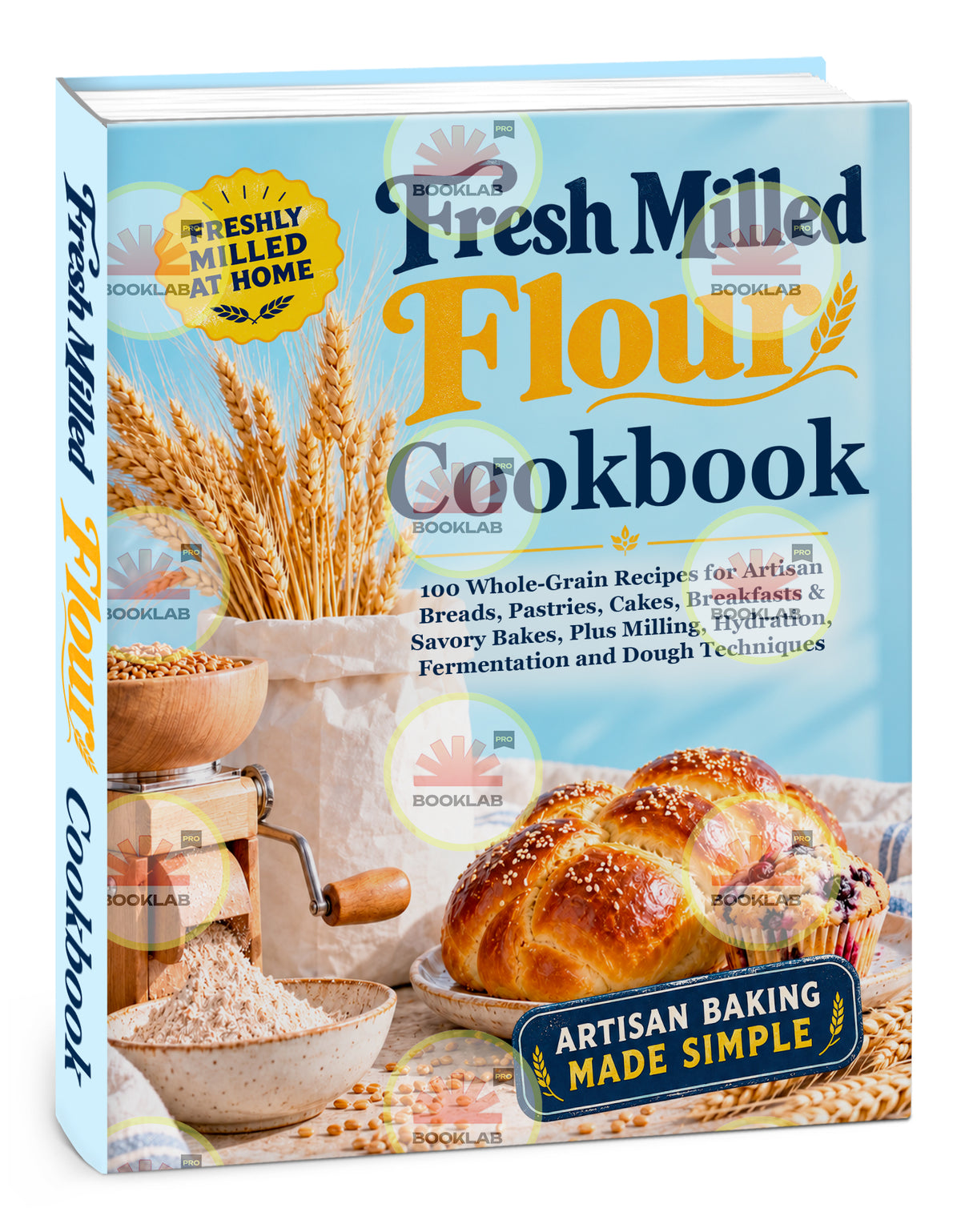
Fresh Milled Flour Cookbook
Fresh Milled Flour Cookbook
SKU:17284517
- Ready to publish on Amazon KDP
- Human-Written Manuscript
Couldn't load pickup availability
Premium Publishing Asset for Amazon Sellers: Fresh Milled Flour Cookbook
A complete, professionally structured 109-page cookbook manuscript featuring 100 whole-grain recipes, practical home-milling guidance, grain selection information, hydration techniques, fermentation principles, and essential dough-preparation methods — fully written, organized, and ready for publishing preparation.
This publishing asset is designed for Amazon sellers, KDP publishers, publishing agencies, and digital entrepreneurs entering or expanding within the fresh-milled flour, whole-grain baking, artisan bread, and homemade baking niches.
The manuscript combines practical baking education with an extensive recipe collection, helping readers understand freshly milled flour while exploring traditional and creative baking techniques.
⭐️ What’s Included
✔️ Complete 109-page cookbook manuscript focused on freshly milled flour and whole-grain baking
✔️ 100 recipes organized into seven baking categories
✔️ Artisan-style breads, rustic loaves, rolls, and flatbreads
✔️ Pastries, croissants, Danish-style treats, and laminated dough creations
✔️ Cookies, bars, brownies, and small baked desserts
✔️ Cakes, tortes, celebration desserts, and sweet bakes
✔️ Breakfast recipes featuring pancakes, waffles, muffins, scones, and quick breads
✔️ Savory recipes including focaccia, pizza crusts, pasta, crackers, and flatbreads
✔️ Globally inspired recipes featuring traditional grains and international baking styles
✔️ Guidance on wheat, spelt, einkorn, emmer, rye, millet, sorghum, teff, and other grains
✔️ Practical information about home milling, equipment selection, flour texture, and extraction rates
✔️ Clear explanations of hydration, autolyse, fermentation, proofing, and gluten development
✔️ Dough-handling guidance covering kneading and stretch-and-fold techniques
✔️ Troubleshooting for dense bread, sticky dough, weak structure, and over-proofing
✔️ Ingredient measurements, preparation times, baking instructions, and estimated nutritional information
✔️ Guidance on storing freshly milled flour and whole grains
✔️ Suitable for Kindle and paperback publishing preparation
📈 Why This Is a Valuable Publishing Asset
This manuscript offers more than a traditional baking recipe collection. It combines 100 whole-grain recipes with practical instruction in fresh milling, flour selection, hydration, fermentation, and dough development.
The seven organized recipe categories provide variety across artisan breads, pastries, cookies, desserts, breakfast dishes, savory baking, and international specialties.
Educational sections explain how different grains influence flavor, texture, water absorption, gluten development, and fermentation, giving readers knowledge they can apply beyond individual recipes.
With its combination of specialized baking techniques, whole-grain education, and diverse recipes, the manuscript provides a strong foundation for developing a content-rich Amazon KDP cookbook in the fresh-milled flour niche.
💼 Ideal For
- KDP publishers expanding their baking and cookbook catalogs
- Publishing agencies seeking complete culinary manuscripts
- Entrepreneurs developing Kindle, paperback, or digital cookbooks
- Sellers entering the whole-grain baking and fresh-milling niches
- Publishers targeting home bakers and artisan bread enthusiasts
🚀 What Makes This Book Special
- 100 recipes across seven distinct baking categories
- Practical fresh-milling education
- Traditional grains, ancient grains, and specialty flours
- Clear explanations of hydration, fermentation, temperature, and dough behavior
- Artisan breads, pastries, cakes, breakfast dishes, and savory recipes
- Practical troubleshooting and dough-adjustment guidance
- International grain-based baking traditions
- Measurements and estimated nutritional information
- Content suitable for beginners and experienced home bakers
- A specialized focus on whole-grain variety, baking skills, and ingredient understanding
Fresh Milled Flour Cookbook is a complete publishing asset for Amazon sellers seeking a specialized cookbook manuscript that combines 100 whole-grain recipes, practical milling knowledge, and essential baking techniques.
- Number of pages: 109
- Trim Size Paperback: 8,5*11
- Trim Size Hardcover: 8,25*11
Share
What's Included
-
Manuscript PDF
Complete manuscript in PDF format
-
eBook Format
Ready-to-publish electronic book format
-
Plagiarism Report
Detailed plagiarism check report
-
Book Cover
Covers that sell and visuals that grab attention
-
Book Description
Book description for marketing purposes
-
Book Quality Guide
Guide to reviewing book quality before publishing on Amazon KDP
Book Details
Human-Written Content
This manuscript was written by human authors and reviewed by editors. We do not use AI-generated text for the core book content. Each title is created as an original publishing asset for Amazon KDP sellers who want ready-to-use, professional-quality content.
Outline Overview
Table of Contents
Introduction: The Living Flour Philosophy
- Understanding freshly milled flour
- Why flour changes after milling
- Selecting whole grains for home baking
- Wheat, spelt, einkorn, emmer, rye, barley, millet, sorghum, teff, and specialty grains
- Choosing and using a home grain mill
- Flour texture and extraction rates
- Storing whole grains and freshly milled flour
- Understanding hydration and water absorption
- Autolyse, fermentation, and proofing
- Gluten development in different grains
- Kneading and stretch-and-fold techniques
- Managing temperature and fermentation time
- Troubleshooting sticky dough, weak structure, dense bread, and over-proofing
Part I: Breads and Rustic Loaves
Chapter 1: Hearth & Rise—Breads That Breathe Life
15 whole-grain bread recipes featuring wheat, einkorn, spelt, Kamut, freekeh, sorghum, teff, barley, rye, millet, emmer, and triticale.
Recipes include:
- Five-Grain Sunrise Hearth Loaf
- Einkorn Ember Crust Boule
- Spelt and Honey Whisper Bread
- Rustic Kamut Valley Loaf
- Freekeh Fire-Roasted Flatbread
- Sorghum Cloud Sandwich Bread
- Teff Midnight Injera Rounds
- Barley Hearthstone Batard
- Rye Shadow Crust Bread
- Millet Golden Crumb Loaf
- Emmer Hearthside Rustic Buns
- Triticale Golden Field Sandwich Loaf
- Barley Maple Hearth Rolls
- Hard Red Wheat Caramel Crust Loaf
- Rye Honey Seed Crisp Loaf
Part II: Pastries and Laminated Doughs
Chapter 2: Layers of Air—Pastries, Laminations, and Delicate Crumbs
13 pastry recipes exploring laminated doughs, enriched bakes, crêpes, rolls, biscuits, and turnovers.
Recipes include:
- Spelt Silk Croissants
- Einkorn Butterfold Danishes
- Kamut Golden Layer Puff Pastry
- Teff Cocoa Dream Rolls
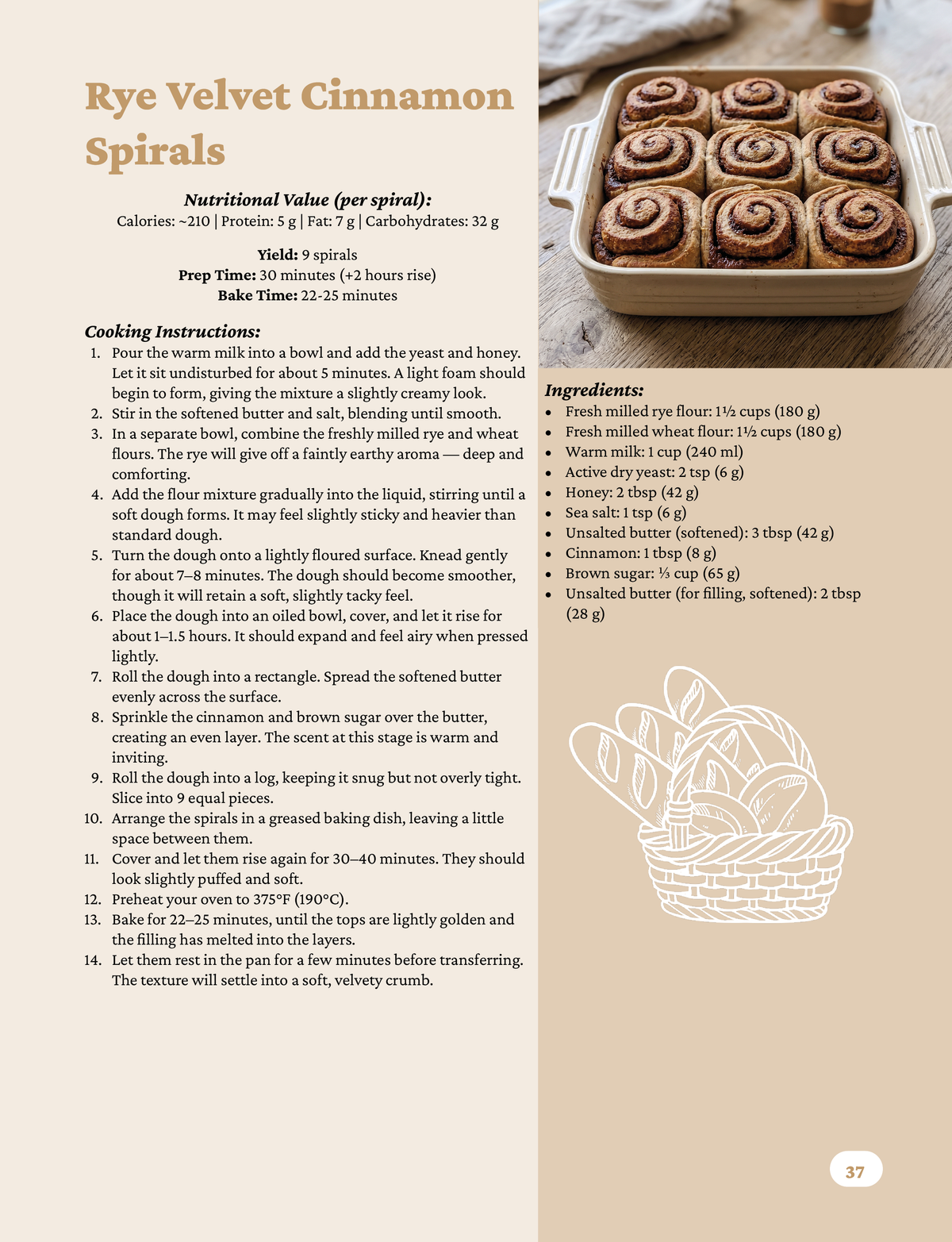
- Rye Velvet Cinnamon Spirals
- Millet Honeycomb Brioche
- Amaranth Cloud Puffs
- Buckwheat Starlight Crêpes
- Sorghum Whisper Turnovers
- Quinoa Lace Mille-Feuille
- Spelt Lavender Evening Biscuits
- Einkorn Cinnamon Orchard Rings
- Kamut Maple Butter Celebration Rolls
Part III: Cookies, Bars, and Small Treats
Chapter 3: The Sweet Fifth—Cookies, Bars, and Small Indulgences
12 recipes featuring ancient grains, whole-grain flours, chocolate, fruit, spices, nuts, and natural sweeteners.
Recipes include:
- Five-Grain Hearth Cookies
- Einkorn Ember Chocolate Discs
- Spelt Maple Dream Biscuits
- Rye Cocoa Night Bites
- Millet Lemon Glow Bars
- Teff Molasses Chews
- Sorghum Spice Snap Cookies
- Amaranth Honey Crunch Clusters
- Buckwheat Velvet Brownie Squares
- Quinoa Caramel Crumble Bars
- Amaranth Cocoa Nut Energy Bars
- Fonio Sweet Coconut Bake Squares
Part IV: Cakes and Celebration Bakes
Chapter 4: Rise & Celebration—Cakes Worth Gathering For
15 cake, torte, cobbler, and sweet-bake recipes made with whole-grain and specialty flours.
Recipes include:
- Five-Grain Celebration Layer Cake
- Einkorn Golden Sun Sponge
- Spelt Orchard Harvest Cake
- Kamut Citrus Glow Bundt
- Teff Midnight Chocolate Torte
- Rye Forest Berry Gateau
- Millet Vanilla Cloud Cake
- Sorghum Silk Pound Cake
- Amaranth Honey Blossom Cake
- Buckwheat Espresso Velvet Cake
- Tigernut Honey Spice Tea Cake
- Soft White Wheat Vanilla Crumb Cake
- Emmer Fig and Walnut Hearth Cake
- Millet Peach Sunrise Cobbler Bake
- Sorghum Apple Cider Snack Cake
Part V: Breakfast and Comfort Baking
Chapter 5: Morning Rituals—Breakfast & Comfort Bakes
16 breakfast recipes covering pancakes, waffles, muffins, scones, crêpes, biscuits, quick breads, and breakfast squares.
Recipes include:
- Five-Grain Sunrise Pancakes
- Einkorn Hearth Waffles
- Spelt Apple Morning Muffins
- Teff Banana Ember Bread
- Rye Walnut Dawn Scones
- Millet Honey Rise Muffins
- Sorghum Golden Breakfast Biscuits
- Amaranth Berry Crumble Bake
- Buckwheat Sunrise Crêpe Stack
- Quinoa Morning Glow Loaf
- Green Banana Earth Blend Muffins
- Teff Orange Spice Morning Squares
- Quinoa Lemon Seed Tea Bread
- Oat Flour Soft Hearth Pancake Bread
- Triticale Rustic Breakfast Biscuits
- Blue Corn Berry Festival Muffins
Part VI: Savory Baking and Everyday Staples
Chapter 6: Earth & Table—Savory Dishes & Everyday Staples
16 savory recipes featuring pasta, flatbreads, focaccia, crackers, pizza crusts, noodles, rolls, galettes, and savory loaves.
Recipes include:
- Five-Grain Rustic Pasta Sheets
- Einkorn Herb Flatbread Wraps
- Spelt Garden Focaccia Bloom
- Rye Caraway Hearth Crackers
- Millet Savory Hand Pies
- Teff Spiced Grain Dumplings
- Sorghum Golden Pizza Crust
- Amaranth Herb Crispbreads
- Buckwheat Rustic Noodles
- Quinoa Savory Tart Shell
- Chickpea Savory Garden Crackers
- Cassava Soft Glow Dinner Rolls
- Lentil Herb Rustic Flatcakes
- Barley Herb Garden Pizza Base
- Buckwheat Savory Onion Galette
- Chickpea Olive Oil Savory Loaf
Part VII: International Grain Traditions
Chapter 7: Global Grain Journeys—Traditions Reimagined
13 globally inspired recipes based on traditional grains and international baking styles.
Recipes include:
- Ethiopian Teff Sunrise Injera Feast
- Italian Einkorn Heritage Pasta
- French Spelt Country Galette
- Indian Millet Festival Flatbreads
- Middle Eastern Freekeh Fire Bread
- Scandinavian Rye Hearth Crispbread
- Mexican Blue Corn Soul Tortillas
- Japanese Buckwheat Zen Soba
- West African Fonio Golden Cakes
- Andean Quinoa Sun Bakes
- Fonio Light Cloud Flatbread
- Blue Corn Sunset Skillet Bread
- Cornmeal Golden Skillet Cakes
Conclusion: The Fifth Element—Flour, Life, and Continuity
- Reflecting on the value of milling grain at home
- Developing confidence with different whole grains
- Applying hydration and fermentation principles
- Learning to adjust dough by sight and feel
- Preserving traditional baking methods
- Experimenting with grain combinations
- Continuing the fresh-milled flour baking journey
Sample Chapter
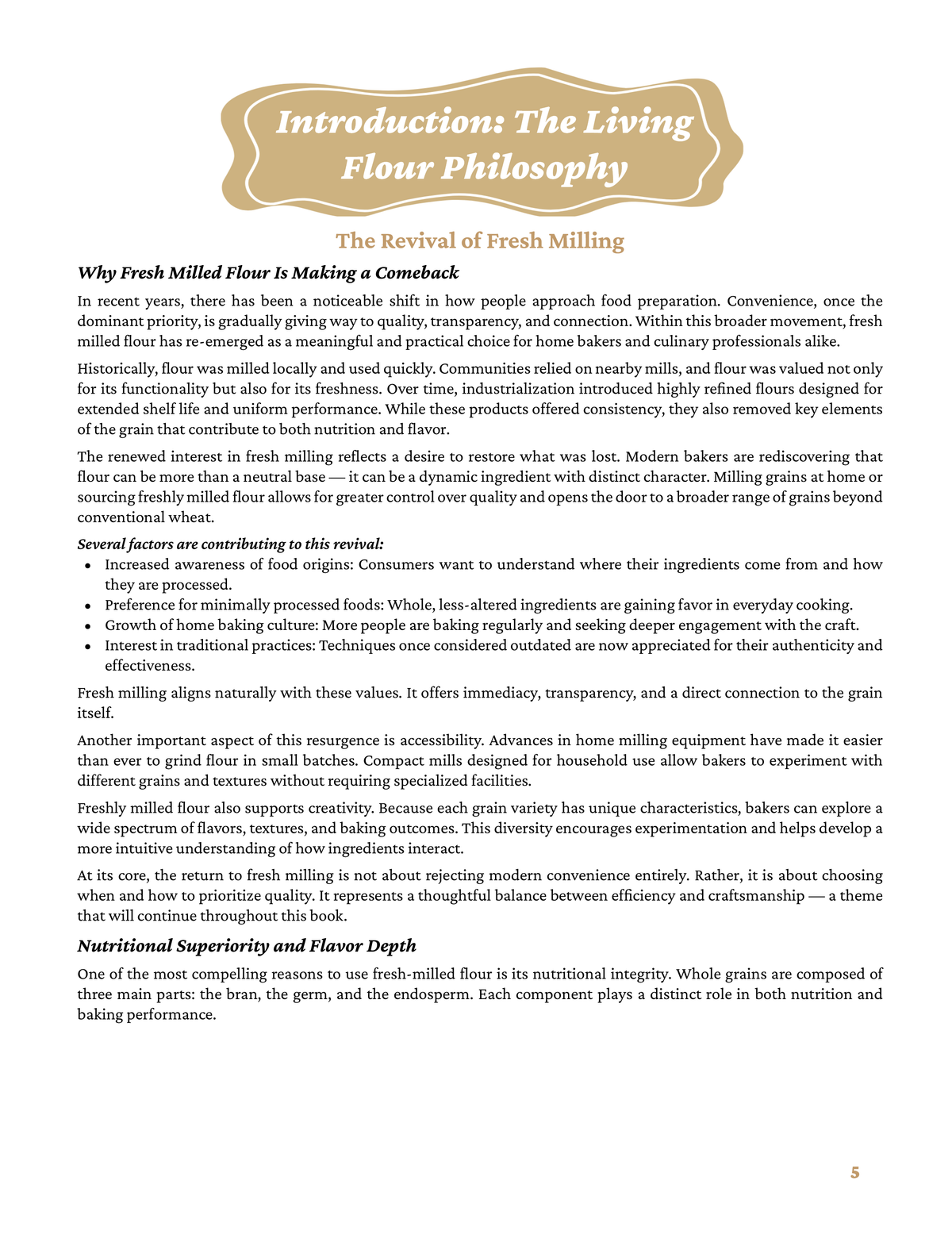
Introduction: The Living Flour Philosophy
The Revival of Fresh Milling
Why Fresh Milled Flour Is Making a Comeback
In recent years, there has been a noticeable shift in how people approach food preparation. Convenience, once the dominant priority, is gradually giving way to quality, transparency, and connection. Within this broader movement, fresh milled flour has re-emerged as a meaningful and practical choice for home bakers and culinary professionals alike.
Historically, flour was milled locally and used quickly. Communities relied on nearby mills, and flour was valued not only for its functionality but also for its freshness. Over time, industrialization introduced highly refined flours designed for extended shelf life and uniform performance. While these products offered consistency, they also removed key elements of the grain that contribute to both nutrition and flavor.
The renewed interest in fresh milling reflects a desire to restore what was lost. Modern bakers are rediscovering that flour can be more than a neutral base — it can be a dynamic ingredient with distinct character. Milling grains at home or sourcing freshly milled flour allows for greater control over quality and opens the door to a broader range of grains beyond conventional wheat.
Several factors are contributing to this revival:
- Increased awareness of food origins: Consumers want to understand where their ingredients come from and how they are processed.
- Preference for minimally processed foods: Whole, less-altered ingredients are gaining favor in everyday cooking.
- Growth of home baking culture: More people are baking regularly and seeking deeper engagement with the craft.
- Interest in traditional practices: Techniques once considered outdated are now appreciated for their authenticity and effectiveness.
Fresh milling aligns naturally with these values. It offers immediacy, transparency, and a direct connection to the grain itself.
Another important aspect of this resurgence is accessibility. Advances in home milling equipment have made it easier than ever to grind flour in small batches. Compact mills designed for household use allow bakers to experiment with different grains and textures without requiring specialized facilities.
Freshly milled flour also supports creativity. Because each grain variety has unique characteristics, bakers can explore a wide spectrum of flavors, textures, and baking outcomes. This diversity encourages experimentation and helps develop a more intuitive understanding of how ingredients interact.
At its core, the return to fresh milling is not about rejecting modern convenience entirely. Rather, it is about choosing when and how to prioritize quality. It represents a thoughtful balance between efficiency and craftsmanship — a theme that will continue throughout this book.
Nutritional Superiority and Flavor Depth
One of the most compelling reasons to use fresh-milled flour is its nutritional integrity. Whole grains are composed of three main parts: the bran, the germ, and the endosperm. Each component plays a distinct role in both nutrition and baking performance.
Structure of the Grain Kernel
Component
Description
Nutritional Contribution
In commercially refined flour, the bran and germ are removed to improve shelf stability and create a lighter texture. However, this process significantly reduces the flour’s nutritional value. Freshly milled flour retains all three parts of the grain, preserving its full nutritional profile.
The presence of the germ is particularly important. It contains natural oils that contribute to both flavor and nutrient density. These oils begin to oxidize shortly after milling, which is why freshly ground flour is best used soon after preparation.
Key Nutritional Advantages of Fresh Milled Flour
- Higher fiber content: Fiber is commonly associated with digestive health and satiety as part of a balanced diet.
- Greater vitamin retention: Especially B vitamins, which are sensitive to processing.
- Improved mineral availability: Including iron, magnesium, and zinc.
- Natural fats preserved: Contributing to both nutrition and taste.
Beyond its measurable nutrients, fresh-milled flour also offers enhanced sensory qualities. Flavor is one of the most immediate and noticeable differences. Unlike refined flour, which is intentionally neutral, fresh flour carries the distinct character of the grain.
For example:
- Wheat can present warm, nutty tones.
- Spelt often has a slightly sweet and earthy profile.
- Rye introduces depth and mild tanginess.
- Millet offers a gentle sweetness with a soft finish.
These flavors are subtle but meaningful. They add complexity to baked goods without requiring additional ingredients.
Flavor Development in Fresh Flour
Factor
Impact on Flavor
Because fresh flour retains its natural components, it interacts differently during baking. The presence of bran and germ can influence hydration, fermentation, and structure, all of which contribute to the final flavor and texture.
Another important consideration is how fresh-milled flour supports balanced eating. The combination of fiber, protein, and natural fats helps create more satisfying baked goods. This can lead to a more mindful approach to portioning and consumption.
In practical terms, using fresh milled flour does not require sacrificing enjoyment for nutrition. Instead, it enhances both simultaneously. The result is food that feels both nourishing and deeply satisfying.
The “Fifth Element”: Vitality in Whole Grains
While nutrition and flavor can be measured and described, another quality in fresh milled flour is less tangible but equally significant. This quality can be understood as vitality — the sense that the ingredient is active, responsive, and connected to its source.
In many cultural traditions, the number five symbolizes completeness and balance. It often represents the integration of physical elements with something more subtle — an animating force that brings everything together. In the context of fresh-milled flour, this idea can be expressed as the “fifth element.”
The first four elements of baking are easy to identify: ingredients, technique, time, and environment. The fifth element is what gives these components cohesion. It is the difference between simply following a recipe and creating something that feels alive.
Fresh milled flour contributes this vitality in several ways:
- Immediate use after grinding: Preserves the grain’s natural energy and responsiveness.
- Active enzymatic processes: Influence fermentation and dough development.
- Connection to whole ingredients: Encourages awareness of origin and quality.
When working with fresh flour, bakers often notice that dough behaves differently. It may feel more elastic, more aromatic, or more responsive to handling. These qualities are not accidental — they are the result of intact grain components interacting in real time.
See Inside the Book


