


BookLab
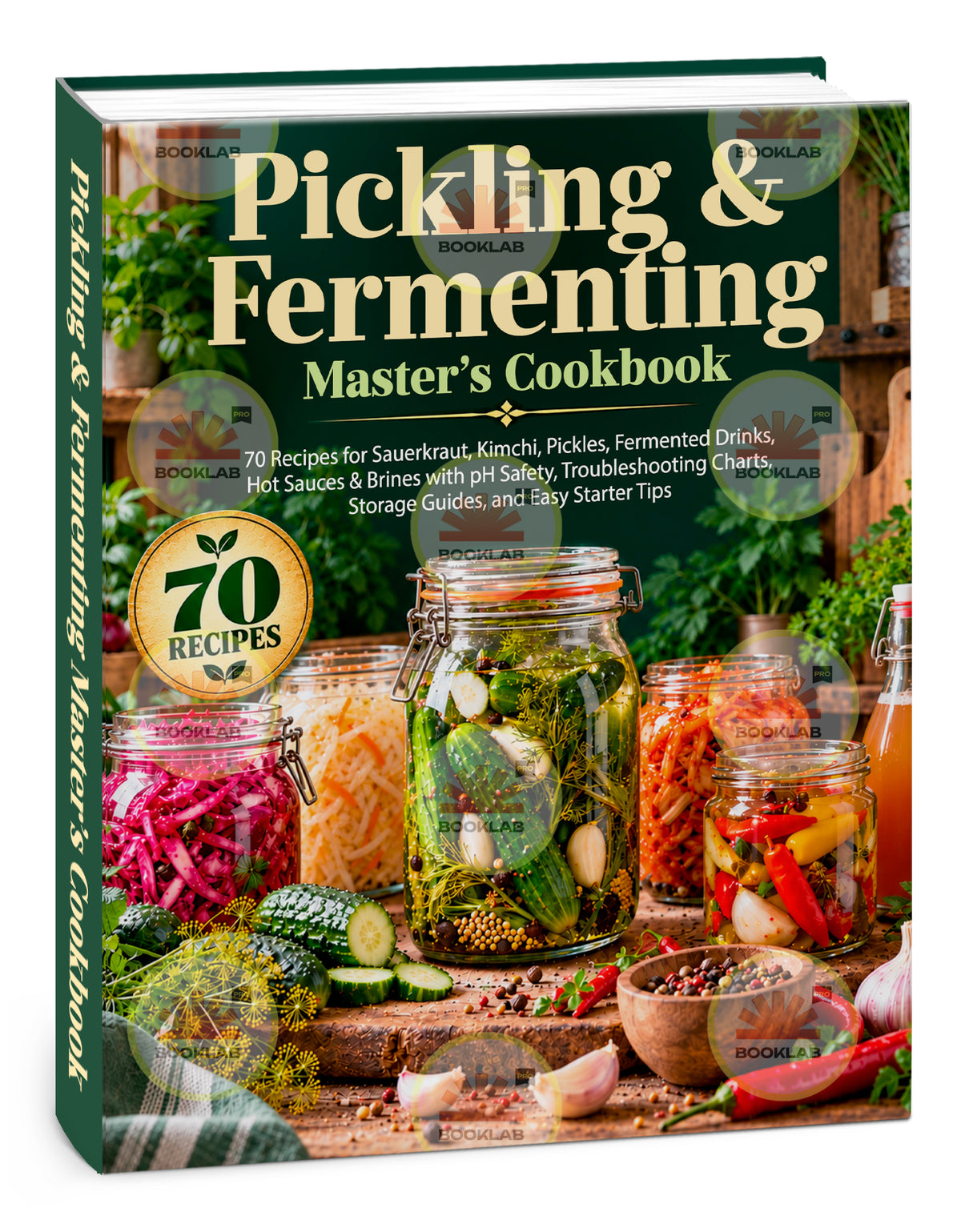
Pickling & Fermenting Master’s Cookbook
Pickling & Fermenting Master’s Cookbook
SKU:17144862
- Ready to publish on Amazon KDP
- Human-Written Manuscript
Couldn't load pickup availability
Premium Publishing Asset for Amazon Sellers: Pickling & Fermenting Master’s Cookbook
A polished, professionally structured cookbook manuscript — created for publishers who want to enter the high-demand pickling, fermentation, and homemade pantry niche with a strong, practical product.
This asset is designed for Amazon sellers, KDP publishers, content agencies, and online entrepreneurs who want a complete fermentation cookbook without spending weeks developing recipes, organizing safety guidance, or building technical reference sections from scratch. The book combines classic recipes, global fermentation traditions, beginner-friendly explanations, and practical troubleshooting tools in one publishable manuscript.
⭐️ What’s Included:
✔️ 70 pickling and fermentation recipes
✔️ Classic sauerkraut, kimchi, fermented pickles, root vegetable ferments, pepper ferments, hot sauces, pastes, relishes, and probiotic drinks
✔️ Step-by-step instructions for every recipe
✔️ Fermentation notes, storage notes, serving suggestions, and nutritional information
✔️ Safety guidance covering pH, salt percentages, mold vs. yeast, temperature, timing, and troubleshooting
✔️ Brine percentage guidance for 2%, 3%, 5%, and 10% brines
✔️ International recipes inspired by Korean, Japanese, European, Slavic, Latin, Mexican, Mediterranean, and Middle Eastern traditions
✔️ Helpful appendices with brine tables, pH charts, temperature timelines, spice references, jar sizes, equipment charts, conversions, and shelf-life guidance
✔️ Suitable for Kindle, paperback, and digital product formatting after final branding and layout
📈 Why Is This an Asset Worth Over $1000?
You’re getting a complete cookbook concept in an evergreen, high-interest niche that continues to attract readers interested in homemade food preservation, probiotic-style drinks, pantry staples, kitchen skills, and traditional cooking methods. Instead of a simple recipe collection, this book offers a structured learning experience — from fermentation basics and brine mastery to advanced troubleshooting, storage, and creative recipe applications.
The manuscript gives buyers practical value through detailed recipes, clear safety explanations, and useful reference charts. It is especially strong for sellers targeting readers who want to make sauerkraut, kimchi, pickles, fermented vegetables, kombucha, tepache, hot sauces, and flavorful brines at home.
💼 Ideal For:
• KDP publisher’s catalog expansion
• Publishing agencies
• Cookbook sellers entering the pickling and fermentation niche
• Entrepreneurs selling digital or print-ready publishing assets
• Sellers focused on food preservation, homesteading, pantry cooking, and traditional kitchen skills
🚀 What Makes This Book Special:
• A clear, professional structure from beginner foundations to master-level techniques
• 70 practical recipes covering vegetables, drinks, sauces, pastes, relishes, and global pickling traditions
• Strong educational value with pH guidance, brine ratios, safety tips, and troubleshooting support
• Complete recipe formatting with prep time, fermentation or pickling time, ingredients, instructions, notes, storage, serving ideas, and nutrition
• Multiple appendix sections that make the book feel complete, useful, and reference-friendly
• A versatile niche with strong appeal for home cooks, food preservers, fermentation beginners, and pantry-building enthusiasts
This is not just a recipe manuscript — it is a complete publishing asset built around a practical, evergreen cookbook topic with strong buyer interest and broad Amazon market potential.
- Number of pages: 93
- Trim Size Paperback: 8,5*11
- Trim Size Hardcover: 8,25*11
Share
What's Included
-
Manuscript PDF
Complete manuscript in PDF format
-
eBook Format
Ready-to-publish electronic book format
-
Plagiarism Report
Detailed plagiarism check report
-
Book Cover
Covers that sell and visuals that grab attention
-
Book Description
Book description for marketing purposes
-
Book Quality Guide
Guide to reviewing book quality before publishing on Amazon KDP
Book Details
Human-Written Content
This manuscript was written by human authors and reviewed by editors. We do not use AI-generated text for the core book content. Each title is created as an original publishing asset for Amazon KDP sellers who want ready-to-use, professional-quality content.
Outline Overview
Table of Contents
Introduction
- Welcome to the world of pickling and fermentation
- How to use this book
- Differences between fermentation, vinegar pickling, and refrigerator pickling
- Essential safety principles
- What beginners should expect from their first batch
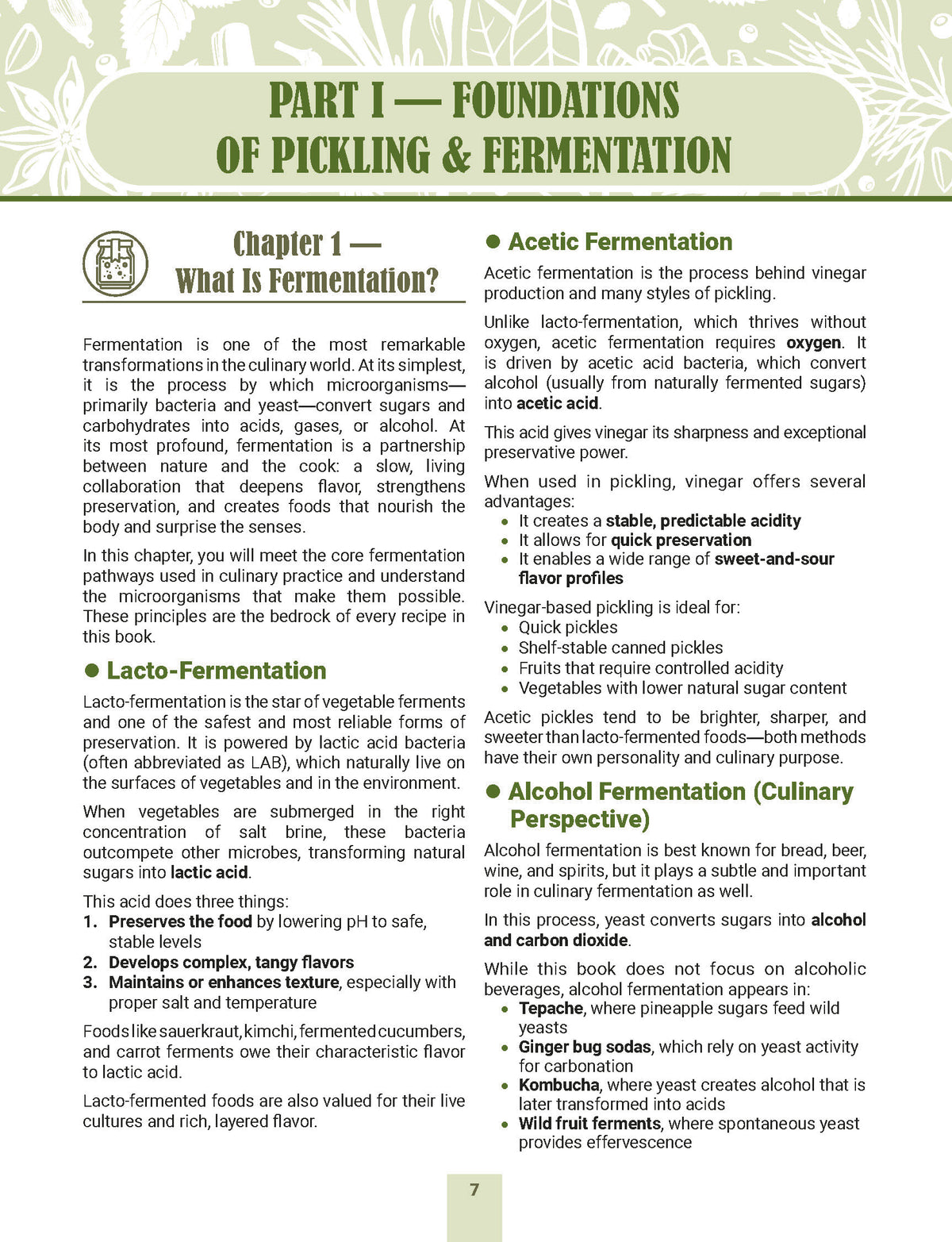
Part I — Foundations of Pickling & Fermentation
Chapter 1 — What Is Fermentation?
- The science behind fermentation
- Beneficial microorganisms
- Lacto-fermentation basics
- How fermentation changes flavor, texture, and shelf life
Chapter 2 — Understanding Pickling
- Fermented vs. vinegar-based pickles
- Quick refrigerator pickles
- Shelf-stable pickling
- Choosing the right method
Chapter 3 — Tools, Equipment & Workspace
- Essential and optional equipment
- Choosing jars, lids, and fermentation weights
- Preparing and sanitizing the workspace
- Preventing contamination
Chapter 4 — Safety, pH & Troubleshooting Essentials
- Understanding acidity and pH
- Safe fermentation conditions
- Mold vs. kahm yeast
- Warning signs and when to discard a batch
- Basic troubleshooting
Chapter 5 — Ingredients & Their Functions
- Vegetables and fruits
- Salt, water, vinegar, and sweeteners
- Herbs and spices
- Tannin-rich ingredients for crispness
- Selecting quality produce
Chapter 6 — Mastering Brines
- Calculating salt percentages
- Preparing 2%, 3%, 5%, and 10% brines
- Matching brine strength to ingredients
- Adjusting brines for different fermentation methods
Part II — Classic Vegetable Ferments
20 Recipes
Chapter 7 — Cabbage Ferments
- Classic and flavored sauerkraut
- Mild and spicy kimchi
Chapter 8 — Pickled & Fermented Cucumbers
- Garlic-dill pickles
- Spicy pickle spears
- Quick bread-and-butter pickles
- Persian and whole-cucumber ferments
Chapter 9 — Root Vegetable Ferments
- Carrots, beets, daikon, and mixed root vegetables
- Ginger, turmeric, citrus, and chili flavor combinations
Chapter 10 — Pepper Ferments
- Jalapeños and sweet peppers
- Chili mash
- Roasted pepper ferments
- Herb-flavored pepper strips
Part III — International Pickling & Fermentation Traditions
20 Recipes
Chapter 11 — Korean Classics
- Kkakdugi
- Oi sobagi
- Water kimchi
- Spicy fermented radishes
Chapter 12 — Japanese Pickles & Ferments
- Nukazuke
- Shiso cucumber pickles
- Fermented garlic paste
- Takuan-style daikon
Chapter 13 — European & Slavic Ferments
- Fermented garlic
- Green tomatoes
- Spiced mushrooms
- Beet kvass
- Carrot and horseradish slaw
Chapter 14 — Latin & Mexican Pickles & Ferments
- Mexican escabeche
- Carrot and jalapeño ferment
- Pineapple tepache
- Fermented mango salsa
Chapter 15 — Mediterranean & Middle Eastern Ferments
- Preserved lemons
- Harissa-style chili paste
- Fermented tomato relish
Part IV — Master Pickling Guide
15 Recipes
Chapter 16 — Vinegar Pickles: Quick & Shelf-Stable
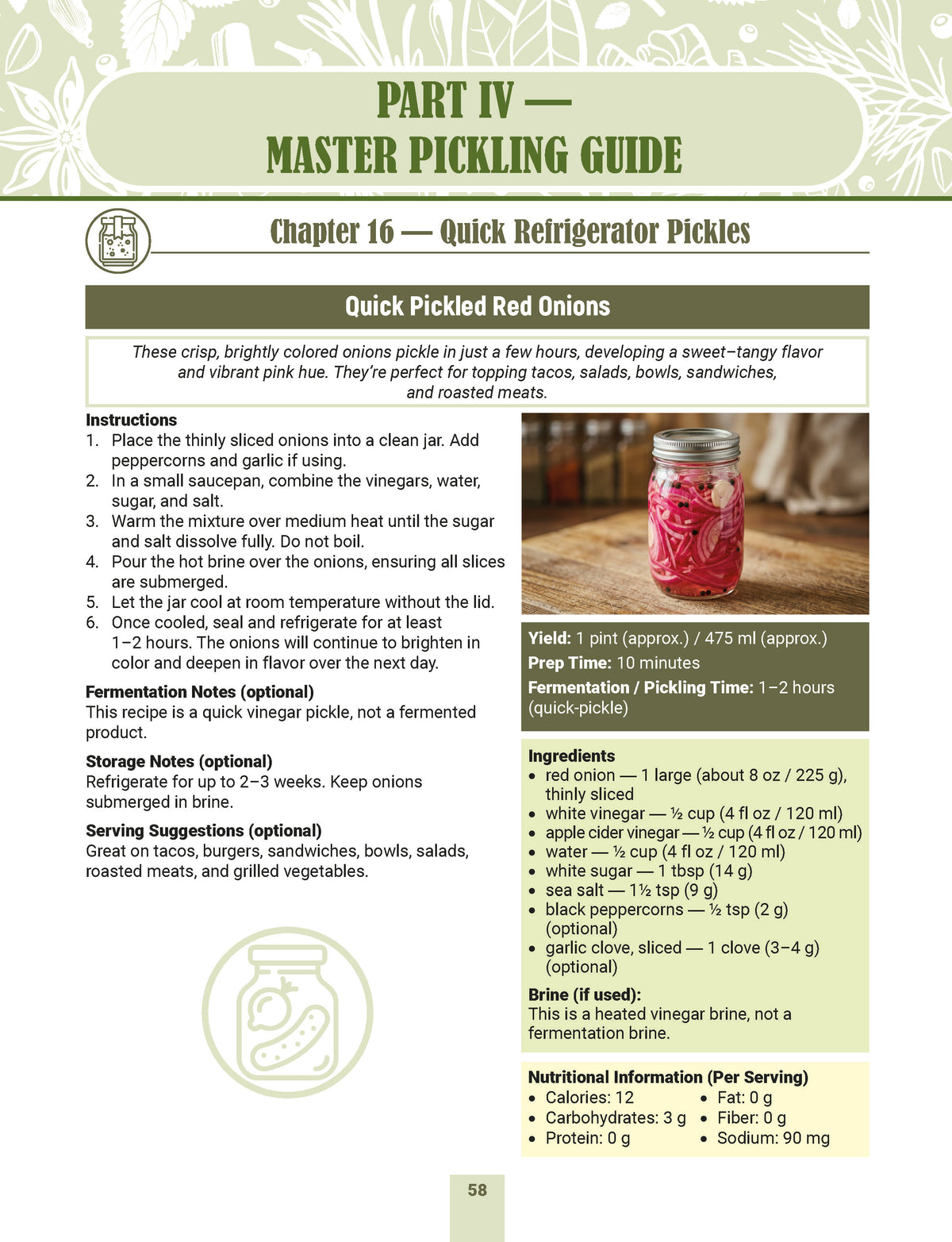
- Red onions
- Radishes
- Beets
- Cauliflower
- Sweet carrots
Chapter 17 — Flavor-Forward Pickles
- Grapes with rosemary
- Apples with cinnamon
- Watermelon rind
- Pearl onions
- Garlic scapes
Chapter 18 — Texture Engineering
- Extra-crisp cucumbers
- Firm green beans
- Okra without sliminess
- Asparagus spears
- Baby corn
Part V — Fermented Drinks & Starters
10 Recipes
Chapter 19 — Probiotic-Style Drinks & Fermented Infusions
- Wild-fermented garlic honey
- Carrot-ginger tonic
- Apple-cinnamon drink
- Herbal lemon water
- Berry cooler
Chapter 20 — Cultured Sodas & Kombucha
- Ginger bug starter
- Strawberry fermented soda
- Citrus-honey soda
- Classic kombucha
- Green tea jun
Part VI — Fermented Sauces, Pastes & Condiments
5 Recipes
Chapter 21 — Hot Sauces
- Classic red chili sauce
- Jalapeño verde sauce
- Habanero mango sauce
Chapter 22 — Pastes & Relishes
- Fermented garlic and ginger paste
- Lacto-fermented tomato-chili salsa
Part VII — Master Techniques & Applications
Chapter 23 — Precision Fermentation
- Monitoring pH
- Mapping temperature
- Controlling fermentation time
- Aging ferments for deeper flavor
Chapter 24 — Advanced Troubleshooting
- Soft or unpleasant textures
- Off-odors
- Cloudy brine
- Surface growth
- Stalled fermentation
- When to restart or discard a batch
Chapter 25 — Cooking with Ferments
- Adding fermented vegetables to everyday meals
- Using fermented sauces in marinades and dressings
- Pairing pickles with different dishes
- Building a versatile fermentation pantry
Appendices
Appendix A — Brine Percentage Tables
- Brine calculations
- Salt-percentage tables
- Choosing the correct brine
- Salt types
- Quick-reference guide
Appendix B — pH Reference Charts
- Safe pH ranges
- Typical values for vegetables, fruits, sauces, drinks, and vinegar pickles
- Baseline pH values
- Quick safety summary
Appendix C — Temperature & Timelines Guide
- Fermentation temperature zones
- Seasonal adjustments
- Processing temperatures
- Fermentation timelines
- Precision-control tips
Appendix D — Spice Reference
- How spices behave in brine
- Essential spice categories
- Flavor combinations
- Tannin sources
- Recommended quantities
Appendix E — Jar Sizes, Weights & Equipment
- Jar-size chart
- Fermentation-weight guide
- Equipment comparison
- Lid types
- Brine-volume estimates
- Equipment care
Appendix F — Metric & U.S. Conversion Tables
- Volume and weight conversions
- Temperature conversions
- Ingredient conversions
- Jar capacities
- Quick calculation guide
Appendix G — Storage & Shelf-Life Guide
- Storage principles
- Shelf life by fermentation category
- Quality loss vs. spoilage
- Signs that food must be discarded
- Long-term storage practices
- Quick-reference chart
Conclusion — Your Journey Continues
- Developing confidence through practice
- Experimenting safely with flavors
- Building a personalized fermentation routine
- Continuing from beginner techniques to advanced fermentation mastery
Sample Chapter
Classic German Sauerkraut
This traditional German-style sauerkraut has a bright, tangy flavor and a crisp, refreshing bite. As it ferments, the cabbage softens slightly while developing deep lactic acidity and a clean, classic aroma.
Yield: 1 quart (approx.) / 950 ml (approx.)
Prep Time: 20 minutes
Fermentation / Pickling Time: 7–21 days
Ingredients
- green cabbage — 2 lb (900 g)
- sea salt — 0.7 oz (20 g), about a 2% salt ratio
- caraway seeds (optional) — 1 tsp (3 g)
Brine (if used):
Not needed; this is a dry-salted ferment. Natural cabbage juices create the brine once massaged.
Instructions
- Remove the tough outer leaves from the cabbage and set one clean leaf aside for later. Slice the cabbage into thin, even shreds.
- Place the shredded cabbage in a large bowl, sprinkle the sea salt over it, and massage firmly until it softens and releases enough liquid to form its own brine.
- Add the caraway seeds if using, letting their aroma gently weave through the cabbage.
- Pack the cabbage tightly into a fermentation jar or crock, pressing it down so the natural brine rises above the surface. Leave 1–2 inches (2.5–5 cm) of headspace.
- Cover the top with the reserved cabbage leaf and place a weight on top to keep everything fully submerged.
- Close the jar with an airlock or a loosely fitted lid and let it ferment at 65–72°F (18–22°C).
- Over the next few days, watch for healthy signs such as bubbling, cloudiness, a rising brine level, and a clean, tangy aroma. Begin tasting around day 5.
- Once it develops the acidity you enjoy—mild at 7 days, sharper after 2–3 weeks—transfer the sauerkraut to the refrigerator to slow fermentation.
Fermentation Notes (optional)
- Ideal temperature: 65–72°F (18–22°C)
- Healthy signs: bubbles, cloudy brine, tangy smell, slight fizz on the tongue
- Submersion tip: pack cabbage firmly; add extra brine only if absolutely necessary
- Warning signs: mold, sliminess, foul odor
Storage Notes (optional)
Refrigerate for up to 6 months. Always keep cabbage fully submerged in its brine.
Serving Suggestions (optional)
Pairs beautifully with roasted meats, potatoes, sausages, sandwiches, or folded into warm grain dishes.
Nutritional Information (Per Serving)
- Calories: 22
- Carbohydrates: 5 g
- Protein: 1 g
- Fat: 0 g
- Fiber: 3 g
- Sodium: 210 mg
Garlic & Juniper Sauerkraut
This aromatic sauerkraut blends the sharp warmth of fresh garlic with the piney, resinous notes of juniper berries. The result is a bright, complex ferment with depth, crunch, and a clean, invigorating aroma as it ages.
Yield: 1 quart (approx.) / 950 ml (approx.)
Prep Time: 20 minutes
Fermentation / Pickling Time: 10–21 days
Ingredients
- green cabbage — 2 lb (900 g)
- sea salt — 0.7 oz (20 g), about a 2% salt ratio
- garlic cloves, sliced — 3 cloves (9–12 g)
- juniper berries, lightly crushed — 1 tbsp (6 g)
Brine (if used):
Not needed; this is a dry-salted ferment. Natural cabbage juices create the brine during massaging.
Instructions
- Remove the tough outer leaves of the cabbage and reserve one clean leaf. Slice the cabbage into thin, even shreds.
- Place the cabbage in a large bowl and sprinkle the salt over it. Massage thoroughly until the shreds soften and release enough liquid to form their own brine.
- Add the sliced garlic and crushed juniper berries, mixing them through the cabbage so their aromas spread evenly.
- Pack the mixture firmly into a fermentation jar or crock, pressing down until the natural brine rises above the cabbage. Leave 1–2 inches (2.5–5 cm) of headspace.
- Place the reserved cabbage leaf on top and add a fermentation weight to keep everything submerged beneath the brine.
- Close the jar with an airlock or a loose lid and leave it to ferment at 65–72°F (18–22°C).
- Watch for bubbling, a piney-garlic aroma, and the brine turning slightly cloudy—normal signs of active fermentation. Begin tasting around day 7–10.
- Once the kraut develops the flavor you enjoy—bright, tangy, and gently aromatic—move it to the refrigerator to slow fermentation.
Fermentation Notes (optional)
- Ideal temperature: 65–72°F (18–22°C)
- Healthy signs: bubbles, cloudy brine, lifted aroma from garlic and juniper
- Submersion tip: pack firmly; add extra brine only if needed to cover
- Warning signs: mold, slimy texture, unpleasant odor
Storage Notes (optional)
Refrigerate for up to 6 months. Keep cabbage fully submerged in its brine.
Serving Suggestions (optional)
Excellent alongside roasted poultry, hearty stews, grilled sausages, or mixed into warm potato dishes for a fragrant lift.
Nutritional Information (Per Serving)
- Calories: 24
- Carbohydrates: 5 g
- Protein: 1 g
- Fat: 0 g
- Fiber: 3 g
- Sodium: 210 mg
See Inside the Book


