


BookLab
The Asian Kitchen Cookbook for Beginners
The Asian Kitchen Cookbook for Beginners
SKU:17537150
- Ready to publish on Amazon KDP
- Human-Written Manuscript
Couldn't load pickup availability
Premium Publishing Asset for Amazon Sellers: The Asian Kitchen Cookbook for Beginners
A complete, professionally structured 113-page Asian cookbook manuscript featuring recipes inspired by Chinese, Japanese, Korean, Thai, Vietnamese, Malaysian, and Singaporean cuisines, essential wok techniques, rice and noodle preparation guides, homemade sauces, ingredient substitutions, nutritional information, and regional cooking traditions — fully written, organized, and ready for publishing preparation.
This publishing asset is designed for Amazon sellers entering or expanding within the Asian cooking, international cuisine, wok cooking, Asian street food, beginner cookbook, and regional culinary tradition niches.
Created for home cooks interested in exploring Asian flavors, the manuscript combines approachable cooking instructions, regional culinary inspiration, foundational techniques, practical pantry guidance, and a diverse selection of everyday dishes and specialty recipes.
⭐️ What’s Included:
✔️ Complete 113-page cookbook manuscript focused on Asian cooking for beginners
✔️ 100 recipes inspired by culinary traditions across East and Southeast Asia
✔️ Regional recipe chapters covering Jiangnan, Sichuan, Cantonese, Korean, Japanese, Thai, Vietnamese, Malaysian, and Singaporean cuisines
✔️ Dedicated collections featuring Asian street food, desserts, traditional sweets, and celebration dishes
✔️ Essential wok cooking guidance covering heat control, stir-frying, wok seasoning, and equipment care
✔️ Practical knife skills, ingredient preparation techniques, steaming methods, and cooking temperature guidance
✔️ Instructions for preparing jasmine rice, sticky rice, sushi rice, and different varieties of noodles
✔️ Foundational guides to homemade broths, chili oil, garlic oil, scallion oil, and dumpling wrappers
✔️ Master sauce guide featuring sweet soy glaze, ginger-scallion sauce, Sichuan mala sauce, peanut satay sauce, and other Asian flavor combinations
✔️ Three-level pantry difficulty scale based on ingredient accessibility and preparation requirements
✔️ Practical substitutions for specialty ingredients, including fish sauce, Shaoxing wine, galangal, tamarind paste, and Thai basil
✔️ Step-by-step cooking instructions with preparation times, cooking times, servings, and ingredient measurements
✔️ Detailed nutritional estimates per serving, including calories, protein, fat, carbohydrates, saturated fat, sodium, potassium, sugars, fiber, and cholesterol
✔️ Allergen information and ingredient accessibility notes accompanying recipes
✔️ Regional introductions explaining culinary traditions, flavor profiles, and characteristic cooking techniques
✔️ Recipes featuring meat, poultry, seafood, tofu, vegetables, rice, noodles, dumplings, and desserts
✔️ Suitable for Kindle and paperback publishing preparation
📈 Why This Is a Valuable Publishing Asset
You’re getting a complete, professionally organized cookbook manuscript — not a basic collection of stir-fry recipes or a short introduction to Asian cuisine.
The Asian cooking niche connects several popular culinary interests: international recipes, wok cooking, homemade noodles, flavorful sauces, regional specialties, and street food.
Readers exploring Asian cooking often seek practical explanations of unfamiliar ingredients, approachable techniques, and clear instructions for recreating favorite dishes at home.
This manuscript addresses these interests through a structured combination of foundational cooking education, regional culinary context, and diverse recipes.
The regional chapters introduce readers to the delicate flavors of Jiangnan cuisine, bold Sichuan seasonings, Cantonese cooking traditions, Korean fermented ingredients, Japanese umami-focused dishes, fragrant Thai curries, Vietnamese broths, and Malaysian and Singaporean specialties.
Additional chapters featuring street food favorites and Asian-inspired desserts expand the manuscript’s variety beyond traditional main courses.
The three-level pantry difficulty system and ingredient substitution guidance help make the content accessible to readers with different levels of cooking experience and ingredient availability.
Detailed nutritional information, allergen notes, and step-by-step preparation instructions add practical value for home cooks looking to explore new cuisines with greater confidence.
💼 Ideal For:
• KDP publishers expanding their Asian cuisine and international cookbook catalogs
• Publishing agencies seeking a complete, professionally structured culinary manuscript
• Entrepreneurs developing Kindle, paperback, or digital cookbook products
• Sellers entering the wok cooking, Asian street food, or beginner international cooking niches
• Publishers targeting adventurous home cooks and readers interested in regional Asian cuisines
• Amazon sellers seeking recipe collections supported by practical cooking education and ingredient guides
🚀 What Makes This Book Special:
• Features 100 recipes inspired by multiple Asian culinary traditions
• Covers Chinese regional cuisines alongside Japanese, Korean, Thai, Vietnamese, Malaysian, and Singaporean cooking
• Combines recipes with essential wok skills and foundational kitchen techniques
• Explains rice preparation, noodle cooking, homemade sauces, and flavor balancing
• Includes a three-level pantry difficulty scale for ingredient accessibility
• Provides practical substitutions for harder-to-find Asian ingredients
• Features regional introductions that add culinary context and cultural inspiration
• Covers traditional dishes, modern interpretations, street food, and sweet treats
• Includes detailed nutritional estimates and recipe-specific allergen information
• Offers accessible cooking instructions for beginners while introducing more adventurous recipes
• Emphasizes variety, practical cooking skills, and flavor exploration
This is a complete publishing asset designed for Amazon sellers seeking a content-rich manuscript in the Asian cuisine, international cooking, and beginner culinary education niches.
With its 100 recipes, regional cooking chapters, essential wok techniques, rice and noodle guides, homemade sauces, ingredient substitutions, pantry difficulty system, and nutritional information, The Asian Kitchen Cookbook for Beginners provides a strong foundation for developing a professional Amazon KDP cookbook that combines diverse Asian-inspired recipes with practical cooking education.
- Number of pages: 113
- Trim Size Paperback: 8,5*11
- Trim Size Hardcover: 8,25*11
Share

What's Included
-
Manuscript PDF
Complete manuscript in PDF format
-
eBook Format
Ready-to-publish electronic book format
-
Plagiarism Report
Detailed plagiarism check report
-
Book Cover
Covers that sell and visuals that grab attention
-
Book Description
Book description for marketing purposes
-
Book Quality Guide
Guide to reviewing book quality before publishing on Amazon KDP
Book Details
Human-Written Content
This manuscript was written by human authors and reviewed by editors. We do not use AI-generated text for the core book content. Each title is created as an original publishing asset for Amazon KDP sellers who want ready-to-use, professional-quality content.
Outline Overview
Table of Contents
Introduction: Entering the Asian Kitchen
- How to use the cookbook
- Understanding the philosophy of Asian-inspired cooking
- Balancing flavor, texture, aroma, and color
- Exploring yin and yang on the plate
- Understanding the five elements of flavor
- Selecting accessible pantry ingredients
- Using the three-level pantry difficulty system
- Making practical ingredient substitutions
- Reading nutritional estimates and allergen notes
- Developing confidence with unfamiliar recipes
Part I: Essential Asian Cooking Foundations
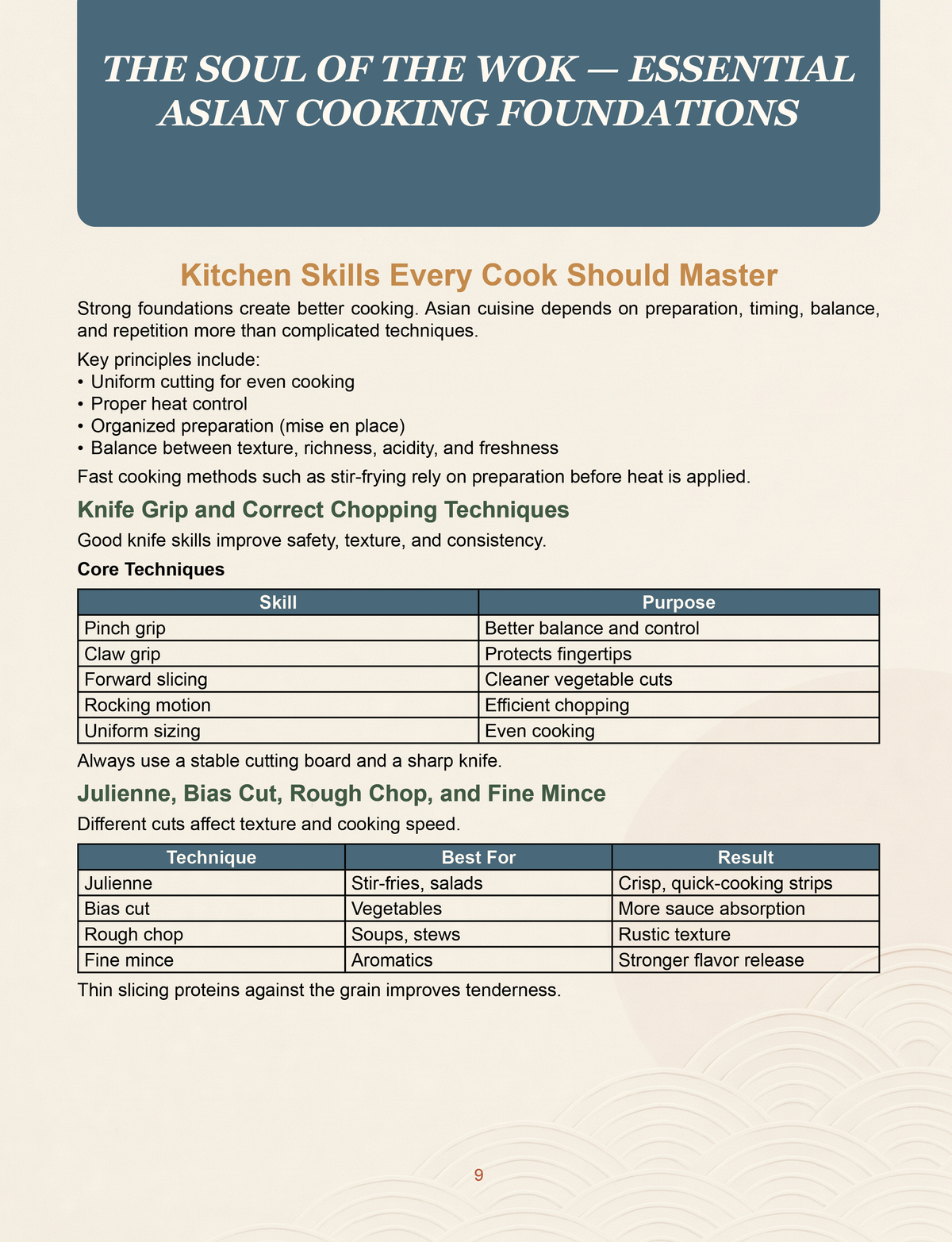
Chapter 1: Kitchen Skills Every Cook Should Master
- Safe knife grip and chopping techniques
- Julienne, bias cut, rough chop, and fine mince
- Preparing ingredients before cooking
- Controlling cooking temperatures
- Organizing an efficient cooking station
Chapter 2: Mastering the Wok
- Choosing an appropriate wok
- Understanding wok hei
- Preheating and controlling heat
- Stir-frying without overcrowding
- Selecting suitable cooking oils
- Seasoning and caring for a wok
Chapter 3: Steaming, Rice, and Noodles
- Steaming with baskets and covered pans
- Cooking jasmine rice
- Preparing sticky rice
- Seasoning sushi rice
- Preparing rice, wheat, egg, and glass noodles
- Preventing noodles from clumping or overcooking
Chapter 4: Building Flavor from Scratch
- Creating balanced broths
- Making homemade chili oil
- Preparing garlic and scallion oils
- Making dumpling wrappers
- Balancing salty, sweet, sour, spicy, bitter, and umami flavors
Chapter 5: Master Sauces and Ingredient Substitutions
- Sweet Soy Glaze
- Ginger-Scallion Sauce
- Sichuan Mala Sauce
- Peanut Satay Sauce
- Everyday stir-fry sauce combinations
- Alternatives for fish sauce, Shaoxing wine, galangal, tamarind paste, and Thai basil
Part II: Regional Recipes
Chapter 6: Silk Roads and River Kitchens—Jiangnan-Inspired Cuisine
Delicate dishes featuring rice, seafood, tofu, greens, mild aromatics, and gently balanced sauces.
Recipes include:
- Lotus Mist River Rice
- Sweet Soy Braised River Carp
- Velvet Tofu with Chrysanthemum Greens
- Tea-Smoked Plum Duck
- Silk Lantern Shrimp Dumplings
- Ginger Blossom Noodle Soup
- Osmanthus Honey Rice Cakes
- Moonlit Bamboo Shoot Stir-Fry
- Jade Garden Bok Choy
- Black Vinegar Pearl Meatballs
Chapter 7: Flames of the Mountain Province—Sichuan-Inspired Cooking
Bold dishes featuring chiles, Sichuan peppercorns, fermented sauces, sesame, and aromatic oils.
Recipes include:
- Ember Pepper Chicken
- Thunderclap Dan Dan Noodles
- Crimson Lantern Mapo Tofu
- Dry-Fried Green Beans with Garlic Sparks
- Chongqing Firecracker Shrimp
- Smoked Chili Beef Wok Toss
- Mala Mushroom Hot Pot
- Red Oil Wontons
- Peppercorn Crispy Eggplant
- Golden Sesame Sweet Potatoes
Chapter 8: Pearl River Banquets—Cantonese-Inspired Comfort and Craft
Steamed, roasted, and wok-cooked dishes inspired by dim sum, seafood, noodles, and Cantonese comfort food.
Recipes include:
- Cloud Harbor Shrimp Har Gow
- Silk Road Char Siu Pork
- Golden Egg Custard Buns
- Ginger Scallion Steamed Fish
- Pearl Market Rice Noodles
- Crispy Honey Walnut Prawns
- Canton Moon Roast Chicken
- Snowy Coconut Taro Soup
- Lotus Leaf Sticky Rice Parcels
- Midnight Soy Chow Mein
Chapter 9: Temples of Fermentation—Korean-Inspired Kitchen Traditions
Flavorful recipes featuring kimchi, gochujang, sesame, rice, noodles, tofu, and grilled proteins.
Recipes include:
- Seoul Midnight Bibimbap
- Fire Bowl Kimchi Fried Rice
- Honey Garlic Bulgogi Skewers
- Snowstorm Japchae Noodles
- Iron Pot Army Stew
- Crispy Kimchi Pancakes
- Sesame Tofu Banchan Trio
- Gochujang Glazed Salmon
- Winter Radish Soup
- Korean Street Corn Cheese Toast
Chapter 10: Islands of Umami—Japanese-Inspired Harmony and Precision
Balanced recipes featuring dashi, miso, soy sauce, noodles, seafood, rice, and delicate seasonings.
Recipes include:
- Kyoto Garden Miso Soup
- Tokyo Alley Yakitori
- Sakura Miso-Dashi Glazed Eggplant
- Crispy Tempura Vegetable Clouds
- Midnight Ramen with Black Garlic Oil
- Matcha Salt Edamame
- Teriyaki Citrus Salmon Bowls
- Mountain Forest Soba Salad
- Flame-Seared Tuna Tataki
- Cherry Blossom Mochi Cakes
Chapter 11: Street Fires and Coconut Dreams—Thai-Inspired Kitchen Adventures
Sweet, sour, salty, and spicy dishes featuring coconut milk, curry, tamarind, lemongrass, herbs, and chiles.
Recipes include:
- Bangkok Basil Flame Chicken
- Tamarind River Pad Thai
- Coconut Lime Jungle Soup
- Golden Curry Pumpkin Noodles
- Chili Mango Sticky Rice
- Lemongrass Night Market Skewers
- Sweet Heat Pineapple Fried Rice
- Green Curry Tofu Garden
- Crispy Chili Fish Cakes
- Palm Sugar Banana Roti
Chapter 12: Perfume Roads of Vietnam—Herbs, Broths, and Freshness
Fresh and aromatic recipes featuring rice noodles, broths, herbs, lemongrass, fish, pork, tofu, and rice paper.
Recipes include:
- Saigon Sunrise Pho Bò
- Charcoal Lemongrass Pork Bowls
- Tamarind Clay Pot Fish
- Rice Paper Garden Rolls
- Five-Spice Crispy Tofu Bites
- Vietnamese Beef Noodle Stew
- Green Papaya Market Salad
- Coconut Coffee Ice Dessert
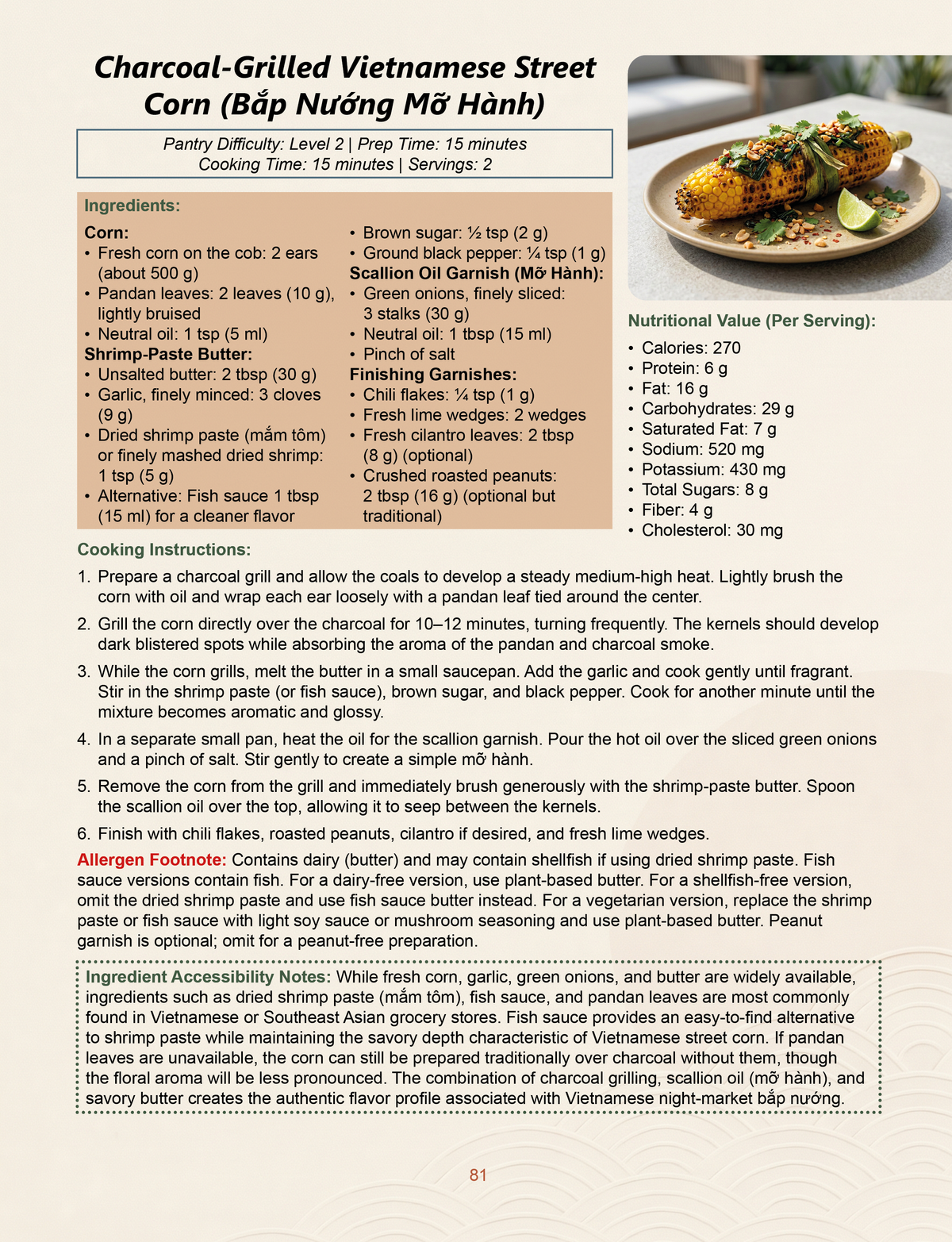
- Charcoal-Grilled Vietnamese Street Corn
- Mekong Caramel Shrimp
Chapter 13: Spice Caravan Kitchens—Malaysian- and Singaporean-Inspired Tables
Fusion dishes featuring coconut milk, sambal, curry leaves, noodles, rice, seafood, tofu, and aromatic spices.
Recipes include:
- Coconut Ember Laksa
- Hawker Stall Hainanese Chicken Rice
- Charred Chili Sambal Eggplant
- Turmeric Leaf Grilled Fish
- Black Pepper Crab Skillet
- Pandan Coconut Pancakes
- Five-Spice Tofu Claypot
- Curry Leaf Noodle Stir-Fry
- Mango Chili Glass Noodle Salad
- Star Anise Beef Rendang
Part III: Sweets, Celebrations, and Street Food
Chapter 14: Lantern Festivals and Sweet Endings
Asian-inspired desserts, teas, buns, cookies, fruit preparations, and celebration treats.
Recipes include:
- Red Bean Moon Lantern Buns
- Jasmine Coconut Snow Custard
- Black Sesame Velvet Soup
- Honey Ginger Pear Tea
- Matcha Rice Flour Cookies
- Mango Sago Celebration Cups
- Asian-Inspired Sticky Date Custard
- Lychee Rose Ice Granita
- Sweet Taro Coconut Dumplings
- Five-Spice Poached Plums
Chapter 15: Midnight Markets and Hidden Alleys—Street Food Favorites
Shareable snacks and handheld dishes inspired by night markets, hawker stalls, and street-food traditions.
Recipes include:
- Iron Skillet Scallion Pancakes
- Chili Garlic Street Noodles
- Smoky Satay Peanut Skewers
- Crispy Curry Potato Puffs
- Asian-Style Crispy Cauliflower
- Soy-Glazed Rice Ball Skewers
- Lantern Alley Fried Dumplings
- Spicy Tamarind Popcorn Chicken
- Vietnamese-Inspired Rice Paper Snack
- Wok-Blistered Sesame Corn Cups
Conclusion: The Endless Table
- Applying foundational techniques to new recipes
- Balancing sauces and seasonings confidently
- Adapting dishes to available ingredients
- Exploring additional regional cuisines
- Developing wok, rice, noodle, and steaming skills
- Creating complete Asian-inspired meals at home
- Continuing to learn about regional culinary traditions
Sample Chapter
Dedication
For the cooks, vendors, families, and travelers who keep culinary traditions alive through shared meals, patience, and hospitality.
This cookbook honors the everyday kitchens, crowded markets, and quiet family tables.
How to Use This Cookbook
This cookbook introduces readers to regional Asian cooking through approachable recipes, essential techniques, and cultural inspiration. Recipes are designed for both beginners and experienced home cooks, with flexible substitutions and practical guidance throughout.
The chapters move through diverse culinary traditions, including Jiangnan, Sichuan, Cantonese, Korean, Japanese, Thai, Vietnamese, Malaysian, and Singaporean cuisines. Each section includes a short regional introduction.
These recipes are designed to encourage confidence, curiosity, and enjoyment in the kitchen.
Nutritional Disclaimer:
All calorie and nutrition calculations in this book are estimates only.
The calorie content and nutritional values of the same ingredient can vary significantly depending on the brand and manufacturer. Even everyday items like cooking oils, dairy products, sauces, or packaged goods often show noticeably different numbers on their labels from one brand to the next.
Because of this, the actual calories in a finished dish may differ from what’s listed in the recipe by 15–20% or more.
It is recommended to always check the nutrition label on the specific products being used. This book is meant to be a source of culinary ideas and inspiration — not a precise calorie-counting guide.
Pantry Difficulty Scale
This cookbook uses a simple pantry scale to help readers understand ingredient accessibility.
Level
Description
Level 1
Everyday supermarket ingredients
Level 2
Expanded Asian pantry ingredients
Level 3
Specialty ingredients and advanced preparation
Level 1: Everyday Accessible
These recipes use ingredients commonly found in most grocery stores: soy sauce, garlic, rice, ginger, eggs, carrots, green onions. These recipes are ideal for beginners.
Level 2: Expanded Asian Pantry
These recipes may include ingredients such as gochujang, fish sauce, rice vinegar, curry paste, rice noodles, and sesame oil. Most items can be found at Asian grocery stores or online.
Level 3: Specialty Exploration
Advanced recipes may include Sichuan peppercorns, galangal, fresh pandan, black vinegar, fermented bean paste, and specialty mushrooms. These recipes encourage culinary exploration while still offering substitution guidance.
Simple Ingredient Swaps
One of the biggest concerns for home cooks exploring Asian cuisine is ingredient availability. Some readers may not live near large international grocery stores. Others may cook in small towns where specialty ingredients are harder to locate.
This cookbook is designed with flexibility in mind. Whenever possible, practical substitutions are included to help readers maintain flavor balance without feeling overwhelmed.
Hard-to-Find Ingredient
Suggested Substitute
Fish sauce
Soy sauce with lime juice
Shaoxing wine
Dry sherry or vegetable broth
Galangal
Ginger with lime zest
Thai basil
Basil with mint
Tamarind paste
Lime juice with brown sugar
Palm sugar
Brown sugar or honey
Makrut lime leaves
Lime zest with basil
Cooking should feel welcoming, flexible, and adaptable to your kitchen.
The Philosophy of the Asian Kitchen
Asian cooking often centers around balance — balancing flavor, texture, aroma, color, and temperature within a single meal.
A spicy dish may be softened with coconut milk. Crispy foods are often paired with fresh herbs or pickled vegetables. Rich broths may be brightened with citrus or greens.
Across many traditions, cooking is guided not only by technique, but by harmony and contrast. Understanding these ideas helps cooks move beyond strict measurements and begin cooking more intuitively.
Yin and Yang on the Plate
The philosophy of Yin and Yang appears throughout many Asian culinary traditions. Meals feel more satisfying when contrasting elements complement one another.
Examples of balance include:
- Spicy noodles paired with cooling cucumber salad
- Crispy foods served with delicate broths
- Rich meats balanced by pickled vegetables
- Fresh herbs added to savory soups and curries
Texture also plays an important role. Crunchy vegetables, silky tofu, crisp toppings, and tender noodles create meals that feel layered and complete.
Balanced cooking is less about rules and more about creating harmony on the plate.
Five Elements of Flavor
Many Asian food traditions connect ingredients symbolically to the natural elements.
Element
Associated Ingredients & Flavors
Wood
Herbs, greens, sour flavors
Fire
Chilies, roasting, spice
Earth
Rice, mushrooms, root vegetables
Metal
Ginger, radish, aromatic broths
Water
Seafood, soups, soy-based broths
A single dish may combine several elements at once, creating depth, contrast, and balance.
A Bowl of Memory
Some of the most memorable meals are surprisingly simple.
A steaming bowl of noodles shared in a crowded market. The aroma of garlic and broth drifting through rainy streets. Vendors cooking with practiced rhythm while strangers gather shoulder to shoulder around small tables.
These experiences remind us that great food is often built from patience, repetition, and care rather than complexity.
This cookbook was inspired by those moments — street stalls, family kitchens, tea houses, and shared tables where recipes evolve across generations.
The recipes throughout these pages are not intended to define a single version of Asian cuisine. Instead, they offer an invitation:
To explore unfamiliar flavors.
To cook boldly.
To gather people around the table.
Because food is more than nourishment.
It is memory, storytelling, and connection.
See Inside the Book


