


BookLab
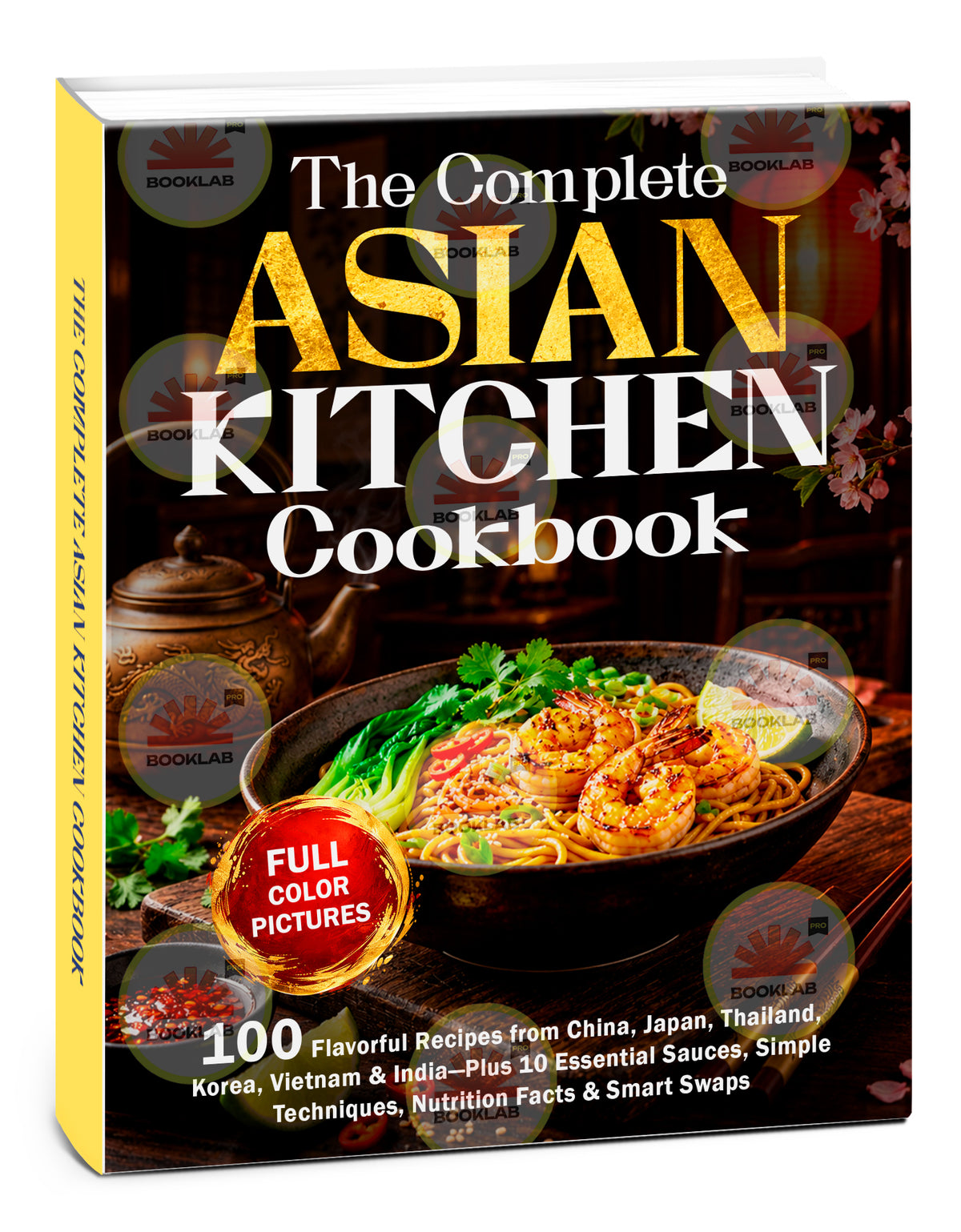
The Complete Asian Kitchen Cookbook
The Complete Asian Kitchen Cookbook
SKU:17516075
- Ready to publish on Amazon KDP
- Human-Written Manuscript
Couldn't load pickup availability
Premium Publishing Asset for Amazon Sellers: The Complete Asian Kitchen Cookbook
A polished, professionally structured culinary manuscript—fully written, organized, and ready for publishing preparation.
This asset is designed for Amazon sellers entering the Asian cooking and international cuisine niche. It brings together iconic recipes from six major Asian culinary traditions in one practical and accessible collection.
Created with clear instructions, approachable techniques, and a strong focus on home cooking, this book offers a valuable publishing asset for sellers looking to expand their KDP catalog with a flavorful cookbook covering Chinese, Japanese, Thai, Korean, Vietnamese, and Indian cuisine.
⭐️ What’s Included:
✔️ Complete cookbook manuscript featuring 100 Asian-inspired recipes
✔️ Dedicated sections for China, Japan, Thailand, South Korea, Vietnam, and India
✔️ Popular dishes including Wonton Soup, Kung Pao Chicken, Tonkotsu Ramen, Teriyaki Salmon, Pad Thai, Green Curry, Bulgogi, Pho Bo, Butter Chicken, and Lamb Biryani
✔️ Soups, noodles, rice dishes, curries, stir-fries, dumplings, grilled dishes, appetizers, desserts, and drinks
✔️ Clear difficulty ratings for easier recipe selection
✔️ Heat-level indicators for mild, medium, spicy, and extra-hot dishes
✔️ Practical guidance on stir-frying, steaming, simmering, braising, frying, grilling, and preparing noodles, rice, and dumplings
✔️ Nutrition facts included with recipes
✔️ Smart Swap notes with practical ingredient alternatives, especially for dishes traditionally higher in sodium
✔️ A dedicated bonus section featuring 10 essential sauces and pastes
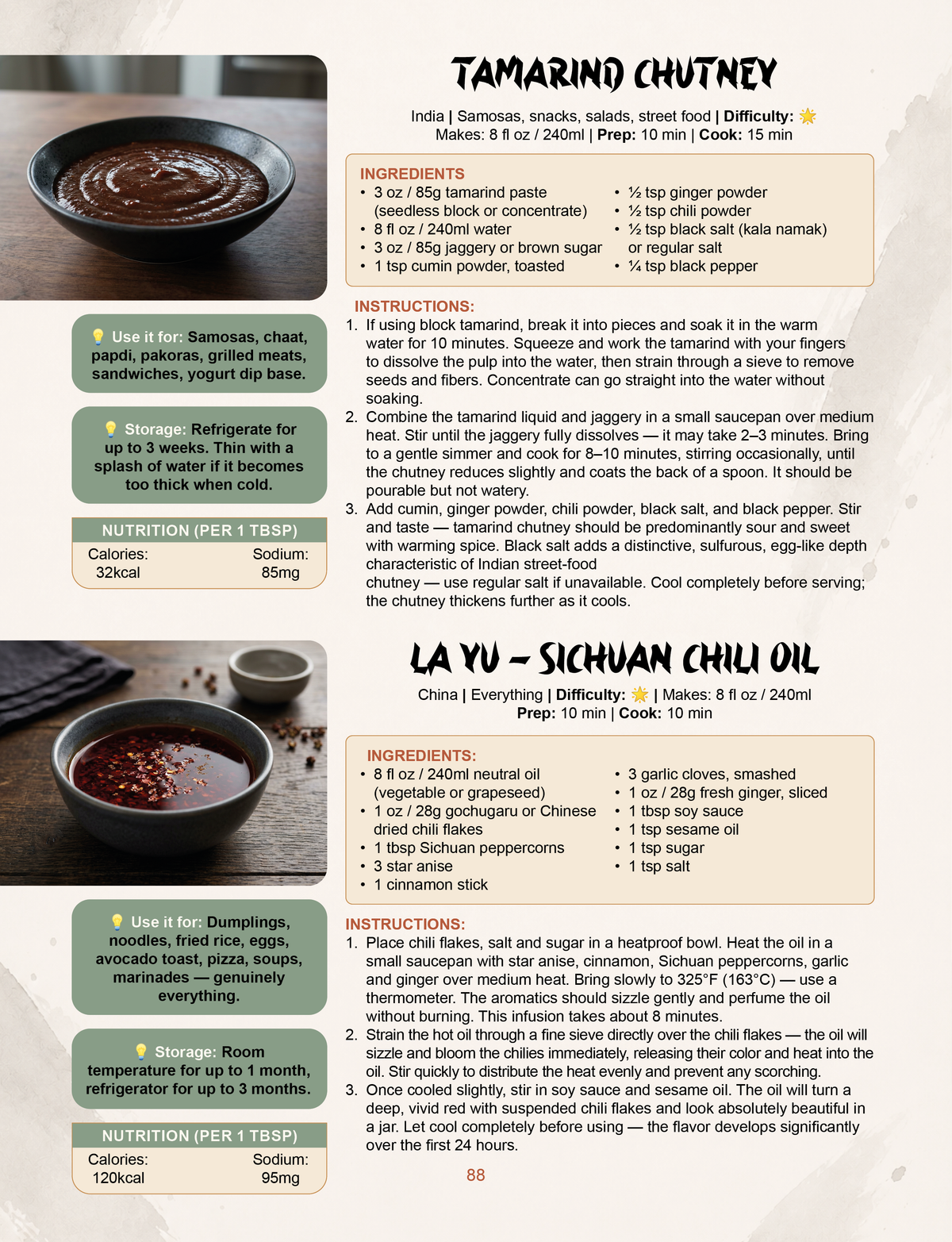
✔️ Includes Gochujang Paste, Sichuan Chili Oil, Homemade Teriyaki Sauce, Nuoc Cham, Thai Peanut Sauce, Ponzu, Green Curry Paste, Sambal Oelek, Miso Marinade, and Tamarind Chutney
✔️ Guidance on basic kitchen tools and alternatives to specialized Asian cooking equipment
✔️ Suitable for Kindle and paperback publishing preparation
📈 Why This Is a Valuable Publishing Asset
You’re getting a complete, professionally structured cookbook manuscript—not a basic recipe list or loosely assembled collection of dishes.
The book is built around a broad and evergreen niche: Asian cuisine, international cooking, restaurant-style favorites, and accessible home cooking. It combines well-known recipes from multiple countries with practical explanations, essential techniques, nutrition information, and useful ingredient swaps.
The multi-country format gives the book wider reader appeal than a cookbook focused on one cuisine, while its organized structure makes it easy to explore different flavors, cooking styles, and regional traditions.
💼 Ideal For:
- KDP publishers expanding a cookbook or international cuisine catalog
- Publishing agencies seeking a finished culinary manuscript
- Entrepreneurs selling digital or print-ready cookbook products
- Sellers entering the Asian food, global cuisine, or home cooking niche
- Publishers seeking a recipe collection with broad market appeal
- Sellers interested in multi-cuisine cookbooks with strong content variety
🚀 What Makes This Book Special:
- Six major Asian cuisines in one complete cookbook
- 100 flavorful recipes across numerous meal categories
- Familiar restaurant favorites and traditional regional dishes
- Clear, approachable instructions for home cooks
- Heat and difficulty indicators
- Nutrition facts for every recipe
- Practical Smart Swap notes
- 10 versatile sauces and pastes for use across multiple meals
- Essential techniques without requiring extensive specialty equipment
- A balanced combination of culinary variety, practical instruction, and reader-friendly organization
This is a complete publishing asset for sellers entering the Asian cuisine and international cooking niche. With 100 recipes, six regional cuisines, 10 essential sauces, practical techniques, nutrition information, and Smart Swaps, the manuscript provides a strong foundation for a professional Amazon KDP product.
- Number of pages: 94
- Trim Size Paperback: 8,5*11
- Trim Size Hardcover: 8,25*11
Share
What's Included
-
Manuscript PDF
Complete manuscript in PDF format
-
eBook Format
Ready-to-publish electronic book format
-
Plagiarism Report
Detailed plagiarism check report
-
Book Cover
Covers that sell and visuals that grab attention
-
Book Description
Book description for marketing purposes
-
Book Quality Guide
Guide to reviewing book quality before publishing on Amazon KDP
Book Details
Human-Written Content
This manuscript was written by human authors and reviewed by editors. We do not use AI-generated text for the core book content. Each title is created as an original publishing asset for Amazon KDP sellers who want ready-to-use, professional-quality content.
Outline Overview
Table of Contents
Introduction
- How to navigate the cookbook
- Essential kitchen tools and equipment
- Approachable alternatives to specialized Asian cookware
- Understanding difficulty and heat-level indicators
- Basic preparation methods and ingredient guidance
Part 1: China — Balance and the Breath of the Wok
- Wonton, egg and tomato, and hot-and-sour soups
- Dan Dan noodles, fried rice, and traditional congee
- Char Siu, Kung Pao Chicken, Mapo Tofu, and Peking Duck
- Sichuan, Hunan, and Chinese-American favorites
- Steamed dumplings, shrimp dumplings, and vegetable sides
- Tea eggs, egg tarts, and fruit-based desserts
Part 2: Japan — Simplicity and the Power of Umami
- Tonkotsu, shoyu, and miso ramen
- Udon, onigiri, rice bowls, and Japanese stews
- Katsu curry, karaage, tonkatsu, and tempura
- Teriyaki salmon, yakitori, and shabu-shabu
- Gyoza, takoyaki, tamagoyaki, and agedashi tofu
- Mochi ice cream and red-bean-filled dorayaki
Part 3: Thailand — Sweet, Sour, Salt, and Heat
- Tom Yum, Tom Kha, and coconut curry noodle soup
- Green, Massaman, and Panang curries
- Pad Thai, Pad See Ew, fried rice, and basil chicken
- Steamed fish, spicy beef, and grilled pork skewers
- Papaya salad, chicken satay, and Thai fish cakes
- Mango sticky rice and traditional Thai iced tea
Part 4: South Korea — Spice and Fermentation
- Kimchi, soybean paste, beef broth, and army-style stews
- Kimbap, Japchae, and kimchi fried rice
- Samgyeopsal, Bulgogi, Galbi, and spicy chicken dishes
- Seafood pancakes, rice cakes, and Korean dumplings
- Homemade kimchi and fermentation basics
- Bingsu and Korean yuzu tea
Part 5: Vietnam — Fragrance and Freshness
- Pho Bo and Bun Bo Hue noodle soups
- Banh Mi and Vietnamese broken rice
- Shaking beef, caramel pork, and turmeric fish
- Fresh spring rolls and crispy fried rolls
- Vietnamese herbs, dipping flavors, and fresh garnishes
- Traditional Vietnamese egg coffee
Part 6: India — A Kaleidoscope of Spice
- South Indian lentil and vegetable soup
- Butter Chicken, Rogan Josh, and Hyderabadi Lamb Biryani
- Palak Paneer and other vegetarian dishes
- Masala Dosa, samosas, and homemade naan
- Building flavor with spices, simmering, and braising
- Gulab Jamun and Mango Lassi
Bonus: 10 Essential Sauces & Pastes
- Gochujang Paste
- Sichuan Chili Oil
- Homemade Teriyaki Sauce
- Vietnamese Nuoc Cham
- Thai Peanut Sauce
- Japanese Ponzu
- Homemade Green Curry Paste
- Sambal Oelek
- Miso Marinade
- Tamarind Chutney
Conclusion: The Journey Has Just Begun
- Applying essential Asian cooking techniques at home
- Reusing sauces and pastes across different dishes
- Exploring regional flavors and ingredient combinations
- Customizing recipes with practical Smart Swaps
- Continuing the journey through Asian home cooking
Sample Chapter
Introduction
The Asian Table – From Mastery to Your Kitchen
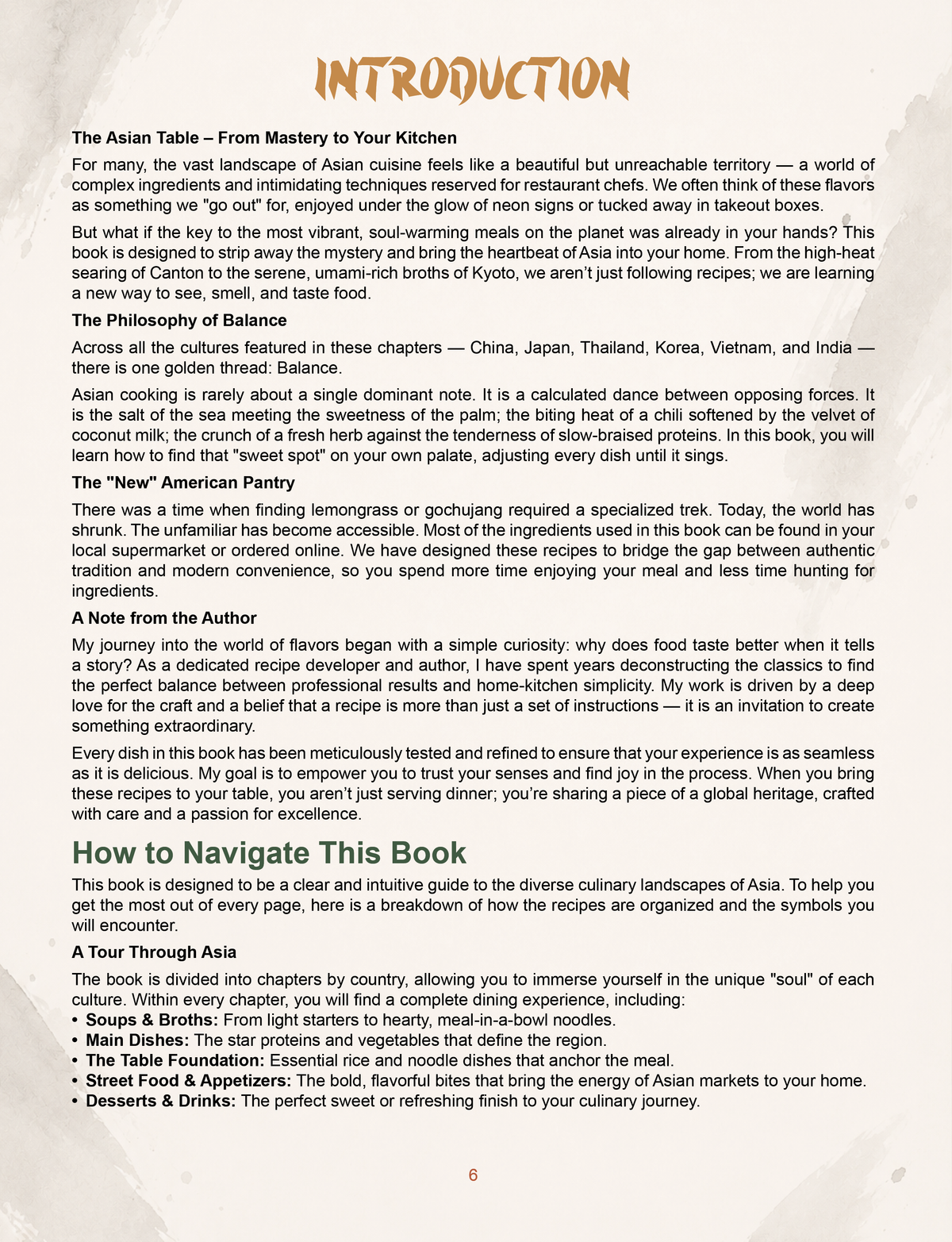
For many, the vast landscape of Asian cuisine feels like a beautiful but unreachable territory — a world of complex ingredients and intimidating techniques reserved for restaurant chefs. We often think of these flavors as something we "go out" for, enjoyed under the glow of neon signs or tucked away in takeout boxes.
But what if the key to the most vibrant, soul-warming meals on the planet was already in your hands? This book is designed to strip away the mystery and bring the heartbeat of Asia into your home. From the high-heat searing of Canton to the serene, umami-rich broths of Kyoto, we aren’t just following recipes; we are learning a new way to see, smell, and taste food.
The Philosophy of Balance
Across all the cultures featured in these chapters — China, Japan, Thailand, Korea, Vietnam, and India — there is one golden thread: Balance.
Asian cooking is rarely about a single dominant note. It is a calculated dance between opposing forces. It is the salt of the sea meeting the sweetness of the palm; the biting heat of a chili softened by the velvet of coconut milk; the crunch of a fresh herb against the tenderness of slow-braised proteins. In this book, you will learn how to find that "sweet spot" on your own palate, adjusting every dish until it sings.
The "New" American Pantry
There was a time when finding lemongrass or gochujang required a specialized trek. Today, the world has shrunk. The unfamiliar has become accessible. Most of the ingredients used in this book can be found in your local supermarket or ordered online. We have designed these recipes to bridge the gap between authentic tradition and modern convenience, so you spend more time enjoying your meal and less time hunting for ingredients.
A Note from the Author
My journey into the world of flavors began with a simple curiosity: why does food taste better when it tells a story? As a dedicated recipe developer and author, I have spent years deconstructing the classics to find the perfect balance between professional results and home-kitchen simplicity. My work is driven by a deep love for the craft and a belief that a recipe is more than just a set of instructions — it is an invitation to create something extraordinary.
Every dish in this book has been meticulously tested and refined to ensure that your experience is as seamless as it is delicious. My goal is to empower you to trust your senses and find joy in the process. When you bring these recipes to your table, you aren't just serving dinner; you’re sharing a piece of a global heritage, crafted with care and a passion for excellence.
How to Navigate This Book
This book is designed to be a clear and intuitive guide to the diverse culinary landscapes of Asia. To help you get the most out of every page, here is a breakdown of how the recipes are organized and the symbols you will encounter.
A Tour Through Asia
The book is divided into chapters by country, allowing you to immerse yourself in the unique "soul" of each culture. Within every chapter, you will find a complete dining experience, including:
- Soups & Broths: From light starters to hearty, meal-in-a-bowl noodles.
- Main Dishes: The star proteins and vegetables that define the region.
- The Table Foundation: Essential rice and noodle dishes that anchor the meal.
- Street Food & Appetizers: The bold, flavorful bites that bring the energy of Asian markets to your home.
- Desserts & Drinks: The perfect sweet or refreshing finish to your culinary journey.
- The Sauce Essentials: No great Asian meal is complete without its secret weapon. This bonus chapter contains 10 carefully chosen sauces and pastes — from Korea's fiery Gochujang to Vietnam's bright Nuoc Cham — that form the invisible backbone of everything you've cooked in this book. Keep them in your refrigerator and you'll never face a bland meal again. These are the recipes that professional chefs guard closely and home cooks reach for every single day.
Understanding the Symbols
To help you choose the right recipe for your schedule and taste, I’ve included three key markers:
The Heat Scale (🌶️): Indicates the intensity of the spice.
🌶️ (Mild): A gentle warmth.
🌶️🌶️ (Medium): A noticeable, balanced kick.
🌶️🌶️🌶️+ (Hot): For those who want an authentic, fiery experience.
The Skill Level (⭐): Indicates the time and effort required.
⭐ (Simple): Quick, minimal prep, great for weeknights.
⭐⭐ (Intermediate): Requires a bit more attention or a specific technique.
⭐⭐⭐ (Advanced): A rewarding "weekend project" dish.
The 💡 Smart Swap note appears throughout the book wherever a dish traditionally relies on high-sodium ingredients like soy sauce, fish sauce or fermented pastes. Each note offers a specific, practical tip — whether that's switching to a low-sodium version, reducing the quantity, or balancing with acidity — to lower the salt content without flattening the flavor.
A Pro Tip for Success
In Asian cooking, the heat is often high and the cooking time is very short. I highly recommend completing all your chopping, dicing, and sauce-mixing before you turn on the burner. Having your ingredients ready in small bowls makes the process smooth, professional, and stress-free.
The Essentials: Your Kitchen Toolkit
One of the greatest myths of Asian cooking is that you need a kitchen filled with specialized gadgets to achieve authentic results. In reality, the heart of the Asian home kitchen is built on simplicity and versatility.
You likely already own everything you need. Instead of searching for professional equipment, this chapter focuses on how to use your everyday tools to get the best results.
The Knife: Precision Over Specialty
In many Asian traditions, the knife does the heavy lifting. Because cooking times are so short, your ingredients must be prepared perfectly before they hit the heat.
See Inside the Book


