


BookLab
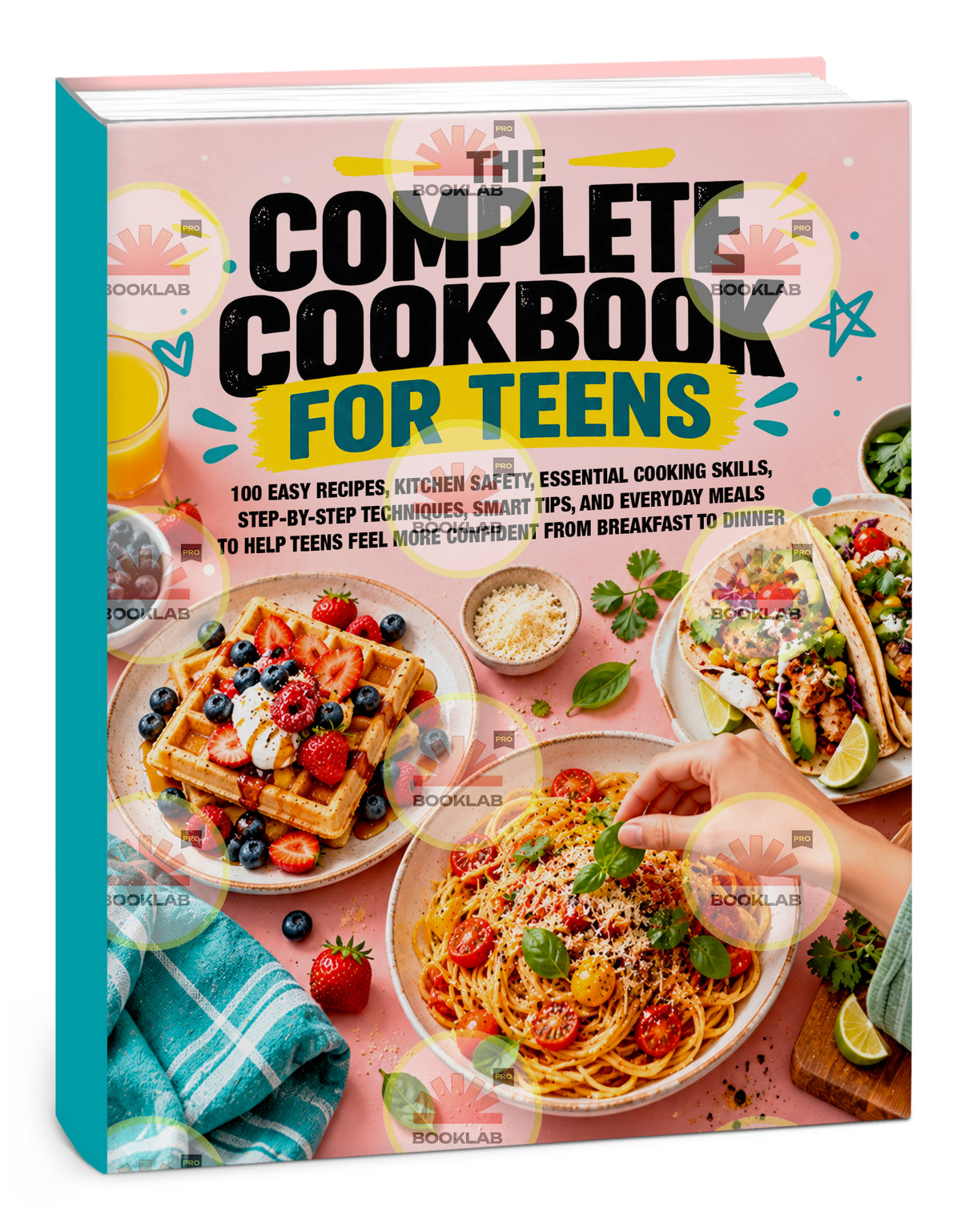
The Complete Cookbook for Teens
The Complete Cookbook for Teens
SKU:17284748
- Ready to publish on Amazon KDP
- Human-Written Manuscript
Couldn't load pickup availability
Premium Publishing Asset for Amazon Sellers: The Complete Cookbook for Teens
A polished, practical, and professionally structured cookbook — fully prepared as a strong publishing asset for the teen cooking and beginner cookbook niche.
This asset is designed for Amazon sellers who want a high-demand cookbook for teens, young adults, students, and beginner home cooks without spending weeks writing, editing, or organizing the content. Built around a family-friendly and evergreen niche, this book combines real recipes with essential kitchen education, making it more than just a recipe collection.
⭐️ What’s Included:
✔️ 100 teen-friendly recipes for every part of the day
✔️ Recipes for breakfast, soups, salads, snacks, sandwiches, burgers, pasta, rice, chicken, beef, pork, seafood, vegetarian meals, sides, sauces, baking, desserts, and global street food
✔️ Beginner-friendly kitchen safety guidance
✔️ Knife safety, fire safety, food hygiene, allergy awareness, and cross-contamination tips
✔️ Essential tools, pots, pans, knives, measuring equipment, and small appliances explained clearly
✔️ Pantry, fridge, freezer, spices, herbs, oils, vinegars, and grocery-shopping guides
✔️ Practical cooking techniques such as roasting, baking, sautéing, boiling, simmering, steaming, braising, seasoning, and tasting
✔️ Nutrition basics for teens, including protein, carbs, fats, hydration, balanced plates, and eating for energy
✔️ Clear recipe format with prep time, cook time, difficulty, servings, tools, ingredients, step-by-step instructions, and nutritional information
✔️ Suitable for Kindle & Paperback publishing
📈 Why This Is a Strong Publishing Asset
You’re getting a complete, well-structured product, not a rough draft. This book targets the growing beginner cooking and teen cookbook market, making it ideal for parents, grandparents, students, young adults, and gift buyers. The combination of 100 approachable recipes and practical kitchen education gives the book strong value for readers who want to build independence and confidence in the kitchen.
💼 Ideal For:
• KDP publisher’s catalog expansion
• Publishing agencies
• Entrepreneurs selling digital or print books online
• Sellers entering the teen cookbook, beginner cooking, student cookbook, or family-friendly cookbook niche
• Gift-focused cookbook collections
🚀 What Makes This Book Special:
• A clear, beginner-friendly structure
• 100 recipes designed for teens and new cooks
• Strong educational chapters before the recipe section
• Safety, tools, pantry, grocery, nutrition, and technique guidance included
• Wide recipe variety, from simple breakfasts to global bites
• Practical content for everyday cooking, school life, family meals, and first independent kitchens
• A complete manuscript that feels useful, organized, and ready for a broad Amazon audience
The Complete Cookbook for Teens is a valuable publishing asset for sellers who want a practical, giftable, and evergreen cookbook in a niche with wide buyer appeal.
- Number of pages: 118
- Trim Size Paperback: 8,5*11
- Trim Size Hardcover: 8,25*11
Share


What's Included
-
Manuscript PDF
Complete manuscript in PDF format
-
eBook Format
Ready-to-publish electronic book format
-
Plagiarism Report
Detailed plagiarism check report
-
Book Cover
Covers that sell and visuals that grab attention
-
Book Description
Book description for marketing purposes
-
Book Quality Guide
Guide to reviewing book quality before publishing on Amazon KDP
Book Details
Human-Written Content
This manuscript was written by human authors and reviewed by editors. We do not use AI-generated text for the core book content. Each title is created as an original publishing asset for Amazon KDP sellers who want ready-to-use, professional-quality content.
Outline Overview
Table of Contents
Introduction
- Why cooking is an essential life skill
- How to use the cookbook
- Building confidence through practice
- Learning from common kitchen mistakes
Part 1: Kitchen Safety
- Fire and heat safety
- Knife handling and cutting safety
- Food hygiene and handwashing
- Preventing cross-contamination
- Allergy awareness and kitchen emergencies
Part 2: Kitchen Tools
- Essential tools for beginner cooks
- Pots, pans, and their uses
- Basic kitchen knives
- Measuring equipment and small appliances
- Cleaning and caring for equipment
Part 3: Pantry & Grocery Basics
- Essential pantry staples
- Fridge and freezer basics
- Herbs, spices, oils, vinegars, and condiments
- Budget-friendly grocery shopping
- Reading and preparing recipes correctly
Part 4: Essential Cooking Skills
- Roasting, baking, grilling, and sautéing
- Boiling, simmering, steaming, and braising
- Chopping, dicing, mincing, and julienning
- Seasoning, tasting, and adjusting flavors
- Understanding cooking temperatures
Part 5: Nutrition for Teens
- Protein, carbohydrates, and fats
- Essential vitamins and minerals
- Building balanced plates
- Eating for school, sports, and everyday energy
- Hydration and mindful eating
Part 6: Everyday Recipes
- Breakfasts, soups, salads, snacks, and appetizers
- Sandwiches, wraps, burgers, pasta, and rice dishes
- Chicken, beef, pork, fish, and seafood meals
- Vegetarian and plant-based recipes
- Side dishes, sauces, and everyday basics
Part 7: Baking, Desserts & Global Food
- Cookies, brownies, breads, and no-bake desserts
- Pizza, cinnamon rolls, mousse, and frozen treats
- Street food and globally inspired recipes
- Dishes from Asian, European, Latin American, and Middle Eastern cuisines
Conclusion
- Continuing to practice essential cooking skills
- Experimenting with ingredients and flavors
- Building independence and confidence in the kitchen
Sample Chapter
CHAPTER 1 — WELCOME TO THE KITCHEN
1.1 Why Every Teen Should Know How to Cook
Cooking is one of the most underrated skills you can develop as a teenager — and one of the most immediately useful.
Think about what it actually means to know how to cook. It means you are never fully dependent on a drive-through, a delivery app, or whoever happens to be home. It means you understand what goes into the food you eat, which gives you control over your own health in a way that reading nutrition labels alone never could. It means you can feed yourself well on a limited budget, which matters more than most people realize when they first start living independently. And it means you have something to offer — in a shared house, at a gathering, in any situation where food brings people together.
There is also the mental side of it. Cooking is one of the rare activities that pulls you completely into the present moment. When you are managing heat, timing multiple elements, tasting and adjusting, there is no room for anything else. Many people who cook regularly describe it as one of the most grounding parts of their day. It is both creative and practical, a combination that feels genuinely satisfying.
Beyond all of that, cooking teaches you transferable skills: patience, organization, the ability to follow a process precisely and then improvise when something goes wrong, and the judgment that comes from doing something over and over until you understand it deeply. These are not cooking skills — they are life skills that happen to be learned in a kitchen.
The teenagers who learn to cook do not just eat better; they also learn to cook. They move through the world with a particular kind of self-sufficiency that shows in everything they do.
1.2 How This Book Works & How to Use It
This book is organized in a deliberate sequence, and it is worth understanding that structure before you start cooking.
The introduction — the section you are reading now — covers everything you need to know before a single burner is turned on. Kitchen safety, tools, pantry basics, cooking techniques, and nutrition. Read this section once, even if you skim some parts. The concepts here will recur throughout the recipes, and understanding them in advance makes everything that follows more comprehensible.
The recipe sections are organized by category, moving from lighter, simpler dishes to more complex, involved ones. Each section builds on the techniques of the previous one. The recipes within each section also move from beginner to intermediate to advanced, so if you are starting, you can stay near the beginning of each section and work your way forward as your confidence grows.
Every recipe in this book follows the same format: a brief description that tells you what the dish is and what makes it worth making, an at-a-glance overview of timing and difficulty, a tools list, an ingredients list with both American and metric measurements, and numbered step-by-step instructions. The steps are written to explain not just what to do but why — because understanding the reasoning behind a technique means you can adapt when something does not go exactly to plan.
Use this book the way you use any good reference: read the full recipe before you start, gather everything you need, and then cook. Return to the sections when you want to understand something more deeply. Mark the recipes you love. Write notes in the margins. Make it yours.
1.3 Your Journey from Beginner to Confident Cook
Confidence in the kitchen is not something you are born with. It is built, one recipe at a time, through repetition, attention, and a willingness to be imperfect.
Every skilled cook you have ever admired — every chef on television, every person whose food you have eaten and thought was extraordinary — was once exactly where you are now. They burned things. They are under-seasoned and over-salted. They tried to flip something too early, and it fell apart. They followed a recipe perfectly and still could not understand why it did not taste right. They learned through doing, not through being told.
The path from beginner to confident cook has a few recognizable stages. At first, you follow recipes exactly and feel anxious if anything deviates from the instructions. Then you start to understand why each step exists, and that understanding gives you flexibility. Eventually, you begin cooking by instinct — tasting as you go, adjusting by feel, substituting ingredients without panic — because you have internalized enough about how food works to trust your own judgment.
This book will take you through all of those stages if you let it. Start with the beginner recipes and do not rush past them. A perfect scrambled egg or a well-made tomato sauce teaches you more about fundamental technique than a complicated dish attempted too early. Build the foundation first. The advanced recipes will still be there when you are ready.
Aim for consistency rather than perfection. Cook the same dish several times. Pay attention each time. Notice what changes when you adjust the heat, or add more salt, or let something cook a minute longer. That kind of attention is what cooking mastery is actually made of.
1.4 A Word on Mistakes — They're Part of the Process
You will burn things. The smoke alarm will go off. A sauce will break, a soufflé will fall, a cake will come out of the pan in three pieces. You will forget to add an ingredient or add it twice. You will cook chicken until it is dry, or pull a roast out of the oven too early. None of these things makes you a bad cook. They make you a cook.
Mistakes in the kitchen are data. When something goes wrong, the most useful response is curiosity rather than frustration. What happened? Was the heat too high? Did the recipe say to rest the meat, and you skipped it? Did you substitute an ingredient without accounting for the difference? Most cooking mistakes have a clear cause, and understanding the cause is what prevents you from making the same mistake twice.
Some of the greatest techniques in cooking — caramelization, deglazing, emulsification — were discovered because someone made a mistake and then paid close enough attention to understand what had actually happened. Mistakes push you to understand food more deeply than a perfect result ever would.
A few practical notes on mistakes: most cooking errors are recoverable. An over-seasoned dish can often be saved by adding more of the other ingredients to balance it. A broken sauce can often be revived with a splash of liquid and a bit of patience. An overcooked piece of meat can be served in a sauce or used in a different dish entirely. Very few mistakes in the kitchen are truly unrecoverable.
Permit yourself to be imperfect. Permit yourself to start again. The only cook who never makes mistakes is the one who never cooks.
See Inside the Book


