


BookLab
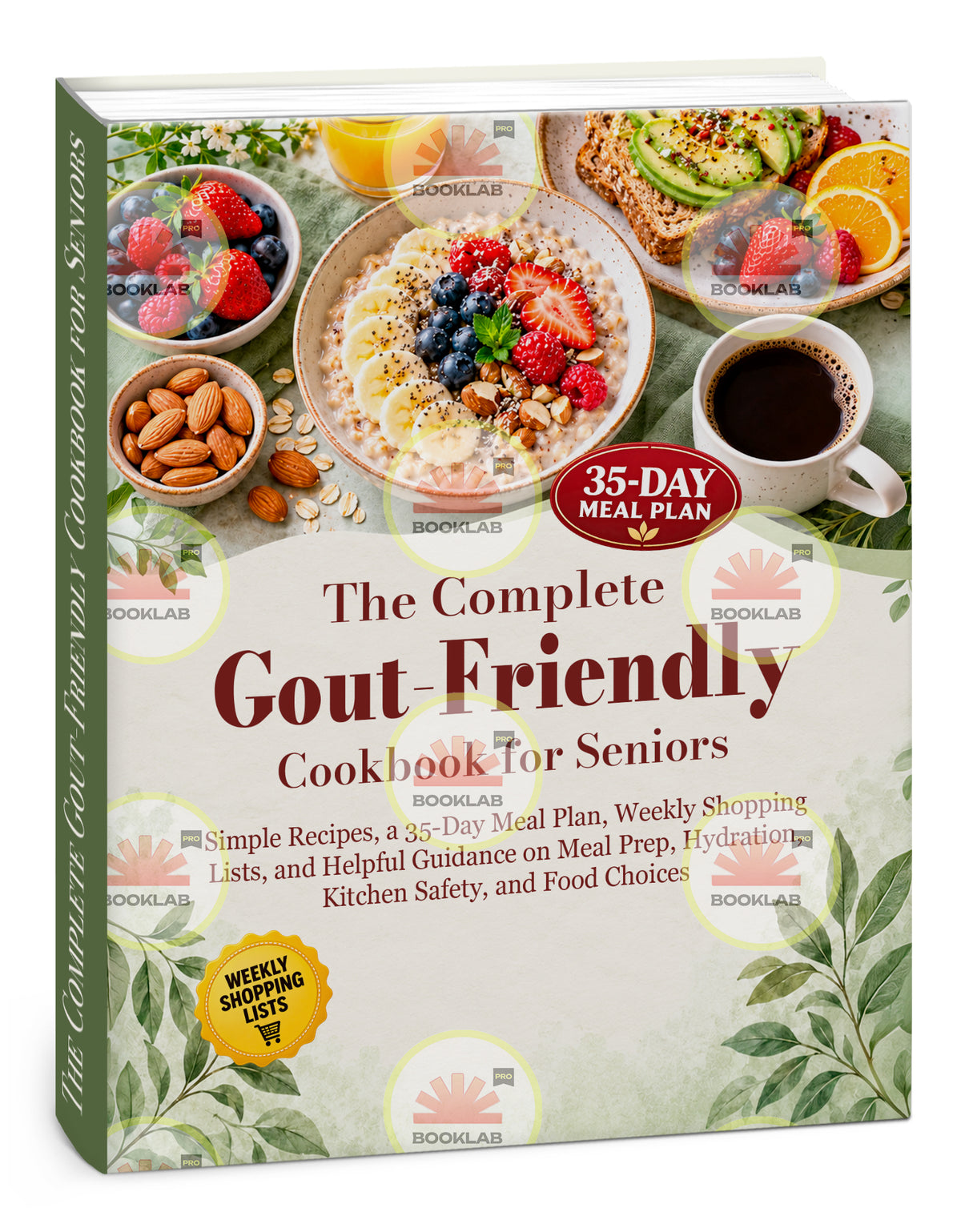
The Complete Gout-Friendly Cookbook for Seniors
The Complete Gout-Friendly Cookbook for Seniors
SKU:16528191
- Ready to publish on Amazon KDP
- Human-Written Manuscript
Couldn't load pickup availability
Premium Publishing Asset for Amazon Sellers: The Complete Gout-Friendly Cookbook for Seniors
A complete, professionally structured 136-page gout-friendly cookbook manuscript featuring simple everyday recipes, a 35-day meal plan, weekly shopping lists, nutritional information, purine-level guidance, ingredient substitutions, and practical cooking advice for older adults — fully written, organized, and ready for publishing preparation.
This publishing asset is designed for Amazon sellers entering or expanding within the gout-friendly cooking, low-purine diet, senior nutrition, specialty cookbook, and practical meal-planning niches.
Created specifically for seniors and older home cooks, the manuscript combines accessible nutritional education with satisfying recipes, convenient planning resources, hydration guidance, and kitchen safety recommendations.
⭐️ What’s Included:
✔️ Complete 136-page cookbook manuscript focused on gout-conscious cooking for seniors
✔️ Recipes organized into six practical categories covering everyday meals, snacks, desserts, and beverages
✔️ Breakfasts, lunches, dinners, snacks, appetizers, homemade desserts, and refreshing drinks
✔️ Introductory educational guidance explaining gout, uric acid, dietary purines, and relevant food choices
✔️ Practical information about higher-purine ingredients and commonly used alternatives
✔️ Senior-focused nutritional guidance covering protein, fiber, hydration, and balanced meal composition
✔️ Clear step-by-step cooking instructions with preparation times, cooking times, and serving information
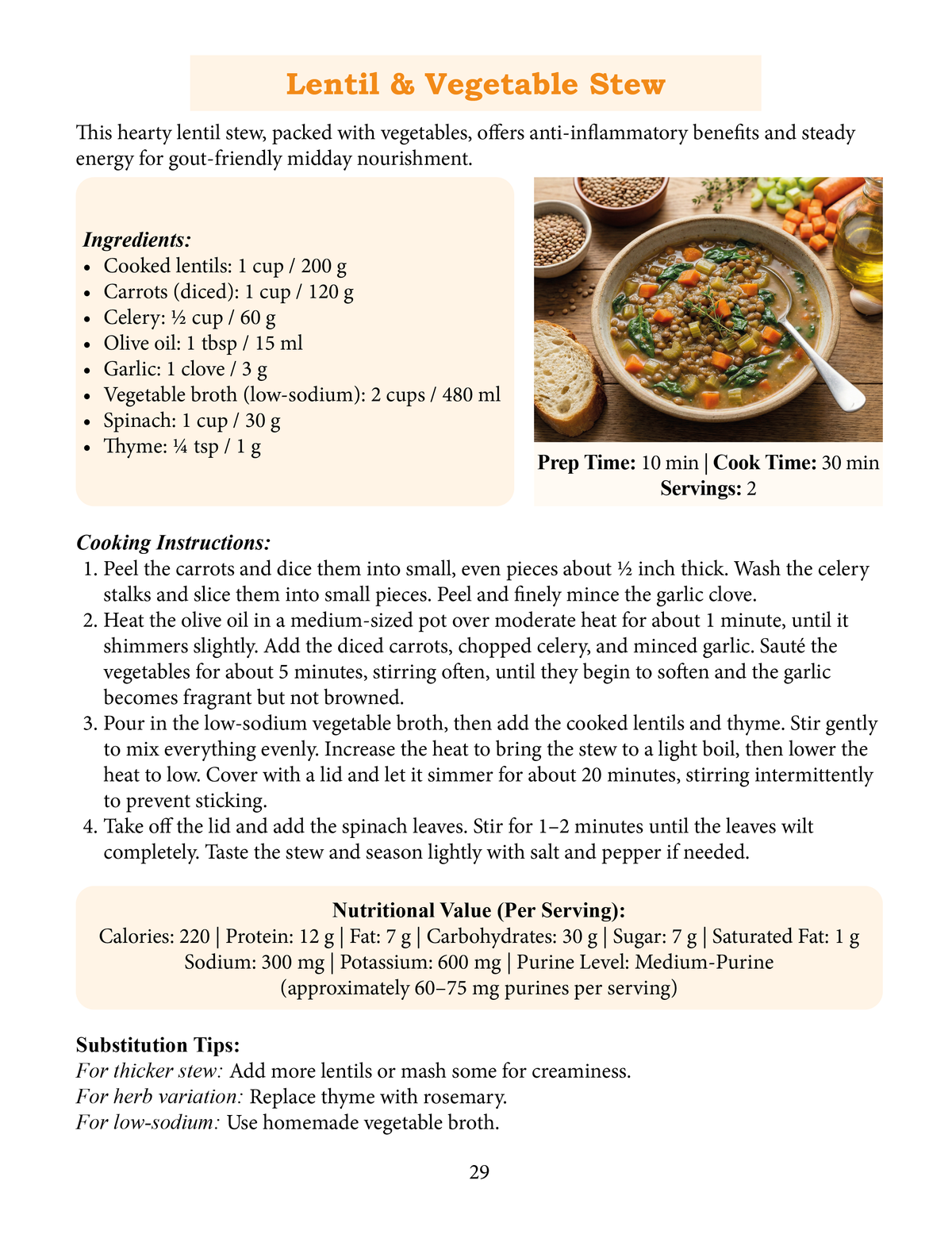
✔️ Nutritional estimates per serving, including calories, protein, fat, carbohydrates, sugar, saturated fat, sodium, and potassium
✔️ Purine-level estimates included with individual recipes
✔️ Ingredient substitution suggestions for different dietary preferences and ingredient availability
✔️ Complete 35-day meal plan organized into five weeks
✔️ Weekly shopping lists supporting grocery planning and kitchen organization
✔️ Practical meal-preparation strategies covering batch cooking, freezing, portioning, and food storage
✔️ Senior-friendly kitchen equipment recommendations, including lightweight cookware and ergonomic utensils
✔️ Kitchen safety guidance addressing accessibility, comfortable food preparation, and reducing unnecessary physical strain
✔️ Hydration-focused recipes featuring infused waters, herbal teas, fruit coolers, and refreshing beverages
✔️ Practical pantry organization and budget-conscious grocery shopping tips
✔️ Suitable for Kindle and paperback publishing preparation
📈 Why This Is a Valuable Publishing Asset
You’re getting a complete, professionally organized cookbook manuscript — not a basic collection of low-purine recipes or a short overview of gout-conscious eating.
The gout-friendly cookbook niche connects several specialized reader interests: senior nutrition, practical dietary education, everyday meal preparation, hydration, and accessible home cooking.
Older adults exploring gout-conscious food choices often look for clear information about dietary purines, familiar ingredients, manageable cooking techniques, and ways to simplify grocery shopping and meal preparation.
This manuscript addresses these needs through a structured combination of educational guidance, approachable recipes, and practical planning tools.
The recipe chapters cover everyday breakfasts, lunches, dinners, snacks, appetizers, desserts, and beverages, providing variety across different meals and preferences.
The included 35-day meal plan and weekly shopping lists extend the manuscript beyond individual recipes, offering organized resources for planning five weeks of meals.
Additional sections on kitchen accessibility, safe cooking practices, hydration, and ingredient substitutions make the content particularly relevant to older readers and caregivers.
💼 Ideal For:
• KDP publishers expanding their senior nutrition and specialty cookbook catalogs
• Publishing agencies seeking a complete, professionally structured culinary manuscript
• Entrepreneurs developing Kindle, paperback, or digital cookbook products
• Sellers entering the gout-friendly cooking, low-purine diet, or senior meal-planning niches
• Publishers targeting older adults, caregivers, and beginner home cooks
• Amazon sellers looking for practical cookbooks combining recipes with educational resources
🚀 What Makes This Book Special:
• Focuses specifically on gout-conscious cooking for older adults
• Combines everyday recipes with practical dietary education
• Includes a complete 35-day meal plan and weekly shopping lists
• Explains purines, uric acid, and relevant food-selection considerations
• Provides nutritional estimates and purine-level information for individual recipes
• Includes useful ingredient substitutions and flexible preparation options
• Covers breakfasts, lunches, dinners, snacks, desserts, and hydration-focused drinks
• Features senior-friendly cooking and kitchen organization recommendations
• Addresses kitchen safety, accessibility, and comfortable meal preparation
• Offers practical advice on batch cooking, portioning, and freezer storage
• Incorporates budget-conscious shopping and pantry organization guidance
• Uses an educational approach without promising gout prevention, symptom relief, or guaranteed medical outcomes
This is a complete publishing asset designed for Amazon sellers seeking a practical, content-rich manuscript in the gout-friendly cooking, low-purine nutrition, and senior cookbook niches.
With its organized recipe collection, 35-day meal plan, weekly shopping lists, nutritional information, purine guidance, ingredient substitutions, hydration resources, and senior-friendly kitchen recommendations, The Complete Gout-Friendly Cookbook for Seniors provides a strong foundation for developing a professional Amazon KDP cookbook that combines accessible nutritional education with enjoyable everyday home cooking.
- Number of pages: 136
- Trim Size Paperback: 8,5*11
- Trim Size Hardcover: 8,25*11
Share
What's Included
-
Manuscript PDF
Complete manuscript in PDF format
-
eBook Format
Ready-to-publish electronic book format
-
Plagiarism Report
Detailed plagiarism check report
-
Book Cover
Covers that sell and visuals that grab attention
-
Book Description
Book description for marketing purposes
-
Book Quality Guide
Guide to reviewing book quality before publishing on Amazon KDP
Book Details
Human-Written Content
This manuscript was written by human authors and reviewed by editors. We do not use AI-generated text for the core book content. Each title is created as an original publishing asset for Amazon KDP sellers who want ready-to-use, professional-quality content.
Outline Overview
Table of Contents
Introduction: Beginning Gout-Conscious Cooking After 50
- Understanding the purpose of the cookbook
- Using recipes, nutrition estimates, and purine-level guidance
- Choosing familiar, accessible ingredients
- Adjusting recipes to individual dietary needs
- Working with a healthcare professional when necessary
- Building manageable cooking and shopping routines
Part I: Gout-Friendly Foundations for Seniors
Chapter 1: Gout Basics and Dietary Principles
An accessible introduction to gout-conscious eating and the dietary considerations that may become more relevant with age.
- Understanding gout in older adults
- The relationship between purines and uric acid
- Foods with lower, moderate, and higher purine levels
- Protein, fiber, and balanced meal composition
- Hydration considerations
- Common gout-diet myths and facts
- Personalizing food choices with professional guidance
Chapter 2: Senior-Friendly Kitchen Essentials
Practical guidance for making shopping, cooking, storage, and meal preparation more comfortable.
- Setting up a gout-conscious kitchen
- Choosing useful pantry staples
- Reading labels and comparing packaged foods
- Budget-conscious grocery shopping
- Batch cooking and portioning
- Freezing and storing meals
- Lightweight cookware and ergonomic utensils
- Kitchen accessibility and safety
- Reducing unnecessary physical strain
Part II: Everyday Recipes
Chapter 3: Breakfast Recipes
Simple morning meals featuring oats, quinoa, fruit, yogurt, eggs, tofu, nuts, and seeds.
Recipes include:
- Berry Bliss Oatmeal
- Quinoa Harmony Bowl
- Nutty Almond Toast Delight
- Nut Butter Overnight Oats
- Banana Pecan Flapjacks
- Banana Quinoa Porridge
- Chocolate Cherry Dream Oats
- Berry Seed Yogurt Boost
- Blueberry Cinnamon Cottage Bowl
- Veggie Tofu Stir
- Berry Chia Delight
- Basil Stone Fruit Delight
- Strawberry-Kiwi Layered Parfait
- Spinach Mushroom Omelet
- Herb Squash Egg Bake
Chapter 4: Lunch Recipes
Plant-forward soups, salads, grain bowls, wraps, patties, and light baked dishes for everyday lunches.
Recipes include:
- Lentil & Vegetable Stew
- Vegetable Barley Soup
- Chickpea & Spinach Curry
- Zucchini & Lentil Soup
- Tomato & White Bean Stew
- Quinoa & Chickpea Salad
- Barley & Roasted Vegetable Medley
- Mediterranean Farro Salad
- Warm Lentil & Carrot Salad with Herbs
- Brown Rice Bowl with Broccoli & Tofu
- Buckwheat & Roasted Carrot Bowl
- Vegetable Quinoa Pilaf
- Sweet Potato & Black Bean Bowl
- Cauliflower & Pea Rice Bowl
- Vegetable Couscous Bowl
- Mushroom & Spinach Buckwheat
- Spinach & Lentil Patties
- Tofu & Vegetable Stir-Fry
- Baked Vegetable Frittata
- Chickpea & Avocado Wraps
Chapter 5: Dinner Recipes
Comforting evening meals featuring vegetables, whole grains, legumes, poultry, tofu, and selected fish dishes.
Recipes include:
- Baked White Fish with Herbs
- Steamed Salmon with Lemon & Dill
- Vegetable & Fish Stew
- Lemon-Garlic Tilapia with Spinach
- One-Pan Salmon with Vegetables
- Stir-Fried Tofu with Broccoli
- Light-Baked Eggplant Parmesan
- Lentil & Vegetable Curry
- Quinoa-Stuffed Bell Peppers
- Vegetable Stir-Fry with Brown Rice
- Chicken & Brown Rice Bake
- Turkey with Lentils & Vegetables
- Chicken & Vegetable Skillet with Barley
- Lentil & Spinach Stew
- Vegetable Quinoa Medley
- Barley & Mushroom Bowl
- Chickpea & Tomato Bake
- Slow-Cooker Tofu & Vegetable Stew
- Vegetable & Brown Rice Casserole
- Chicken & Vegetable Stew with Thyme
Chapter 6: Snacks and Appetizers
Easy sweet and savory options designed for smaller portions, convenient preparation, and everyday variety.
Recipes include:
- Apple Slices with Almond Butter & Cinnamon
- Carrot Sticks with Creamy Yogurt Dip
- Low-Sugar Zucchini Bread Bites
- Herbed Olive Oil Popcorn
- Rainbow Fruit Kebabs with Honey-Lime Glaze
- Gout-Friendly Trail Mix
- Baked Sweet Potato Chips with Rosemary
- Savory Lentil Patties with Parsley
- Soft Berry & Cream Parfait
- Steamed Edamame with Lemon & Sea Salt
- Rice Cake Bites with Avocado & Cucumber
- Baked Veggie Fritters with Oats & Herbs
- Chickpea & Herb Bites
- Mini Melon & Mint Skewers
- Oven-Roasted Carrot Fries
Chapter 7: Desserts and Treats
Fruit-forward and homemade desserts featuring yogurt, oats, nuts, seeds, spices, and moderate sweetness.
Recipes include:
- Baked Pears with Cinnamon & Honey
- Strawberry Sorbet with Mint
- Low-Fat Yogurt Pops with Blueberries
- Light Cherry Clafoutis
- Dark Chocolate-Dipped Oranges
- Baked Apple Crisp with Oats & Cinnamon
- Banana Chia Pudding with Almond Milk
- Oatmeal Cookies with Dates & Walnuts
- Peach Yogurt Mousse
- Coconut Rice Pudding with Cardamom
- Crunchy Toasted Oat & Berry Compote Parfait
- Cinnamon Baked Plums with Oat Crumble
- Almond-Date Energy Balls
- Apple Yogurt Mini Loaf Cake
- Frozen Mango Cream Cups
Chapter 8: Beverages and Hydration
Infused waters, fruit coolers, herbal teas, and other refreshing homemade drinks.
Recipes include:
- Tart Cherry Tonic
- Coconut Water Lime Cooler
- Watermelon Mint Cooler
- Cranberry Apple Refresher
- Herbal Hibiscus Cooler
- Pineapple Cucumber Sparkle
- Lemon & Mint Infused Water
- Cucumber & Berry Infused Water
- Ginger & Lemon Herbal Tea
- Peppermint & Chamomile Calming Tea
- Apple-Cinnamon Warm Infusion
- Citrus Sparkling Cooler
- Berry Ginger Spritzer
- Minted Green Tea Refresher
- Cucumber Aloe Hydration Drink
Part III: Meal Planning and Personalization
Chapter 9: Building a Personalized Eating Routine
- Understanding individual calorie needs
- Balancing protein, carbohydrates, fats, and fiber
- Considering personal purine limits
- Recognizing allergies and sensitivities
- Coordinating food choices with prescribed medications
- Finding a manageable eating rhythm
- Adjusting portions and substitutions
- Consulting a healthcare professional about individual restrictions
35-Day Meal Plan
- Week 1: Gentle Start
- Week 2: Balanced Routine
- Week 3: Strength and Renewal
- Week 4: Steady Wellness
- Week 5: Long-Term Harmony
Weekly Shopping Lists
- Fresh fruits and vegetables
- Grains, legumes, and pantry staples
- Dairy products and alternatives
- Selected protein sources
- Herbs, spices, and beverages
- Budget-conscious substitutions
- Quantities organized by week
Conclusion: Creating Sustainable Everyday Habits
- Continuing to prepare balanced meals
- Maintaining regular hydration
- Using batch cooking to reduce effort
- Rotating recipes for greater variety
- Adjusting meals to appetite and energy levels
- Organizing the kitchen for comfort and safety
- Making flexible food choices without unrealistic medical promises
Sample Chapter
Understanding Gout in Seniors
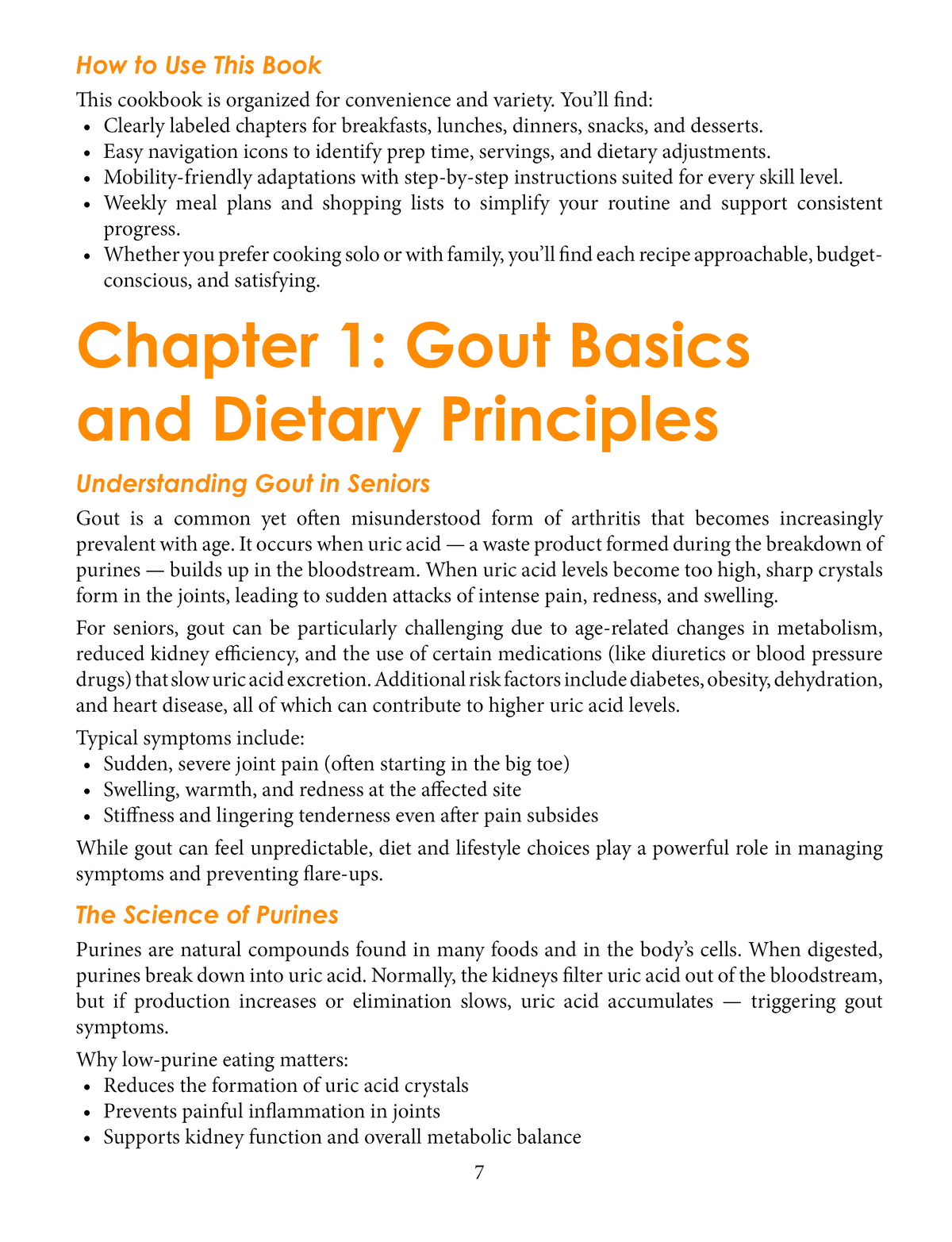
Gout is a common yet often misunderstood form of arthritis that becomes increasingly prevalent with age. It occurs when uric acid — a waste product formed during the breakdown of purines — builds up in the bloodstream. When uric acid levels become too high, sharp crystals form in the joints, leading to sudden attacks of intense pain, redness, and swelling.
For seniors, gout can be particularly challenging due to age-related changes in metabolism, reduced kidney efficiency, and the use of certain medications (like diuretics or blood pressure drugs) that slow uric acid excretion. Additional risk factors include diabetes, obesity, dehydration, and heart disease, all of which can contribute to higher uric acid levels.
Typical symptoms include:
- Sudden, severe joint pain (often starting in the big toe)
- Swelling, warmth, and redness at the affected site
- Stiffness and lingering tenderness even after pain subsides
While gout can feel unpredictable, diet and lifestyle choices play a powerful role in managing symptoms and preventing flare-ups.
The Science of Purines
Purines are natural compounds found in many foods and in the body’s cells. When digested, purines break down into uric acid. Normally, the kidneys filter uric acid out of the bloodstream, but if production increases or elimination slows, uric acid accumulates — triggering gout symptoms.
Why low-purine eating matters:
- Reduces the formation of uric acid crystals
- Prevents painful inflammation in joints
- Supports kidney function and overall metabolic balance
High-purine foods include red meats, organ meats, shellfish, and certain fish (like sardines and anchovies). Processed foods, alcohol (especially beer), and sugary drinks also raise uric acid levels.
Key Dietary Guidelines for Gout-Friendly Living
Foods to Limit or Avoid
- Red meats and organ meats: Liver, kidneys, and other high-purine animal products.
- Shellfish and oily fish: Shrimp, scallops, anchovies, sardines, and mackerel.
- Alcohol: Especially beer and spirits, which hinder uric acid removal.
- Sugary sodas and fruit juices: High in fructose, which increases uric acid production.
- Processed foods and refined carbohydrates: Contribute to inflammation and weight gain.
Foods to Enjoy More Often
- Cherries and berries: Naturally reduce inflammation and lower uric acid.
- Low-fat dairy products: Support bone health while lowering gout risk.
- Whole grains: Oats, brown rice, and barley for steady energy and fiber.
- Fresh vegetables: Particularly leafy greens, bell peppers, and carrots.
- Plant-based proteins: Lentils, beans (in moderation), tofu, and nuts.
- Hydration heroes: Water, herbal teas, and citrus-infused drinks to eliminate uric acid.
These choices not only minimize flare-ups but also promote heart, kidney, and bone health — key priorities for aging adults.
Nutritional Considerations for Aging
As we age, our bodies need less overall energy but a higher concentration of nutrients in every meal. For seniors managing gout, this means balancing uric acid control with overall wellness:
- Protein: Choose moderate amounts of lean meats, fish, eggs, or plant proteins to maintain muscle mass.
- Calcium and Vitamin D: Support bone strength through low-fat dairy, fortified cereals, and sunlight exposure.
- Fiber: Found in fruits, vegetables, and whole grains to aid digestion and regulate blood sugar.
- Hydration: Make sure you’re getting about 6–8 glasses of water daily, as proper hydration helps your kidneys remove uric acid more effectively.
- Healthy fats: Incorporate olive oil, avocado, and flaxseed for cardiovascular and joint support.
A well-balanced gout-friendly diet helps prevent nutrient deficiencies while easing inflammation naturally.
Myths vs. Facts About Gout Diets
Myth
Fact
“All high-protein foods are bad for gout.”
Only purine-rich animal proteins should be limited; plant proteins like lentils and tofu are excellent alternatives.
“Coffee causes gout attacks.”
Moderate coffee intake may actually lower uric acid levels in many people.
“Vitamin C doesn’t affect gout.”
Studies show vitamin C can help reduce uric acid production when taken consistently.
“If I take medication, diet doesn’t matter.”
Even with medication, diet remains a cornerstone of gout prevention and overall joint health.
“Once gout improves, I can eat whatever I want.”
Gout is a chronic condition; long-term dietary mindfulness keeps flare-ups from returning.
Gout may be a lifelong companion for many seniors, but it doesn’t have to control your life. Understanding the science behind the condition — and how the foods you choose affect your body — can empower you to live pain-free, mobile, and vibrant.
This book will guide you through that transformation, offering practical tools, delicious recipes, and expert insights to help you regain comfort, confidence, and joy in every meal.
See Inside the Book


