


BookLab
The Cortisol Detox Diet for Women Over 40
The Cortisol Detox Diet for Women Over 40
SKU:16595172
- Ready to publish on Amazon KDP
- Human-Written Manuscript
Couldn't load pickup availability
Premium Publishing Asset for Amazon Sellers: The Cortisol Detox Diet for Women Over 40
A complete, professionally structured 110-page cookbook manuscript featuring 100 nourishing recipes, a 4-week meal plan, weekly shopping lists, practical nutrition guidance, and supportive daily lifestyle strategies tailored to women over 40.
This publishing asset is designed for Amazon sellers entering or expanding within the cortisol diet, women’s wellness, menopause nutrition, stress management, hormone-supportive eating, and healthy aging cookbook niches.
Created for women navigating perimenopause, menopause, and everyday stress, the manuscript combines accessible nutritional education, easy-to-follow recipes, practical meal planning, and sustainable lifestyle habits.
⭐️ What’s Included:
✔️ Complete 110-page cookbook manuscript focused on balanced nutrition, stress-conscious eating, and everyday wellness for women over 40
✔️ 100 recipes organized into seven practical categories:
- 20 calming breakfast recipes
- 20 hormone-supportive lunch recipes
- 20 anti-inflammatory dinner recipes
- 10 comforting soups and stews
- 15 nutritious snacks and mini meals
- 10 smoothies, elixirs, and wellness drinks
- 5 lighter desserts and evening treats
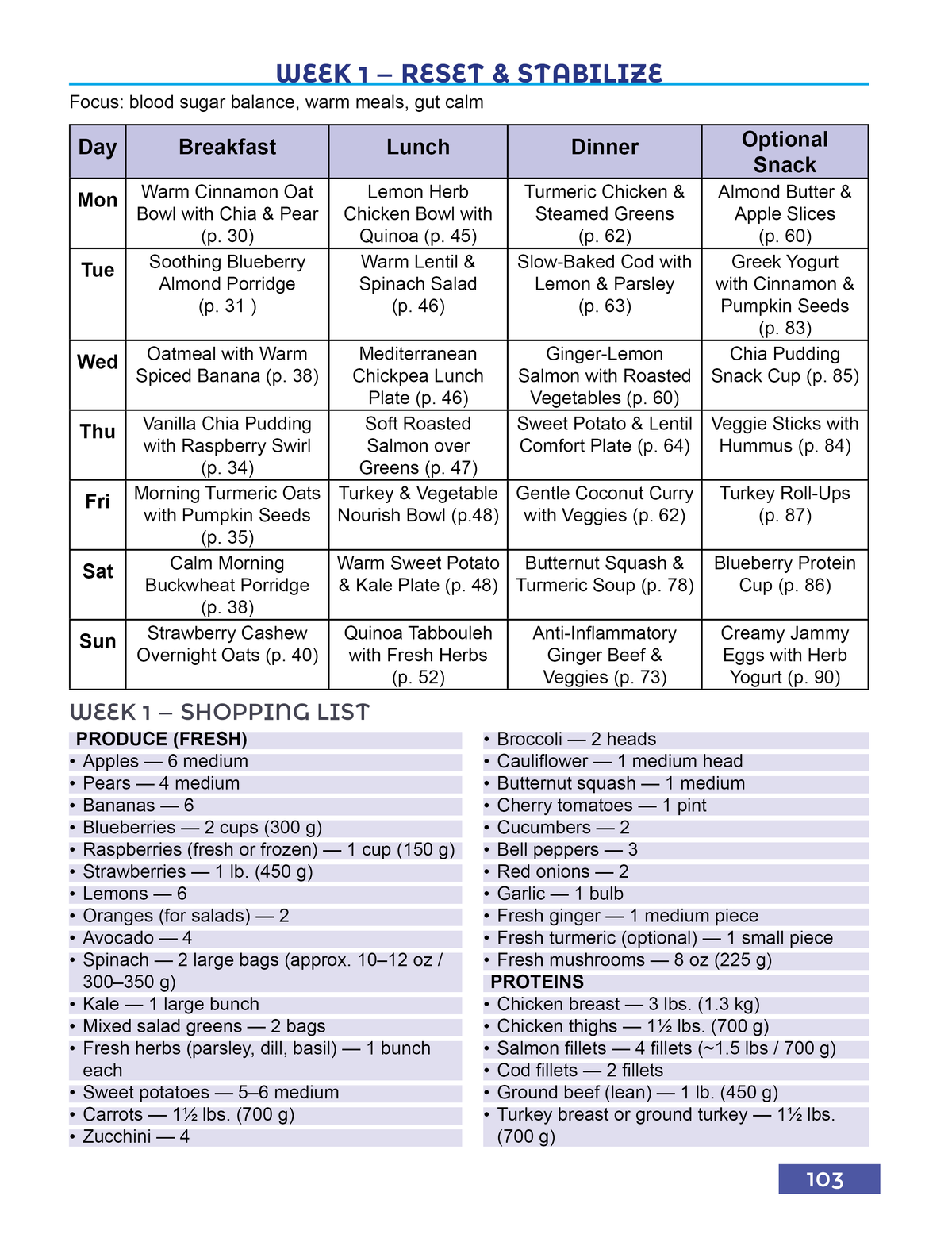
✔️ Complete 4-week meal plan designed to simplify daily food choices, encourage consistent nourishment, and establish sustainable eating routines
✔️ Weekly shopping lists to streamline grocery planning, ingredient organization, and meal preparation
✔️ Practical cortisol education explaining the body’s stress response, daily cortisol rhythms, and the relationship between nutrition, sleep, and hormonal changes after 40
✔️ Nutrition guidance for midlife women covering balanced protein intake, healthy fats, slow-digesting carbohydrates, magnesium-rich foods, hydration, and fiber
✔️ Supportive lifestyle practices including breathwork, gentle movement, grounding exercises, sleep hygiene, and daily relaxation routines
✔️ Meal-preparation strategies featuring ingredient substitutions, batch-cooking suggestions, and practical approaches for busy schedules
✔️ Additional reference materials including food lists, pantry essentials, kitchen setup guidance, supplement information, quick-reference charts, lifestyle templates, and measurement conversions
📈 Why This Is a Valuable Publishing Asset
Strong Niche Positioning: Combines several complementary cookbook and wellness topics, including cortisol-conscious nutrition, menopause support, stress management, and healthy eating for women over 40.
Defined Target Audience: Addresses women seeking manageable nutritional routines during midlife hormonal transitions, with an emphasis on everyday practicality.
Comprehensive Content Structure: Offers more than a recipe collection by combining educational chapters, organized meal planning, shopping lists, and lifestyle guidance.
Practical Everyday Appeal: Features familiar ingredients, accessible cooking methods, flexible meal options, and realistic strategies for maintaining consistent nutrition.
Clear Marketing Opportunities: The 100-recipe collection, 4-week meal plan, and additional educational resources provide tangible features for Amazon product descriptions, cover messaging, and promotional materials.
💼 Ideal For:
- Amazon KDP publishers expanding into women’s wellness and nutrition niches
- Sellers developing specialized cookbooks for women over 40
- Publishers targeting perimenopause and menopause lifestyle audiences
- Cookbook brands focused on balanced eating, stress-conscious nutrition, and healthy aging
- Entrepreneurs building complementary wellness and self-care book collections
🚀 What Makes This Book Special
Unlike basic recipe collections, The Cortisol Detox Diet for Women Over 40 integrates practical cooking guidance with nutritional education and manageable lifestyle routines.
Its structured 4-week approach, seven recipe categories, weekly shopping lists, and additional reference materials create a comprehensive resource for readers interested in midlife nutrition and everyday well-being.
This is a professionally organized publishing asset combining 100 nourishing recipes, practical meal planning, and supportive lifestyle guidance for women over 40 — suitable for Amazon KDP publishing preparation and niche portfolio expansion.
- Number of pages: 110
- Trim Size Paperback: 8,5*11
- Trim Size Hardcover: 8,25*11
Share

What's Included
-
Manuscript PDF
Complete manuscript in PDF format
-
eBook Format
Ready-to-publish electronic book format
-
Plagiarism Report
Detailed plagiarism check report
-
Book Cover
Covers that sell and visuals that grab attention
-
Book Description
Book description for marketing purposes
-
Book Quality Guide
Guide to reviewing book quality before publishing on Amazon KDP
Book Details
Human-Written Content
This manuscript was written by human authors and reviewed by editors. We do not use AI-generated text for the core book content. Each title is created as an original publishing asset for Amazon KDP sellers who want ready-to-use, professional-quality content.
Outline Overview
Table of Contents
Introduction: Supporting Everyday Well-Being After 40
- Understanding the purpose of the cookbook
- How nutrition and daily routines may influence energy and stress
- Using the recipes, meal plan, and reference materials
- Adapting meals to individual preferences and needs
- Working with qualified healthcare professionals when necessary
Part I: Understanding Cortisol and Midlife Nutrition
Chapter 1: Cortisol and the Stress Response
- What cortisol is and how it functions
- Understanding the natural daily cortisol rhythm
- The relationship between stress, energy, and sleep
- How hormonal changes after 40 may affect daily well-being
Chapter 2: Common Stress Triggers After 40
- Irregular meals and blood sugar fluctuations
- Inadequate sleep and demanding schedules
- Excessive caffeine and highly processed foods
- Emotional stress and insufficient recovery
- Recognizing personal patterns and triggers
Chapter 3: The Cortisol-Conscious Eating Approach
- Building balanced meals with protein, fiber, and healthy fats
- Choosing slow-digesting carbohydrates
- Supporting regular meals and consistent nourishment
- Developing sustainable habits without extreme restriction
Chapter 4: Foods to Emphasize
- Lean and plant-based protein sources
- Magnesium-rich foods
- Whole grains and fiber-rich carbohydrates
- Vegetables, fruits, nuts, and seeds
- Healthy fats and hydration options
Chapter 5: Foods and Habits to Limit
- Excess caffeine and added sugars
- Highly processed foods
- Skipping meals and restrictive eating patterns
- Late-night eating habits
- Identifying individual food sensitivities
Chapter 6: Supportive Lifestyle Practices
- Breathwork and grounding exercises
- Gentle movement and stretching
- Sleep-hygiene routines
- Hydration and mindful eating
- Creating manageable daily relaxation habits
Part II: Nourishing Recipes
Chapter 7: Calming Breakfasts
Twenty balanced breakfast recipes featuring whole grains, fruit, eggs, yogurt, seeds, and plant-based ingredients.
Recipes include:
- Warm Cinnamon Oat Bowl with Chia & Pear
- Protein-Rich Egg Scramble with Spinach & Herbs
- Soothing Blueberry Almond Porridge
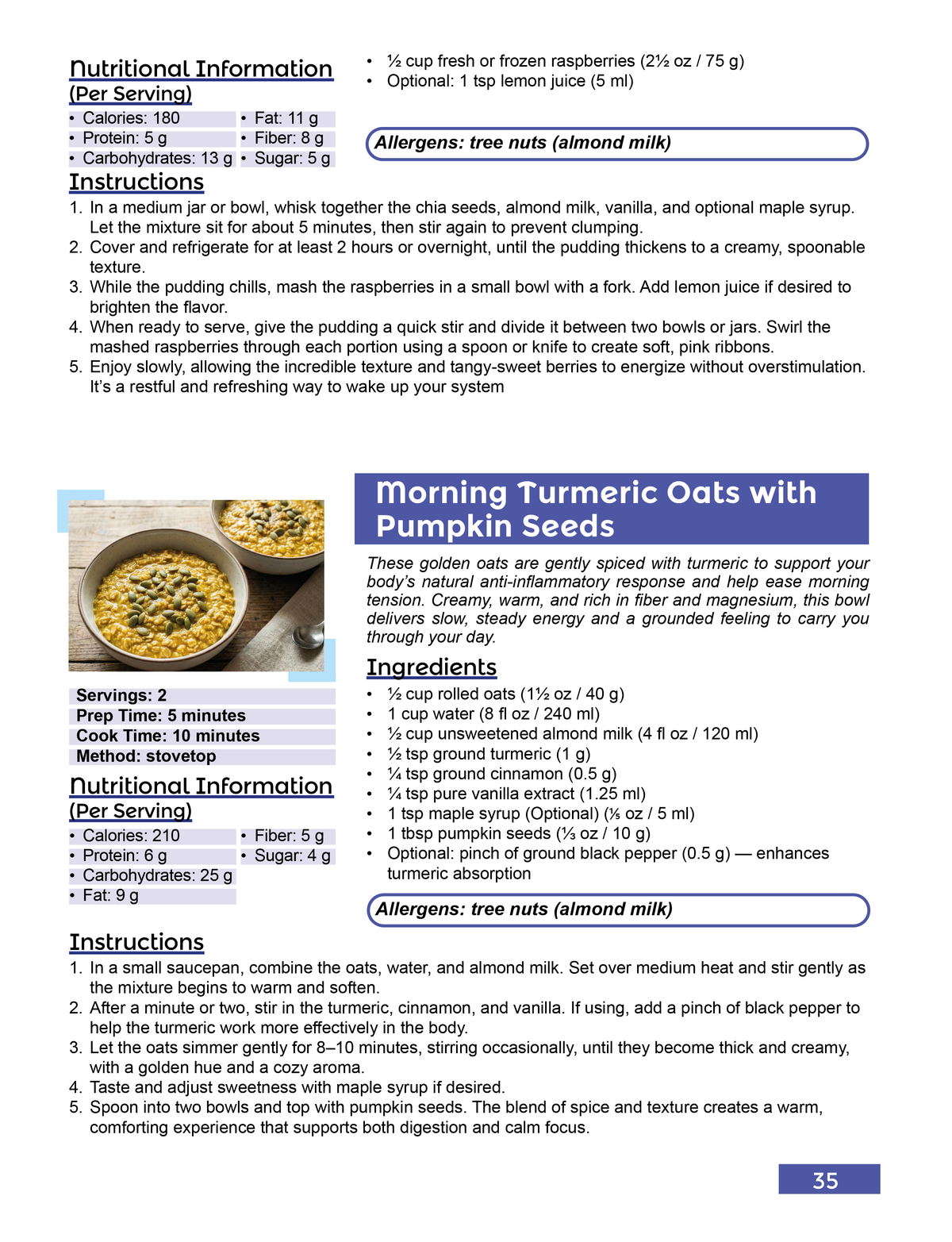
- Vanilla Chia Pudding with Raspberry Swirl
- Egg Muffins with Bell Pepper & Greens
- Blueberry Protein Pancakes
- Almond Butter & Chia Seed Breakfast Parfait
Chapter 8: Hormone-Supportive Lunches
Twenty satisfying lunches combining lean proteins, legumes, vegetables, whole grains, and nourishing fats.
Recipes include:
- Lemon Herb Chicken Bowl with Quinoa
- Warm Lentil & Spinach Salad
- Mediterranean Chickpea Lunch Plate
- Soft Roasted Salmon over Greens
- Turkey & Vegetable Nourish Bowl
- Baked Tofu Bowl with Ginger Greens
- Roasted Carrot & Lentil Energy Bowl
Chapter 9: Balanced Dinners
Twenty approachable dinners featuring poultry, seafood, tofu, legumes, vegetables, and whole grains.
Recipes include:
- Turmeric Chicken & Steamed Greens
- Ginger-Lemon Salmon with Roasted Vegetables
- Warm Vegetable & Quinoa Skillet
- Gentle Coconut Curry with Vegetables
- Slow-Baked Cod with Lemon & Parsley
- Butternut Squash & Chickpea Bake
- Ginger Beef & Vegetables
Chapter 10: Comforting Soups and Stews
Ten warm recipes designed for convenient meals and batch cooking.
Recipes include:
- Sweet Potato & Carrot Soup
- Ginger Chicken Broth
- Lentil & Spinach Comfort Soup
- Butternut Squash & Turmeric Soup
- Gentle Chicken & Rice Soup
- Dairy-Free Cauliflower Soup
Chapter 11: Snacks and Mini Meals
Fifteen simple options combining protein, fiber, fruit, vegetables, nuts, seeds, and whole grains.
Recipes include:
- Almond Butter & Apple Slices
- Greek Yogurt with Cinnamon & Pumpkin Seeds
- Calm-Energy Protein Bites
- Veggie Sticks with Hummus
- Mini Chicken Salad Wrap
- Turkey Roll-Ups with Greens
- Blueberry Protein Cup
Chapter 12: Smoothies and Wellness Drinks
Ten refreshing and warming drinks featuring fruit, greens, spices, plant milks, and protein-rich ingredients.
Recipes include:
- Blueberry-Calm Morning Smoothie
- Green Smoothie
- Ginger Pear Smoothie
- Vanilla Protein Shake
- Turmeric Golden Milk
- Caffeine-Free Spiced Oat Milk Latte
- Warm Lavender Honey Elixir
Chapter 13: Lighter Desserts and Evening Treats
Five simple desserts featuring fruit, chia seeds, pumpkin, almonds, and dark chocolate.
Recipes include:
- Warm Baked Cinnamon Apples
- Low-Sugar Chocolate Chia Pudding
- Ginger-Pear Evening Compote
- Pumpkin Spice Evening Bowl
- Dark Chocolate Almond Mousse
Part III: Four-Week Meal Plan
Week 1: Reset and Stabilize
- Establishing regular meal timing
- Preparing balanced breakfasts and lunches
- Introducing simple hydration and evening routines
- Week 1 shopping list
Week 2: Building a Consistent Routine
- Increasing meal variety
- Combining protein, fiber, and healthy fats
- Using batch preparation to simplify cooking
- Week 2 shopping list
Week 3: Supporting Rest and Recovery
- Choosing comforting meals and snacks
- Practicing mindful eating
- Strengthening sleep and relaxation routines
- Week 3 shopping list
Week 4: Creating Long-Term Habits
- Personalizing the meal structure
- Reusing favorite recipes
- Planning meals for busy schedules
- Week 4 shopping list
Part IV: Practical Reference Materials
Appendix A: Food Lists
- Foods to emphasize
- Foods to enjoy in moderation
- Practical substitutions
- Protein, fiber, and healthy-fat references
Appendix B: Pantry and Kitchen Setup
- Essential pantry ingredients
- Refrigerator and freezer staples
- Helpful kitchen equipment
- Batch-cooking and storage guidance
Appendix C: Supplement Information
- General supplement considerations
- Reading labels and checking serving sizes
- Medication and health-condition precautions
- When to consult a healthcare professional
Appendix D: Quick-Reference Charts
- Balanced plate guide
- Protein and fiber references
- Hydration reminders
- Meal and snack combinations
Appendix E: Lifestyle Templates
- Daily routine planner
- Sleep and energy tracker
- Meal-preparation worksheet
- Stress-awareness journal
Appendix F: Measurement Conversions
- US customary and metric measurements
- Volume and weight conversions
- Oven temperature references
Conclusion: Building Sustainable Everyday Habits
- Reviewing personal progress
- Continuing with flexible meal planning
- Maintaining realistic nutrition and lifestyle routines
- Adapting the four-week plan for ongoing use
- Prioritizing consistency over perfection
Sample Chapter
Chapter 1 — Cortisol: The Hormone Behind It All
Cortisol is often called the “stress hormone,” but that name doesn’t do it justice. Cortisol is one of the most essential hormones in your entire body — guiding your energy, sleep, appetite, immune system, metabolism, and even how emotionally grounded you feel day to day.
For women over 40, understanding cortisol becomes essential, as this hormone begins to react differently during perimenopause and menopause. Small triggers that once went unnoticed can now cause bigger hormonal ripples, influencing weight, mood, and overall well-being.
This chapter gives you a clear, compassionate look at what cortisol does, how it behaves, and why it matters so much in this stage of life.
What Cortisol Is
Cortisol is a steroid hormone produced by your adrenal glands — two small, powerful organs that sit atop your kidneys. Although cortisol is linked to stress, its primary role is to balance. It helps regulate:
- Blood sugar
- Energy levels
- Blood pressure
- Inflammation
- Immune response
- Sleep–wake cycles
When your body senses stress — physical, emotional, or even internal stress like inflammation — it signals your adrenals to release cortisol.
A healthy amount of cortisol keeps you sharp, stable, and resilient. Too little or too much, however, can create symptoms most women know all too well: fatigue, cravings, belly weight, brain fog, irritability, and trouble sleeping.
Daily Cortisol Rhythm
Cortisol isn’t meant to stay high all day. Instead, it follows a natural rhythm known as the cortisol curve, which tells your body when to wake, stay alert, and wind down.
A healthy cortisol rhythm looks like this:
- Morning Peak
Cortisol rises sharply in the early morning hours, helping you wake up with energy, mental clarity, and motivation. - Gradual Decline Through the Day
Levels gently fall through the afternoon, supporting steady focus and emotional balance. - Low Levels at Night
By evening, cortisol should be low so melatonin can rise. This allows your body to relax, digest dinner comfortably, and transition to restful sleep.
But many women over 40 experience a flattened, reversed, or chaotic cortisol curve.
Common patterns include:
- Exhausted in the morning, wired at night
- Midday crashes
- Sudden hunger or shakiness
- Racing thoughts before bed
- Feeling wide awake at 3 a.m.
These rhythm disruptions play a significant role in weight changes, burnout, inflammation, and digestive discomfort.
High vs. Low Cortisol
Cortisol imbalances generally fall into two broad categories:
High Cortisol (Hyper-responsivity)
This happens when stressors — emotional strain, overworking, restrictive dieting, chronic pain, unresolved inflammation—push cortisol up and keep it high.
Common signs include:
- Belly weight that won’t budge
- Sugar or salt cravings
- Irritability, anxiety, or restlessness
- Feeling “tired but wired”
- Nighttime wake-ups
- Fluid retention and bloating
- Brain fog or trouble concentrating
For many women over 40, high cortisol is the starting point of imbalance.
Low Cortisol (Cortisol Depletion Pattern)
Over time, constantly elevated cortisol can lead to depletion. The body becomes less responsive — not because it’s coping well but because it’s exhausted.
Signs often include:
- Deep fatigue that rest doesn’t fix
- Low motivation
- Morning heaviness
- Sensitivity to stress
- Dizziness upon standing
- Low blood pressure
- Reliance on caffeine to function
Low cortisol isn’t better than high cortisol — both patterns can cause similar symptoms, and both disrupt hormone balance.
Cortisol Spikes vs. Chronic Elevation
Not all cortisol rises are harmful.
A cortisol spike is normal. It happens when you:
- Exercise
- Have an exciting conversation
- React to a sudden noise
- Solve a problem
- Experience a burst of creativity
These spikes fade quickly, and the body resets.
Chronic elevation, however, is different.
This happens when cortisol never returns to baseline because the body continues to perceive ongoing stress signals. These signals can be obvious — work pressure, emotional strain — or subtle, like:
- Not eating breakfast
- Drinking coffee on an empty stomach
- Blood sugar swings
- Poor sleep
- Inflammation
- Over-exercising
- Constant worry
- Too much multitasking
When cortisol stays high, it disrupts hunger hormones, slows metabolism, affects thyroid function, increases inflammation, and promotes abdominal fat storage.
For women over 40, chronic elevation is far more common than single spikes — and far more impactful.
Understanding cortisol is the first step toward resetting it.
Now that you know what this hormone is doing behind the scenes, the rest of this book will guide you through gentle, effective ways to bring it back into balance — so your body can finally feel supported again.
See Inside the Book


