


BookLab
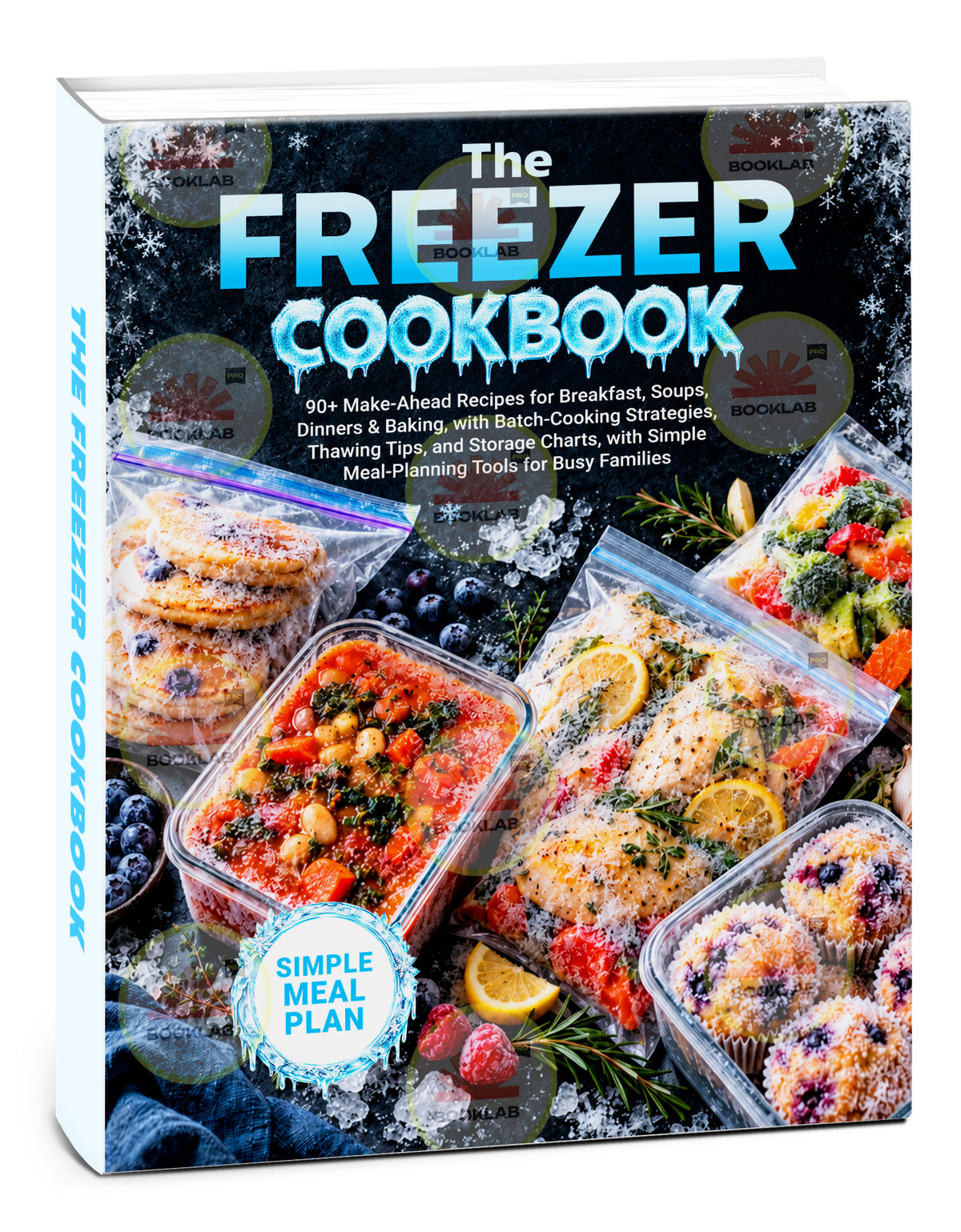
The Freezer Cookbook
The Freezer Cookbook
SKU:16737270
- Ready to publish on Amazon KDP
- Human-Written Manuscript
Couldn't load pickup availability
Premium Publishing Asset for Amazon Sellers: The Freezer Cookbook
A complete, professionally structured 101-page freezer cooking manuscript featuring 90+ make-ahead recipes, batch-cooking strategies, safe freezing and thawing techniques, food storage charts, nutritional information, and practical meal-planning tools — fully written, organized, and ready for publishing preparation.
This publishing asset is designed for Amazon sellers entering or expanding within the freezer cooking, make-ahead meals, batch cooking, family meal preparation, and time-saving cookbook niches.
Created for busy families, working parents, and home cooks seeking more convenient meal preparation, the manuscript combines practical freezer cooking education with versatile recipes, food storage guidance, and flexible planning strategies.
⭐️ What’s Included:
✔️ Complete 101-page cookbook manuscript focused on freezer-friendly meals and practical food preparation
✔️ 90+ make-ahead recipes organized into eight convenient recipe categories
✔️ Freezer breakfasts, soups, stews, chilis, chicken and turkey dishes, beef and pork meals, seafood, vegetarian recipes, sides, and baking favorites
✔️ Five foundational chapters covering freezing science, essential equipment, ingredient suitability, freezing methods, and safe thawing
✔️ Practical explanations of freezing temperatures, ice crystal formation, freezer burn, and maintaining food quality
✔️ Guidance on flash freezing, batch cooking, portion freezing, flat-pack storage, and freezer meal kits
✔️ Instructions for preparing freezer-to-oven and freezer-to-skillet meals
✔️ Safe thawing and reheating guidance for different ingredients and prepared dishes
✔️ Vegetable blanching charts and ingredient freezability information
✔️ Storage recommendations, labeling systems, and freezer organization strategies
✔️ Step-by-step recipes with preparation times, cooking methods, freezing instructions, and recommended storage periods
✔️ Nutritional estimates per serving, including calories, protein, carbohydrates, fat, fiber, and sugar
✔️ Weekly and monthly freezer meal-planning strategies for different household needs
✔️ Practical guidance on preparing multiple meals during a single batch-cooking session
✔️ Smart grocery shopping strategies covering bulk purchases, seasonal ingredients, and pantry organization
✔️ Flexible meal rotation ideas for maintaining variety and reducing unnecessary food waste
✔️ Homemade freezer-friendly baking recipes, including bread dough, pizza dough, cookies, muffins, and breakfast favorites
✔️ Suitable for Kindle and paperback publishing preparation
📈 Why This Is a Valuable Publishing Asset
You’re getting a complete, professionally organized cookbook manuscript — not simply a collection of recipes that can be stored in the freezer.
Freezer cooking is a practical publishing niche connecting several established reader interests: meal preparation, convenient family dinners, batch cooking, household organization, food storage, and budget-conscious grocery planning.
Readers exploring make-ahead cooking often seek more than recipes. They want to understand which ingredients freeze successfully, how long prepared meals maintain their quality, how to thaw food safely, and how to organize a freezer for everyday convenience.
This manuscript addresses these interests through a structured combination of foundational freezer cooking education, practical planning resources, and a diverse recipe collection.
Its eight recipe categories cover quick breakfasts, comforting soups and stews, poultry dishes, meat-based meals, seafood, plant-based dinners, versatile sides, and ready-to-bake favorites.
The dedicated freezing chapters provide additional reference value through explanations of storage methods, ingredient preparation, suitable containers, thawing practices, and food-quality considerations.
Weekly and monthly meal-planning guidance helps readers create flexible cooking routines, while batch-preparation strategies demonstrate ways to prepare ingredients and meals ahead of time.
The combination of everyday recipes, freezing instructions, storage information, and organizational techniques gives this manuscript broader utility than a conventional family cookbook.
💼 Ideal For:
• KDP publishers expanding their meal-prep and family cookbook catalogs
• Publishing agencies seeking a complete, professionally structured culinary manuscript
• Entrepreneurs developing Kindle, paperback, or digital cookbook products
• Sellers entering the freezer cooking, batch cooking, or make-ahead meal niches
• Publishers targeting busy families, working parents, and practical home cooks
• Amazon sellers seeking cookbooks that combine recipes with food-storage and planning guidance
🚀 What Makes This Book Special:
• Features 90+ recipes developed around make-ahead and freezer cooking methods
• Combines eight recipe categories with practical freezer cooking education
• Includes dedicated guidance on freezing, thawing, reheating, and storage
• Provides vegetable blanching charts and ingredient suitability information
• Explains batch cooking, flash freezing, portioning, and freezer meal preparation
• Features freezer-to-oven, freezer-to-skillet, and ready-to-bake options
• Includes recipe-specific freezing methods and recommended storage periods
• Offers weekly and monthly meal-planning strategies
• Covers convenient breakfasts, family dinners, vegetarian meals, soups, and baking
• Provides nutritional estimates for individual recipes
• Addresses freezer organization, labeling, and food rotation
• Emphasizes practical grocery planning and reducing unnecessary food waste
This is a complete publishing asset designed for Amazon sellers seeking a content-rich manuscript in the freezer cooking, meal preparation, and family cookbook niches.
With its 90+ make-ahead recipes, eight recipe categories, essential freezing techniques, storage charts, safe thawing guidance, batch-cooking strategies, and flexible meal-planning resources, The Freezer Cookbook provides a strong foundation for developing a professional Amazon KDP cookbook that combines practical kitchen education with convenient everyday meals.
- Number of pages: 101
- Trim Size Paperback: 8,5*11
- Trim Size Hardcover: 8,25*11
Share
What's Included
-
Manuscript PDF
Complete manuscript in PDF format
-
eBook Format
Ready-to-publish electronic book format
-
Plagiarism Report
Detailed plagiarism check report
-
Book Cover
Covers that sell and visuals that grab attention
-
Book Description
Book description for marketing purposes
-
Book Quality Guide
Guide to reviewing book quality before publishing on Amazon KDP
Book Details
Human-Written Content
This manuscript was written by human authors and reviewed by editors. We do not use AI-generated text for the core book content. Each title is created as an original publishing asset for Amazon KDP sellers who want ready-to-use, professional-quality content.
Outline Overview
Table of Contents
Introduction: Making Freezer Cooking Work for You
- Benefits of make-ahead cooking
- Saving time, money, and everyday effort
- Reducing food waste through better planning
- Building a flexible freezer-meal routine
- How to use the recipes and storage guidance
Part I: Freezing Essentials
Chapter 1: Understanding Freezing
- How freezing preserves food
- Freezing temperatures and ice-crystal formation
- Preventing freezer burn
- Protecting flavor, texture, and quality
- Understanding recommended storage times
Chapter 2: Tools and Equipment
- Choosing freezer-safe containers
- Bags, trays, wraps, and reusable storage options
- Labeling and dating prepared food
- Organizing freezer space
- Essential tools for efficient batch cooking
Chapter 3: Understanding Ingredient Freezability
- Foods that freeze successfully
- Ingredients that require preparation before freezing
- Vegetables and blanching techniques
- Managing dairy, grains, pasta, sauces, and proteins
- Ingredients that may change in texture
Chapter 4: Essential Freezing Methods
- Flash freezing individual portions
- Flat-pack storage for space efficiency
- Freezing complete meals and meal components
- Preparing freezer-to-oven dishes
- Creating freezer-to-skillet meal kits
- Portioning food for different household sizes
Chapter 5: Safe Thawing and Quality Restoration
- Refrigerator thawing
- Cold-water and microwave methods
- Cooking selected meals directly from frozen
- Safe reheating temperatures
- Restoring texture, moisture, and flavor
Part II: Meal Prep and Freezer Planning
Chapter 6: Weekly and Monthly Freezer Planning
- Choosing recipes for batch cooking
- Preparing several meals in one session
- Developing weekly and monthly rotations
- Balancing breakfasts, lunches, and dinners
- Maintaining variety in the freezer
Chapter 7: Smart Shopping for Freezer Cooking
- Creating efficient grocery lists
- Buying ingredients in bulk
- Using seasonal produce
- Combining pantry and freezer staples
- Managing food costs and reducing waste
Part III: Freezer-Friendly Recipes
Section 1: Breakfast Freezer Favorites
Convenient breakfasts that can be prepared ahead for busy mornings.
Recipes include:
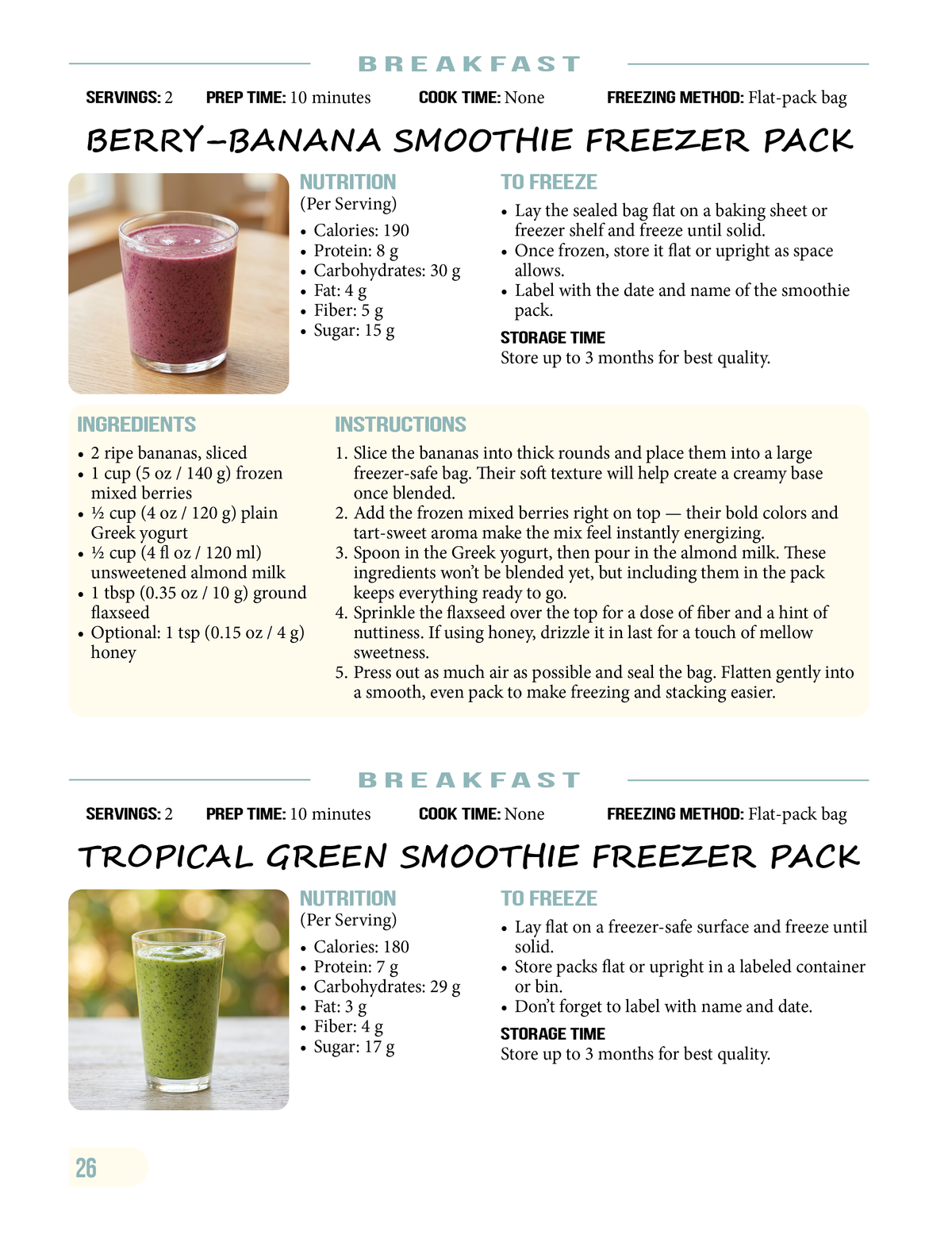
- Berry–Banana Smoothie Freezer Pack
- Tropical Green Smoothie Freezer Pack
- Chocolate Protein Smoothie Pack
- Classic Make-Ahead Egg & Cheese Breakfast Sandwich
- Turkey Sausage & Cheddar Breakfast Sandwich
- Veggie & Feta Breakfast Burritos
- Bacon, Egg & Potato Breakfast Burritos
- Apple Cinnamon Baked Oat Cups
- Blueberry Lemon Oatmeal Bake
- Double-Chocolate Protein Muffins
- Buttermilk Freezer Waffles
- Spinach & Pepper Egg Bite Squares
Section 2: Soups, Stews, and Chilis
Comforting freezer meals suitable for individual portions or family dinners.
Recipes include:
- Hearty Chunky Vegetable Stew
- Rustic Chicken Noodle Soup
- Beef & Barley Comfort Stew
- Golden Lentil & Vegetable Soup
- Creamy Tomato Basil Bisque
- Broccoli Cheddar Freezer-Stable Soup
- Chicken & White Bean Chili
- Classic Beef & Bean Chili
- Vegetarian Three-Bean Chili
- Roasted Butternut Squash Soup
- Mushroom & Wild Rice Stew
- Spicy Red Lentil Tomato Soup
Section 3: Chicken and Turkey Mains
Freezer marinades, casseroles, meal starters, and family-style poultry dishes.
Recipes include:
- Lemon Herb Chicken Freezer Marinade
- Honey Garlic Chicken Freezer Marinade
- Spicy Chipotle Chicken Freezer Marinade
- Creamy Italian Chicken Freezer Marinade
- Teriyaki Ginger Chicken Freezer Marinade
- Smoky BBQ Chicken Freezer Marinade
- Chicken Alfredo Bake
- Chicken & Broccoli Cheddar Bake
- Shredded Chicken Meal Starter
- Taco-Style Shredded Chicken Starter
- Freezer-to-Skillet Chicken Fajita Strips
- Turkey Meatballs with Italian Herbs
- Turkey Veggie Patties
- Family-Style Chicken Enchilada Kit
- Turkey Pot Pie Filling Kit
Section 4: Beef, Pork, and Lamb Mains
Hearty meat-based dishes designed for slow cooking, baking, or quick skillet preparation.
Recipes include:
- Classic Beef Stew Slow-Cooker Freezer Bag
- Korean BBQ Beef Strips Freezer Kit
- Garlic & Rosemary Beef Strips
- Homestyle Beef Meatloaf
- Italian Parmesan Meatballs
- Pork Tenderloin with Maple Mustard Marinade
- Herb-Crusted Pork Tenderloin Kit
- Ground Beef Taco Starter
- Ground Pork Stir-Fry Starter
- Lamb Shepherd’s Pie Freezer Kit
- Cottage Pie Freezer Kit
- Beef Stroganoff Meal Starter
Section 5: Seafood and Fish
Carefully prepared seafood marinades, sheet-pan kits, skillet meals, and freezer-friendly favorites.
Recipes include:
- Lemon Dill Fish Marinade Pack
- Cajun Spiced Fish Marinade Pack
- Garlic Butter Sheet-Pan Salmon Freezer Kit
- Mediterranean Herb Sheet-Pan White Fish Kit
- Shrimp Asian Stir-Fry Freezer Pack
- Garlic Lime Shrimp Freezer Skillet Pack
- Creamy Seafood Chowder
- Salmon Cakes with Dill & Lemon
Section 6: Vegetarian and Vegan Mains
Plant-based curries, stews, casseroles, meatless meal starters, and vegetable-rich entrées.
Recipes include:
- Coconut Chickpea Curry
- Red Lentil & Tomato Curry
- Butternut Squash & Spinach Curry
- Hearty Lentil & Potato Stew
- Vegetable & Quinoa Stew
- Black Bean Plant-Based Meatballs
- Lentil-Walnut Meatballs
- Teriyaki Tofu Stir-Fry Freezer Kit
- Lemon Garlic Tofu Meal Starter
- Sweet Potato & Black Bean Enchilada Bake
- Broccoli & Cauliflower Cheddar Casserole
- Mediterranean Vegetable Bake
Section 7: Side Dishes, Grains, and Vegetable Packs
Versatile freezer staples that simplify side dishes, grain bowls, casseroles, and skillet meals.
Recipes include:
- Oven-Roasted Vegetable Medley
- Roasted Brussels Sprouts Pack
- Carrot–Cauliflower Mash
- Garlic Parsnip Mash
- Precooked Brown Rice Portions
- Precooked Quinoa Portions
- Precooked Barley Pilaf Starter
- Spinach & Ricotta Stuffed Peppers
- Mushroom & Wild Rice Stuffed Squash
- Creamy Chicken Pasta-Bake Starter Kit
- Tomato Basil Pasta-Bake Freezer Kit
- Mixed Vegetable Skillet Pack
Section 8: Baking, Doughs, and Ready-to-Bake Favorites
Homemade doughs, breads, cookies, and baked goods that can be stored for convenient future baking.
Recipes include:
- Classic Bread Dough
- Whole Wheat Bread Dough
- Perfect Pizza Dough
- Flaky All-Butter Pie Crust
- Chocolate Chip Cookie Dough Balls
- Oatmeal Raisin Cookie Dough
- Lemon Poppyseed Quick Bread
- Banana Nut Quick Bread
- Buttery Scones
- Homestyle Biscuits & Dinner Rolls Pack
Conclusion: Building a Sustainable Freezer-Cooking Routine
- Starting with a manageable number of recipes
- Keeping an accurate freezer inventory
- Labeling, dating, and rotating meals
- Combining complete dishes with versatile meal components
- Adjusting batch sizes to household needs
- Maintaining variety while simplifying everyday cooking
- Creating a flexible long-term freezer meal system
Sample Chapter
Chapter 1 — Understanding Freezing
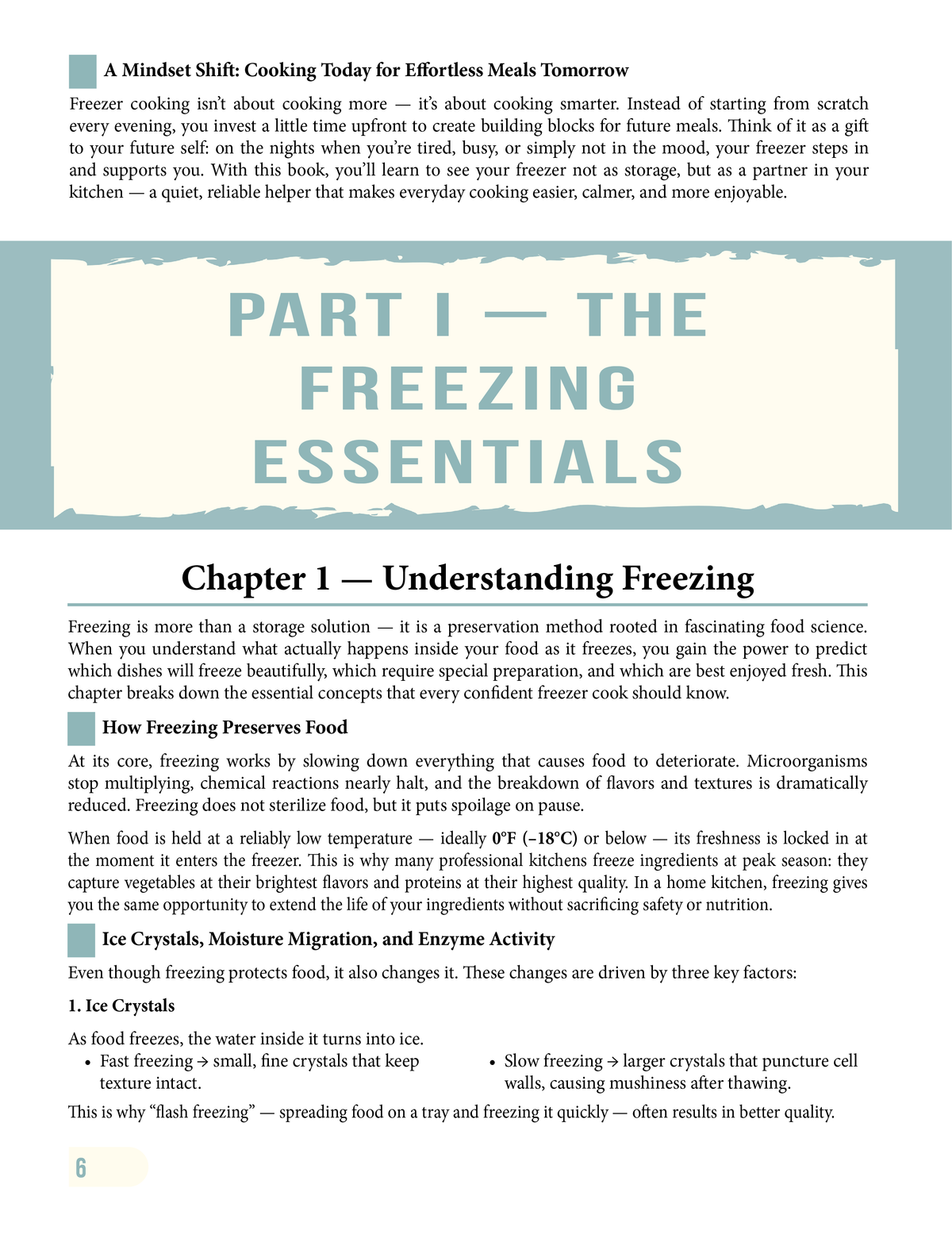
Freezing is more than a storage solution — it is a preservation method rooted in fascinating food science. When you understand what actually happens inside your food as it freezes, you gain the power to predict which dishes will freeze beautifully, which require special preparation, and which are best enjoyed fresh. This chapter breaks down the essential concepts that every confident freezer cook should know.
How Freezing Preserves Food
At its core, freezing works by slowing down everything that causes food to deteriorate. Microorganisms stop multiplying, chemical reactions nearly halt, and the breakdown of flavors and textures is dramatically reduced. Freezing does not sterilize food, but it puts spoilage on pause.
When food is held at a reliably low temperature — ideally 0°F (–18°C) or below — its freshness is locked in at the moment it enters the freezer. This is why many professional kitchens freeze ingredients at peak season: they capture vegetables at their brightest flavors and proteins at their highest quality. In a home kitchen, freezing gives you the same opportunity to extend the life of your ingredients without sacrificing safety or nutrition.
Ice Crystals, Moisture Migration, and Enzyme Activity
Even though freezing protects food, it also changes it. These changes are driven by three key factors:
1. Ice Crystals
As food freezes, the water inside it turns into ice.
- Fast freezing → small, fine crystals that keep texture intact.
- Slow freezing → larger crystals that puncture cell walls, causing mushiness after thawing.
This is why “flash freezing” — spreading food on a tray and freezing it quickly — often results in better quality.
2. Moisture Migration
Water always seeks equilibrium. In the freezer, this means moisture can move from the surface of food toward colder areas, eventually evaporating and forming ice on the outside. This process leads to freezer burn, which looks like grayish patches and causes dryness. It is not unsafe, but it affects flavor and texture.
Good packaging and removing excess air dramatically reduce this effect.
3. Enzyme Activity
Even in the freezer, natural enzymes continue working — just very slowly.
Some vegetables may discolor or soften unless they are blanched (briefly boiled, then chilled) before freezing.
Blanching deactivates enzymes and protects color, flavor, and nutrients.
The Role of Temperature and Speed
Two factors determine how well your food will freeze: how cold and how fast.
Temperature
A freezer should always stay at 0°F (–18°C) or lower. Warmer temperatures allow ice crystals to partially melt and refreeze, which damages texture. Frequent door opening or an overfilled freezer can cause fluctuations, so it’s helpful to keep a thermometer inside.
Speed
The faster food freezes, the better it will taste and look when thawed.
Techniques that encourage fast freezing include:
- Spreading items out in a single layer
- Cooling cooked food completely before freezing
- Using shallow containers
- Avoiding stacking packages until they are fully frozen
A “cold zone” in your freezer — usually the back or bottom — is the best place to freeze new items.
What Freezes Well and What Doesn’t (With Explanations)
Understanding how different foods behave in the freezer helps you avoid disappointment and choose the best recipes for freezing.
Foods That Freeze Well
These ingredients maintain their structure, moisture, and flavor with little compromise:
- Soups and stews — high moisture content freezes beautifully
- Cooked meats — pulled chicken, shredded beef, meatballs
- Most vegetables — especially when blanched
- Breads and baked goods — muffins, cookies, rolls, dough
- Grains and legumes — rice, quinoa, lentils
Their textures are stable because water is evenly distributed and less likely to form damaging crystals.
Foods That Freeze Acceptably with Minor Precautions
These can freeze well with proper preparation:
- Sauces with dairy — stabilize with a roux or blend after thawing
- Certain fruits — great for smoothies, but may soften
- Egg dishes — best when baked or fully cooked
- Pasta — slightly undercook before freezing
Foods That Don’t Freeze Well
Their structure or moisture balance makes them prone to textural issues:
- Leafy salads — become limp and watery
- Cucumbers, raw tomatoes, zucchini — cell walls rupture easily
- Soft cheeses and tofu — may become crumbly unless prepared in a specific way
- Cream-heavy sauces — can separate after thawing
- Fried foods — often lose crispness
Knowing this helps you choose recipes that will deliver the best experience from freezer to table.
See Inside the Book


