


BookLab
The Ultimate Carnivore Diet Cookbook
The Ultimate Carnivore Diet Cookbook
SKU:16546416
- Ready to publish on Amazon KDP
- Human-Written Manuscript
Couldn't load pickup availability
Premium Publishing Asset for Amazon Sellers: The Ultimate Carnivore Diet Cookbook
A complete, professionally structured 100-page cookbook manuscript featuring 100 animal-based recipes, detailed nutrition facts, a 28-day meal plan, weekly shopping lists, essential cooking techniques, and practical beginner guidance.
This publishing asset is designed for Amazon sellers entering or expanding within the carnivore diet, animal-based nutrition, zero-carb cooking, meat-focused recipes, and beginner-friendly specialty cookbook niches.
Created for readers interested in simplified cooking and animal-based eating, the manuscript combines practical recipes, foundational dietary information, structured meal planning, and essential kitchen skills.
⭐️ What’s Included:
✔️ Complete 100-page cookbook manuscript focused on carnivore cooking, animal-based ingredients, meal preparation, and practical dietary guidance
✔️ 100 recipes organized into seven categories:
- 15 satisfying breakfast recipes
- 20 beef recipes, including steaks, roasts, and organ meats
- 15 pork and lamb recipes
- 15 poultry recipes
- 15 fish and seafood recipes
- 10 egg-based dishes
- 10 carnivore snacks and small bites
✔️ Complete 28-day meal plan organized into four weeks to simplify daily meal selection and establish a consistent cooking routine
✔️ Weekly shopping lists featuring practical ingredient planning, grocery organization, and budget-conscious purchasing strategies
✔️ Nutrition facts for recipes to support convenient comparison and informed meal selection
✔️ Essential cooking techniques covering pan-searing, grilling, roasting, slow cooking, fat rendering, bone broth preparation, and temperature control
✔️ Beginner-friendly carnivore diet introduction explaining animal-based eating principles, permitted foods, dietary restrictions, and common transition challenges
✔️ Detailed meat-selection guidance covering beef, pork, lamb, poultry, fish, seafood, organ meats, and animal fats
✔️ Practical kitchen and meal-preparation advice including equipment recommendations, food storage, preparation methods, and ingredient sourcing
✔️ Additional reference materials featuring nutritional tables, frequently asked questions, progress-tracking templates, butchery basics, conversion charts, and a cooking glossary
📈 Why This Is a Valuable Publishing Asset
Strong Niche Positioning: Targets the carnivore diet and animal-based cooking categories, with additional relevance to zero-carb meal planning and meat-focused cookbooks.
Defined Target Audience: Designed for beginners, home cooks, and readers seeking structured guidance for preparing meals centered on animal-derived ingredients.
Comprehensive Content Structure: Combines recipes, cooking instruction, nutritional information, meal planning, shopping support, and reference materials in one organized manuscript.
Practical Everyday Appeal: Features familiar ingredients, multiple protein categories, accessible cooking methods, and meal-preparation strategies suitable for different experience levels.
Clear Marketing Opportunities: The 100 recipes, 28-day meal plan, weekly shopping lists, nutrition facts, and cooking techniques provide concrete selling points for Amazon listings, cover messaging, and promotional materials.
💼 Ideal For:
- Amazon KDP publishers expanding into carnivore diet and animal-based cooking niches
- Sellers developing beginner-friendly specialty cookbooks
- Publishers targeting readers interested in zero-carb and meat-focused recipes
- Cookbook brands focused on practical cooking techniques and meal planning
- Entrepreneurs building complementary diet and nutrition publishing portfolios
🚀 What Makes This Book Special
Unlike basic meat recipe collections, The Ultimate Carnivore Diet Cookbook combines a broad selection of animal-based dishes with detailed cooking instruction, structured meal planning, and practical lifestyle guidance.
Its emphasis on developing natural flavors without herbs or spices, understanding different meat cuts, and mastering essential cooking methods gives the manuscript a distinctive culinary focus.
The inclusion of a complete 28-day meal plan, weekly shopping lists, nutritional references, and beginner-oriented educational chapters creates a comprehensive publishing resource.
This is a professionally organized publishing asset combining 100 carnivore recipes, practical cooking techniques, structured meal planning, and essential beginner guidance — suitable for Amazon KDP publishing preparation and specialized cookbook portfolio expansion.
- Number of pages: 100
- Trim Size Paperback: 8,5*11
- Trim Size Hardcover: 8,25*11
Share

What's Included
-
Manuscript PDF
Complete manuscript in PDF format
-
eBook Format
Ready-to-publish electronic book format
-
Plagiarism Report
Detailed plagiarism check report
-
Book Cover
Covers that sell and visuals that grab attention
-
Book Description
Book description for marketing purposes
-
Book Quality Guide
Guide to reviewing book quality before publishing on Amazon KDP
Book Details
Human-Written Content
This manuscript was written by human authors and reviewed by editors. We do not use AI-generated text for the core book content. Each title is created as an original publishing asset for Amazon KDP sellers who want ready-to-use, professional-quality content.
Outline Overview
Table of Contents
Introduction: Understanding the Carnivore Approach
- Defining carnivore and animal-based eating
- Historical perspectives on meat-centered diets
- Understanding the zero-carbohydrate approach
- Focusing on natural flavors without herbs or spices
- Reviewing the available research and its limitations
- Separating personal experiences from established evidence
- Common questions about fiber, vitamins, cholesterol, and variety
- Who should seek medical advice before making dietary changes
- Preparing for the first four weeks
- Hydration, electrolytes, and possible transition challenges
- Setting realistic expectations without guaranteed outcomes
Part I: Preparation and Cooking Fundamentals
Chapter 1: Building a Carnivore Pantry
- Animal-based foods used throughout the cookbook
- Selecting beef, pork, lamb, poultry, fish, and seafood
- Eggs, dairy products, organ meats, and animal fats
- Choosing salt and checking packaged-food labels
- Ingredients excluded from the strict approach
- Sourcing meat based on quality, availability, and budget
Chapter 2: Essential Kitchen Equipment
- Cast-iron and stainless-steel cookware
- Grills, roasting pans, and slow cookers
- Instant-read thermometers and kitchen scales
- Knives, cutting boards, and storage containers
- Freezer organization and meal-preparation equipment
- Budget-friendly alternatives to specialized tools
Chapter 3: Essential Carnivore Cooking Techniques
- Developing flavor through browning and caramelization
- Pan-searing steaks and chops
- Grilling, roasting, braising, and slow cooking
- Rendering and storing animal fats
- Preparing compliant bone broth
- Understanding meat cuts and suitable cooking methods
- Controlling cooking temperatures and resting meat
- Food-safety temperatures and doneness guidance
Part II: The Recipe Collection
Chapter 4: Carnivore Breakfasts
Fifteen filling breakfast recipes featuring eggs, bacon, steak, sausage, salmon, cheese, and organ meats.
Recipes include:
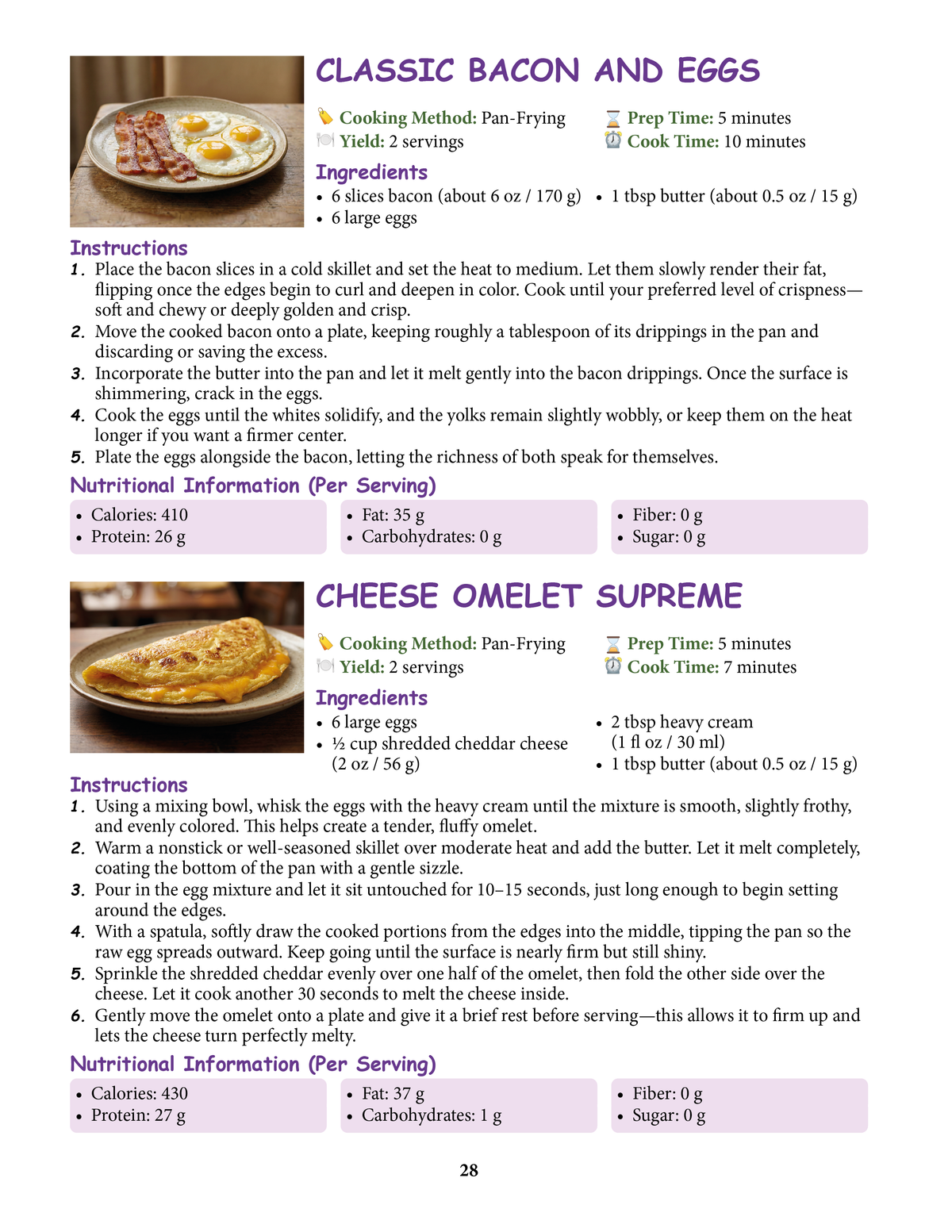
- Classic Bacon and Eggs
- Steak and Eggs Power Breakfast
- Smoked Salmon with Poached Eggs
- Breakfast Sausage Patties
- Egg Muffins with Bacon
- Butter-Fried Eggs with Bone Marrow
- Breakfast Burger Bowl
- Pan-Fried Liver with Eggs
- Breakfast Ribeye with Rendered Fat
- Eggs en Cocotte
Chapter 5: Beef Recipes
Twenty beef recipes covering steaks, burgers, roasts, slow-cooked cuts, organ meats, and bone broth.
Recipes include:
- Perfect Ribeye Steak
- Butter-Basted Strip Steak
- Filet Mignon with Bone Marrow
- Slow-Cooked Beef Short Ribs
- Cheese-Stuffed Burgers
- Braised Beef Brisket
- Beef Tongue
- Prime Rib Roast
- Beef Heart Skewers
- Tallow-Fried Beef Liver
- Beef Tripe Stew
- 24-Hour Beef Bone Broth
Chapter 6: Pork and Lamb Recipes
Fifteen recipes featuring chops, ribs, pork belly, slow-cooked shoulders, lamb cuts, organ meats, and homemade sausage.
Recipes include:
- Pork Chops with Crispy Fat
- Slow-Roasted Pork Shoulder
- Baby Back Ribs
- Pork Belly Strips
- Pork Liver Pâté
- Pork Cracklings
- Lamb Chops with Butter
- Roasted Leg of Lamb
- Braised Lamb Shoulder
- Homemade Pork Sausages
Chapter 7: Poultry Recipes
Fifteen recipes featuring chicken, turkey, duck, quail, poultry organs, and broth.
Recipes include:
- Whole Roasted Chicken
- Crispy Chicken Thighs
- Chicken Drumsticks
- Ground Chicken Patties
- Chicken Liver with Butter
- Whole Roasted Turkey
- Duck Breast with Crispy Skin
- Duck Leg Confit
- Roasted Quail
- Chicken Bone Broth
Chapter 8: Fish and Seafood Recipes
Fifteen recipes featuring fatty fish, white fish, shellfish, mollusks, and fish roe.
Recipes include:
- Crisp-Skin Pan-Seared Salmon
- Butter-Baked Salmon
- Grilled Trout
- Tuna Steaks
- Baked Cod
- Butter-Poached Halibut
- Shrimp in Butter
- Pan-Seared Scallops
- Steamed Lobster
- Mussels in Cream
- Grilled Octopus
- Salmon Roe
Chapter 9: Egg-Based Dishes
Ten versatile egg recipes suitable for breakfasts, light meals, and meal preparation.
Recipes include:
- Eggs Benedict Without the English Muffin
- Cloud Eggs
- Egg Salad
- Deviled Eggs
- Soft-Boiled Eggs
- Egg Drop Soup with Bone Broth
- Egg Roll-Ups with Ham
- Baked Egg Casserole
- Cheese Egg Custard
Chapter 10: Snacks and Small Bites
Ten portable and make-ahead options featuring meat, eggs, cheese, fish, and rendered fats.
Recipes include:
- Bacon Chips
- Oven-Baked Cheese Crisps
- Sugar-Free Beef Jerky
- Hard-Boiled Eggs
- Crispy Chicken Skin Chips
- Carnivore Cheese Board
- Carnivore Charcuterie Platter
- Pork Rinds
- Bone Marrow “Butter”
- Salmon Jerky
Part III: The 28-Day Meal Plan
Chapter 11: Week-by-Week Meal Planning
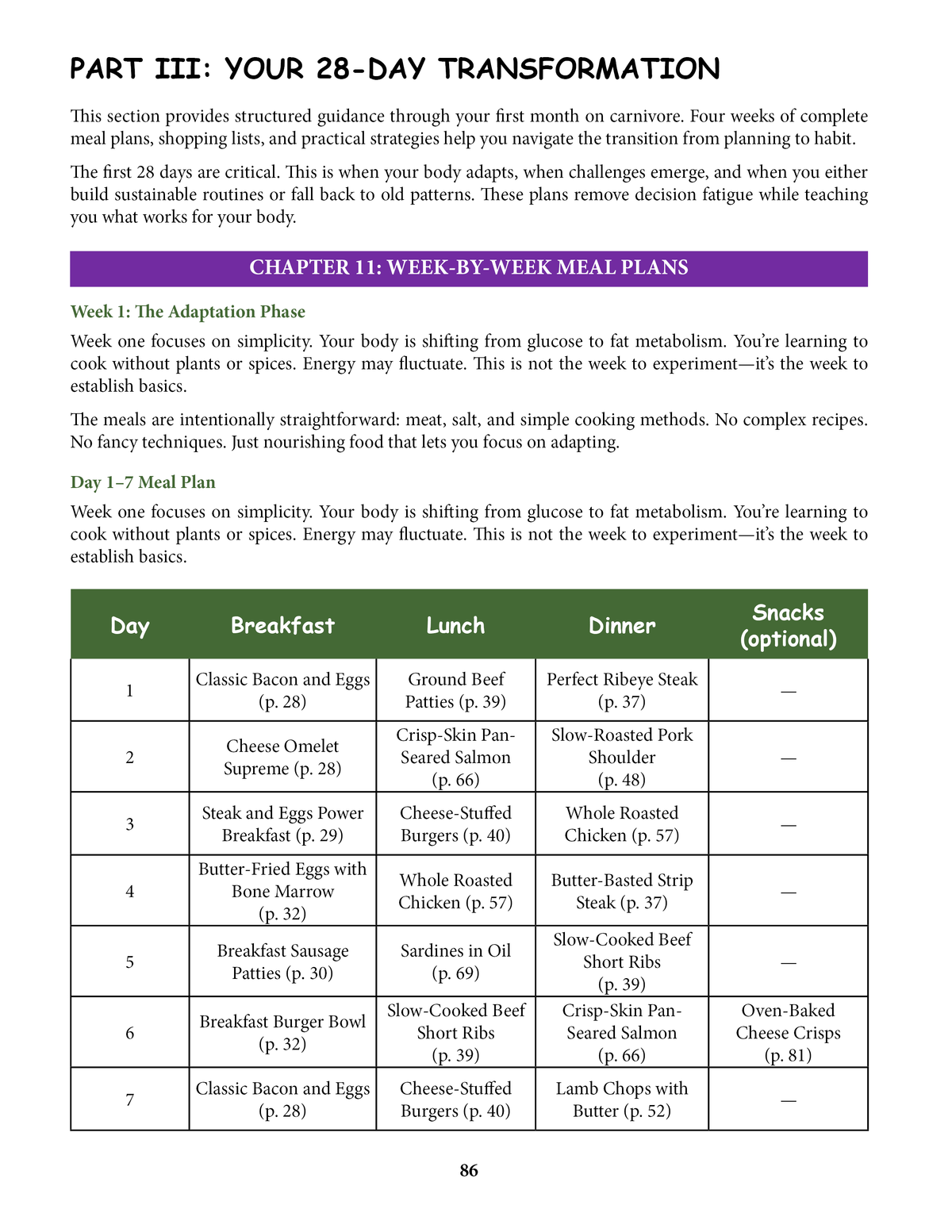
- Week 1: Establishing a simple routine
- Week 2: Finding preferred meals and portions
- Week 3: Expanding cooking techniques and variety
- Week 4: Developing a sustainable personal structure
- Rotating recipes without unnecessary repetition
- Adjusting portions according to individual needs
Chapter 12: Shopping Lists and Meal Preparation
- Four coordinated weekly shopping lists
- Estimating meat, eggs, seafood, dairy, and fat quantities
- Preparing multiple meals in one cooking session
- Refrigerating and freezing cooked foods safely
- Using leftovers efficiently
- Buying economical cuts and shopping in bulk
- Working with local butchers and seafood suppliers
Part IV: Practical Carnivore Lifestyle Guidance
Chapter 13: Beyond the Plate
- Establishing consistent daily habits
- Handling restaurants and social occasions
- Planning meals while traveling
- Managing common cooking and meal-planning challenges
- Maintaining hydration and monitoring individual responses
- Knowing when to consult a healthcare professional
Chapter 14: Tracking Personal Progress
- Choosing useful observations to record
- Food, energy, digestion, and sleep journals
- Using 30-day tracking templates
- Avoiding overreliance on appearance-based comparisons
- Discussing laboratory testing with a healthcare provider
- Reviewing and adjusting the approach responsibly
Chapter 15: Hunger, Satiety, and Meal Frequency
- Distinguishing physical hunger from habitual eating
- Exploring different meal frequencies
- Understanding protein and fat balance
- Adjusting portion sizes
- Recognizing individual appetite signals
- Avoiding rigid one-size-fits-all rules
Chapter 16: Long-Term Planning
- Maintaining variety within a limited ingredient framework
- Preventing boredom through different cuts and cooking methods
- Seasonal shopping and special occasions
- Considering food reintroductions when appropriate
- Building a reliable support system
- Continuing medical and nutritional monitoring
Part V: Appendices and Reference Materials
Appendix A: Nutritional Information
- Recipe nutrition tables
- Vitamin and mineral references
- Protein and fat comparisons
- Omega-3 and omega-6 information
- Nutrient bioavailability overview
Appendix B: Frequently Asked Questions
- Long-term dietary considerations
- Fiber and digestive concerns
- Vitamin C and micronutrients
- Cholesterol and laboratory monitoring
- Pregnancy, nursing, and childhood considerations
- Supplements, coffee, tea, alcohol, and fasting
- Hunger, digestion, and meal frequency
Appendix C: Carnivore Journal
- Daily food log
- Energy and appetite tracker
- Digestion and sleep observations
- Weekly reflection pages
- 30-day review template
Appendix D: Butchery Basics
- Understanding beef, pork, lamb, and poultry cuts
- Matching cuts to cooking methods
- Selecting economical alternatives
- Communicating with a butcher
- Requesting custom cuts and special orders
Appendix E: Conversion and Temperature Charts
- Metric and US customary conversions
- Celsius and Fahrenheit references
- Cooking-time estimates by weight
- Internal food-safety temperatures
- Resting and carryover-cooking guidance
Appendix F: Cooking Glossary
- Carnivore diet terminology
- Essential cooking methods
- Common meat-cut terminology
- French culinary terms used in the recipes
Conclusion: Creating a Personalized, Sustainable Routine
- Reviewing the first 28 days
- Identifying preferred recipes and techniques
- Maintaining flexibility without unrealistic promises
- Continuing to monitor individual needs
- Seeking qualified professional guidance when necessary
- Building a practical long-term cooking routine
Sample Chapter
CHAPTER 1: THE CARNIVORE PANTRY
Complete Food List: What’s Allowed
The carnivore diet is remarkably simple: if it comes from an animal, you can eat it. This chapter breaks down every food category available to you, helping you understand the full range of options within this way of eating.
RED MEATS
Red meat forms the foundation of most carnivore diets. These proteins are nutrient-dense, satisfying, and provide the majority of calories for most people following this approach.
Beef is the most popular choice. Every cut works—from premium ribeye and tenderloin to budget-friendly chuck roast and ground beef. The beauty of beef is its versatility: steaks for quick meals, roasts for slow cooking, ribs for special occasions, and ground beef for everyday simplicity. Don’t overlook less common cuts like brisket, short ribs, shanks, and oxtail—these tougher cuts become incredibly tender with slow cooking and offer deep, rich flavors.
Veal provides a milder, more delicate beef flavor. Chops, cutlets, shanks, and ground veal all work well.
Lamb and mutton offer distinctive flavors. Lamb is younger and milder; mutton is more mature with a stronger taste. Use legs, shoulders, racks, chops, and ground lamb. Some people love the unique flavor, while others need to get used to it.
Pork brings versatility and often costs less than beef. Chops, tenderloin, shoulder, belly, ribs, ham, bacon—all excellent choices. Pork’s natural sweetness and fat content make it satisfying and flavorful.
Game meats like venison, elk, bison, and wild boar provide variety. These are typically leaner than conventional meats and offer unique flavors. If you hunt or have access to game, these make excellent additions.
Important principle: Don’t trim the fat. Fat provides energy, carries flavor, and supports satiety. Embrace fatty cuts.
POULTRY
Birds offer lighter protein options while still providing complete nutrition. The key with poultry is keeping the skin on whenever possible—that’s where much of the flavor and fat reside.
Chicken is universally available and affordable. Whole birds provide the best value and variety—dark meat (thighs, drumsticks) has more fat and flavor than white meat (breast). Wings are underrated for their skin-to-meat ratio. Ground chicken works for quick meals but tends to be lean, so add extra fat when cooking.
Turkey works similarly to chicken, but larger. Great for feeding groups. Dark meat is preferred over breast for fat content.
Duck is a carnivore favorite. Rich, fatty, flavorful—especially the breast and legs. Duck fat is prized for cooking. If you’ve never tried duck, it’s worth seeking out.
Other birds like quail, goose, and Cornish hens add variety. Quail is delicate and quick-cooking. Goose is rich and fatty, perfect for special occasions.
Don’t discard organs—hearts, livers, and gizzards that come with whole birds are nutritious and flavorful.
FISH AND SEAFOOD
The ocean provides an enormous variety. Fish and seafood offer different nutrient profiles from land animals, particularly omega-3 fatty acids.
Fatty fish, like salmon, mackerel, sardines, herring, and anchovies, are nutritional powerhouses. High in omega-3s, vitamin D, and other nutrients. These should be regular rotation items.
White fish—cod, halibut, bass, snapper, grouper, tilapia—are leaner but still nutritious. Easier to digest, milder flavor, good for those transitioning to carnivore.
Shellfish pack incredible nutrition into small packages. Shrimp, crab, lobster, scallops, oysters, mussels, and clams all work. Oysters are particularly nutrient-dense.
Other seafood, like squid, octopus, and eel, provide variety and unique textures.
Fish roe and caviar are among the most nutrient-dense foods available. Salmon roe, tobiko, and, if you can access it, sturgeon caviar.
Wild-caught is ideal, but farmed fish still support carnivore eating. Fresh or frozen, both work well. Canned options like sardines, salmon, and tuna (in water or oil) are convenient and affordable.
EGGS
Eggs deserve special mention as one of nature’s perfect foods. Nutritionally complete, affordable, versatile, and quick to prepare.
Chicken eggs are the standard. Whole eggs only—both yolk and white together provide complete nutrition. The yolk contains most nutrients, but the white provides protein. Pasture-raised eggs from chickens eating their natural diet (bugs, worms) have better nutrient profiles, but any eggs work.
Duck eggs are larger and richer with more fat and protein. If available, they’re worth trying.
Quail eggs are smaller and more delicate. More novelty than necessity.
Goose eggs are very large and rich. Harder to find but an interesting variety.
You can eat many eggs daily. Three to twelve eggs per day is common among carnivores. Listen to your appetite.
DAIRY PRODUCTS (MEDIUM LEVEL)
Dairy is optional on carnivore. Some people thrive with it, others react poorly. The “medium level” approach includes dairy but focuses on low-lactose, high-fat options.
Butter and ghee are the most tolerated dairy products. Butter is 80%+ fat, mostly saturated, with minimal lactose. Grass-fed butter has better nutrient profiles. Ghee (clarified butter) has virtually zero lactose since milk solids are removed.
Heavy cream (36–40% fat) works well for many. Use in coffee, cooking, or sauces. The high fat, low lactose profile makes it easier to digest than milk.
Hard aged cheeses like cheddar, parmesan, gouda, and aged Swiss have minimal lactose due to the aging process. The longer aged, the less lactose.
Sour cream (full-fat only) is similar to heavy cream in composition and works well for most.
See Inside the Book


